The Future of Blogging: Why Effort, Strategy, and Nuance Still Trump Generative AI

In the modern digital landscape, the corporate blog is no longer an optional "nice-to-have"—it is a cornerstone of brand authority, SEO performance, and audience engagement. However, as the digital ecosystem grows more crowded and AI-driven content floods the web, the effectiveness of traditional blogging is facing an existential stress test.
To navigate these shifting tides, marketers are increasingly looking to the 11th Annual Blogger Survey from Orbit Media. This longitudinal study, which has tracked the habits and results of thousands of content creators for over a decade, offers a reality check for brands resting on their laurels. The consensus? If you aren’t evolving your content strategy, you aren’t just standing still—you’re falling behind.
The State of the Industry: Time, Effort, and the AI Paradox
One of the most pressing questions heading into 2025 was whether generative AI would finally "solve" the time-investment problem of content creation. With tools promising to turn prompts into full-length articles in seconds, one might expect a dramatic decrease in the time spent on production.

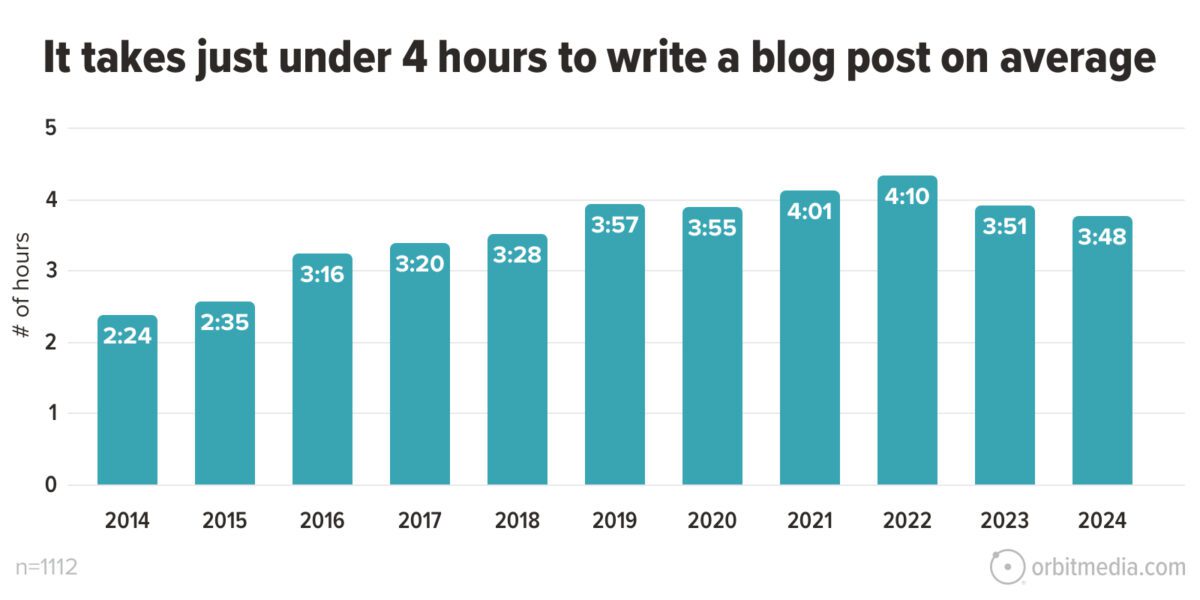
The data, however, tells a different story. The average time to write a standard blog post currently sits at three hours and forty-eight minutes—a mere three-minute reduction from the previous year.
This resilience of production time is not a failure of technology; it is a testament to the fact that high-quality content still requires significant human intervention. While 80% of bloggers now incorporate AI into their workflow—up from near-zero in 2022—the data shows no clear correlation between increased AI usage and "stronger" performance results. AI is excellent for brainstorming, drafting, and visualization, but it cannot replicate the strategic nuance, factual verification, and unique brand storytelling required to cut through the noise.
Supporting Data: The Anatomy of a High-Performing Blog
The survey highlights a clear divide between "low-effort" content programs and those that drive tangible business outcomes. The evidence suggests that for those who want to win, there are no shortcuts.
The "Volume vs. Value" Balance
The research indicates that bloggers who commit to long-form content—specifically articles exceeding 2,000 words—are significantly more likely to report "strong results." However, quantity does not negate the need for frequency. The data suggests that a bi-weekly publishing cadence is the minimum requirement for maintaining audience interest and search visibility.
Treating Blogs Like Social Feeds
Perhaps the most transformative insight from the 11th Annual Survey is the suggestion that brands should treat their blog feed with the same rigor as their social media presence. Platforms like LinkedIn and Instagram invest millions into understanding user engagement patterns. Successful blogs are now adopting these same principles: prioritizing visual storytelling, creating a distinct "brand voice," and fostering community interaction rather than simply broadcasting static information.
Expert Q&A: Perspectives from Andy Crestodina
To unpack these findings, we sat down with Andy Crestodina, CMO and Co-Founder of Orbit Media, a veteran of digital marketing who has been at the forefront of website optimization for over two decades.

Q: What research findings were the most surprising to you personally?
Crestodina: "The data tells us, year after year, that big efforts drive big outcomes. What’s surprising isn’t the data itself—it’s the reaction. We see the stark contrast between high-effort and low-effort programs, yet so many organizations continue to stick with the same low-effort, monthly, short-form content treadmill. They aren’t doing original research, they aren’t collaborating with influencers, and they aren’t utilizing video. If you keep doing the same thing, you should expect low results. The data proves it."
Q: The report notes that the most visible marketing metrics are the least important. How should we be measuring success?
Crestodina: "Ninety-five percent of marketers have access to analytics, and they almost exclusively look at traffic. But traffic is a vanity metric. It’s easy to track but doesn’t tell you if you’re actually moving the needle. As search traffic becomes more volatile—and as ‘zero-click’ searches become the norm—we have to redefine success.
"We need to look deeper. Are we seeing word-of-mouth growth? Are we seeing increased time-on-site from high-value prospects? Are we seeing bottom-of-funnel conversions? The most important outcomes in marketing are often the hardest to measure, but they are the ones that actually pay the bills."

Q: You’ve seen a shift in your own strategy regarding ‘rented land.’ Can you explain?
Crestodina: "Years ago, there was a rule: ‘Don’t build on rented land.’ I broke that rule by launching a LinkedIn newsletter. Even though our website traffic has dipped, our total reach and visibility have skyrocketed. We aligned ourselves with the tech giants’ goals of keeping users on their platforms. By publishing directly to LinkedIn, they reward us with promotion and exposure to millions. My #1 tip for B2B brands today? Stop worrying about getting everyone to your website and start meeting them where they already live."
Implications for Content Marketing Leaders
The findings from this year’s survey offer a clear roadmap for leaders looking to pivot their strategy in 2025. Moving away from the "traffic-first" model is no longer just a suggestion; it is a necessity for survival in a post-AI world.
1. Shift from Traffic to Engagement
Stop measuring success by page views. Start measuring it by engagement quality. Track how many people are signing up for your email list, how many are clicking your internal CTAs, and how many are sharing your content with their peers.

2. Embrace "Human-in-the-Loop" AI
Use AI to handle the heavy lifting of administrative tasks—formatting, SEO meta-tags, and idea generation—but reserve the writing, research, and strategic alignment for human experts. The "human element" is the new premium asset in content marketing.
3. Prioritize Originality and Collaboration
The internet is flooded with generic, AI-generated "best practice" articles. To stand out, brands must produce original research, conduct interviews, and curate unique perspectives. If your blog isn’t providing something that cannot be found elsewhere, it will eventually be rendered obsolete.
4. Optimize for "Zero-Click" Environments
Accept that search engines are evolving. Instead of trying to force users to leave the search engine to visit your site, focus on providing value directly on the platforms where they spend their time—whether that’s through newsletters, social feeds, or video content.

Conclusion: The Path Forward
The 11th Annual Blogger Survey serves as a reminder that there is no "easy button" in marketing. While the tools of the trade have changed, the fundamental principles of quality, consistency, and strategic effort remain unchanged.
For brands willing to move past the obsession with traffic and focus on the deep, indirect benefits of content marketing—like building authority, fostering community, and driving bottom-of-funnel results—the future remains bright. The challenge for 2025 is not just to produce more content, but to produce content that matters. As Andy Crestodina aptly summarizes: "The most important outcomes from marketing are the ones that are the hardest to measure: word-of-mouth, top-of-mind awareness, and bottom-of-funnel trust."
Focus your energy there, and the metrics that truly matter will follow.