The Rise of Agentic Workflows: How Manus AI is Redefining the Automation Frontier
The artificial intelligence landscape is undergoing a fundamental shift. For the past two years, the industry has been dominated by "chat-based" models—interfaces where users prompt an AI and receive a text or image response. However, a new era of "agentic AI" is emerging, characterized by tools that do not just suggest actions but execute them. Leading this charge is Manus, an autonomous agent designed to navigate the web, use third-party tools, and complete complex, multi-step workflows with minimal human intervention.
As businesses move away from simple prompt-and-response interactions, the ability to build agentic workflows is becoming a critical competitive advantage. By delegating high-level cognitive tasks to agents like Manus, organizations are effectively moving from "AI as an assistant" to "AI as a workforce."
Main Facts: Moving Beyond the Chatbot Paradigm
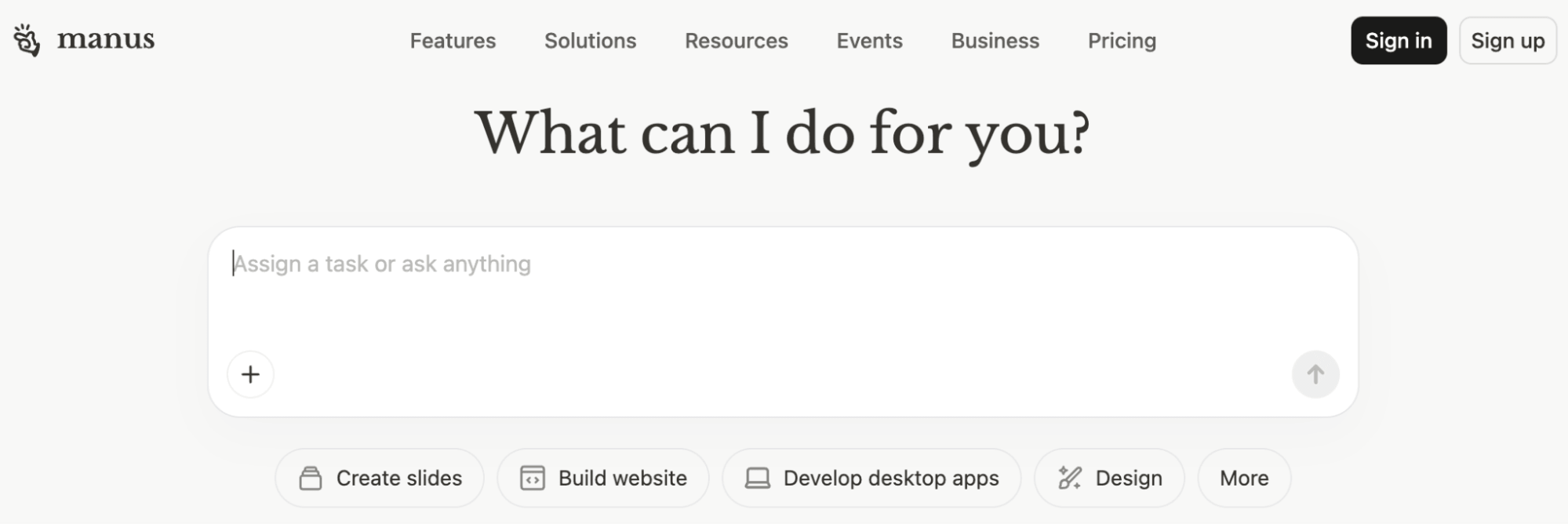
The core distinction between a standard chatbot like ChatGPT or Claude and an agent like Manus lies in the nature of the interaction. While traditional AI asks, "How can I help you?" (implying the user will still perform the final execution), Manus asks, "What can I do for you?" and then proceeds to do it.
Manus is an autonomous agent capable of accessing the internet, logging into user accounts, and manipulating software interfaces. Unlike a standard Large Language Model (LLM) that generates content within a closed sandbox, Manus acts as a "digital employee." It can research a topic across multiple websites, synthesize that data into a report, log into a CRM to update records, and then send a notification via Telegram once the task is complete.
Critically, Manus operates through natural language. It does not require the user to write Python scripts or understand API configurations. This accessibility allows non-technical professionals—marketers, consultants, and project managers—to build sophisticated automation that previously required a dedicated engineering team.
Chronology: The Evolution of AI Task Execution
To understand the significance of Manus, one must look at the progression of AI capabilities over the last few years:
- The Generative Phase (2022–2023): Users learned to prompt LLMs to write emails, summaries, and code. The bottleneck remained the "copy-paste" problem, where humans had to manually move data between the AI and their actual work tools.
- The Integration Phase (Late 2023–2024): Tools began offering "Plugins" and "Actions," allowing AI to search the web or connect to apps like Google Drive. However, these steps still required constant human oversight and "next-step" prompting.
- The Agentic Phase (2025–Present): Tools like Manus, Claude Cowork, and Perplexity Computer began allowing AI to take over the computer interface or run in a persistent cloud environment. These agents can plan their own multi-step sequences, troubleshoot errors autonomously, and deliver a finished product rather than just a draft.
Kate vanderVoort, a marketing and communications expert, notes that this evolution represents a shift in responsibility. In the agentic phase, the human’s role changes from "creator" to "architect and supervisor."
Supporting Data: The Economics of Agentic Automation
Manus operates on a credit-based subscription model, reflecting the high computational cost of autonomous browsing and multi-step reasoning. Understanding the unit economics of these tasks is essential for businesses looking to scale.
Subscription Tiers and Credit Allocation
- Free Tier: Includes 300 "refresh credits" per day. These do not roll over and are intended for light, daily queries.
- Starter Plan ($20/month): Provides a pool of 4,000 credits.
- Pro Plan ($40/month): Provides 8,000 credits.
- Enterprise/Power Tier ($200/month): Provides 40,000 credits.
The Cost of Autonomy
The credit "burn rate" depends entirely on the complexity of the task. A simple search and summary might cost 5 to 10 credits. However, a deep research task—where the agent visits 20 websites, downloads PDFs, and writes a comprehensive 50-page manual—can consume 900 to 2,000 credits in a single run.
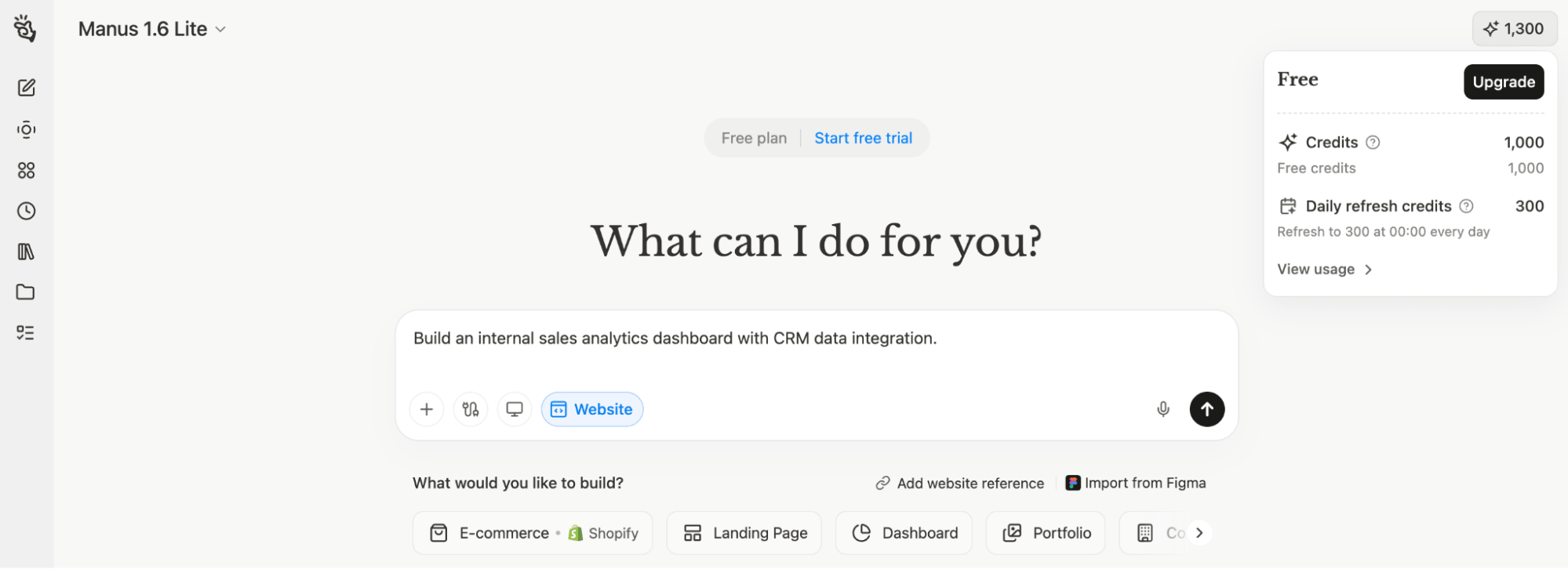
While a $5 task (in credit value) might seem high compared to a "free" ChatGPT query, the value proposition lies in the time saved. For example, a proposal generation workflow that previously took four hours of human labor can now be executed for approximately $5 worth of credits, representing a massive Return on Investment (ROI).
Access Modes
Manus provides four distinct ways to interact with its agentic engine:
- Browser-Based: Interacts with web platforms using the user’s active sessions.
- Desktop App ("My Computer"): Directly interacts with local files on the user’s hard drive.
- Telegram Integration: Allows users to monitor and respond to long-running tasks via mobile.
- Cloud Computer: A persistent, 24/7 virtual machine that can host databases and run continuous "scans" of the internet or social media.
Official Responses: Expert Insights on Agentic Strategy
Kate vanderVoort, who has integrated Manus into her high-level consulting practice, emphasizes that the success of an agentic workflow depends on the quality of the "brief" rather than the "prompt."
The "Briefing" Mindset
VanderVoort argues that users must stop treating AI like a sounding board. "If you hired a $500-per-hour consultant, you wouldn’t spend billable hours brainstorming out loud," she explains. Instead, users should use a secondary, cheaper LLM (like Perplexity or a standard ChatGPT instance) to build a "highly optimized prompt" for Manus. This ensures that when the Manus agent starts running—and consuming credits—it has a clear, executable roadmap.
The Power of "Skills"
Manus allows users to save successful workflows as "Skills." A Skill is essentially a packaged set of instructions and context files (like brand voice guides or SOPs). Once a Skill is created, the user can invoke it with a simple command, and Manus will replicate the complex process exactly as it was designed. This creates a "flywheel effect" where the business becomes more efficient with every new Skill developed.
Case Study: The $150,000 Training Manual
During a workshop with a major food and beverage manufacturer, vanderVoort demonstrated the power of Manus by tasking it with creating a comprehensive Learning and Development (L&D) program.
- The Result: Manus ran 42 autonomous steps over 50 minutes. It produced a seven-module training program, a 150-page manual, and interactive quizzes.
- The Context: The company’s internal team had been working on this for two years and had only reached "step four." They had recently paid an external agency $150,000 to complete the project—a task Manus finished in under an hour for a fraction of the cost.
Implications: The Future of the "AI-Driven" Business
The rise of tools like Manus suggests several long-term implications for the global workforce and business operations.
1. The Death of Low-Value "Glue Work"
A significant portion of the modern workday is spent on "glue work"—copying data from a transcript to a document, moving research into a CRM, or formatting reports. Agentic AI makes this work obsolete. As agents become more reliable, the value of a human employee will shift entirely toward strategy, empathy, and high-level decision-making.
2. SOPs as the New Programming Language
Standard Operating Procedures (SOPs) are no longer just dusty documents in a company folder; they are the "code" that runs AI agents. VanderVoort highlights that a well-documented SOP, when fed into a Manus Skill, allows the AI to reflect the specific logic and reasoning of a business. Companies that fail to document their processes will find themselves unable to leverage the full power of agentic AI.

3. The Requirement for "Agent Management"
As businesses deploy multiple agents—one for research, one for social media management, one for lead generation—a new role will emerge: the Agent Manager. This professional will be responsible for orchestrating these workflows, monitoring credit usage, and ensuring that the various AI agents are working in harmony with the company’s goals.
4. Security and Persistent Autonomy
With the introduction of the "Cloud Computer" mode, AI is moving toward 24/7 persistence. This allows for continuous competitive intelligence and real-time customer interaction. However, it also raises significant questions regarding security and data privacy. Manus addresses this by allowing agents to work within "sandboxed" environments, but as agents gain more autonomy to log into sensitive accounts, the industry will need to develop more robust "human-in-the-loop" verification systems.
Conclusion
Manus represents a bridge to the future of work. By moving from a conversational interface to an executive one, it allows users to automate the "un-automatable." The transition requires a shift in mindset: from prompt engineering to process architecture. For those willing to invest the time in building SOPs and optimized briefs, the reward is a scalable, autonomous workforce that operates at the speed of thought. As Kate vanderVoort’s experience suggests, the question is no longer what AI can say, but what AI can do.