The Century Quest: How Cent is Rewriting the Playbook for Preventive Healthcare in India
"May you live a hundred years." It is a phrase whispered at birthday celebrations across the globe—a sentiment often relegated to the realm of poetic well-wishing rather than a tangible, clinical objective. For most, the idea of reaching a century of life is a matter of luck, genetics, or divine providence. However, a new wave of health-tech innovators in Bengaluru is looking to shift this paradigm, moving longevity from the category of "hope" to the category of "science."
Cent, a burgeoning D2C preventive healthcare startup, is betting that the future of medicine isn’t just about treating the sick—it is about keeping the healthy from ever becoming patients in the first place. By focusing on the intersection of advanced imaging, artificial intelligence, and proactive diagnostics, Cent aims to democratize the kind of comprehensive health screening that was once reserved for the ultra-wealthy or the critically ill.
The Genesis: From Practo to Preventive Powerhouse
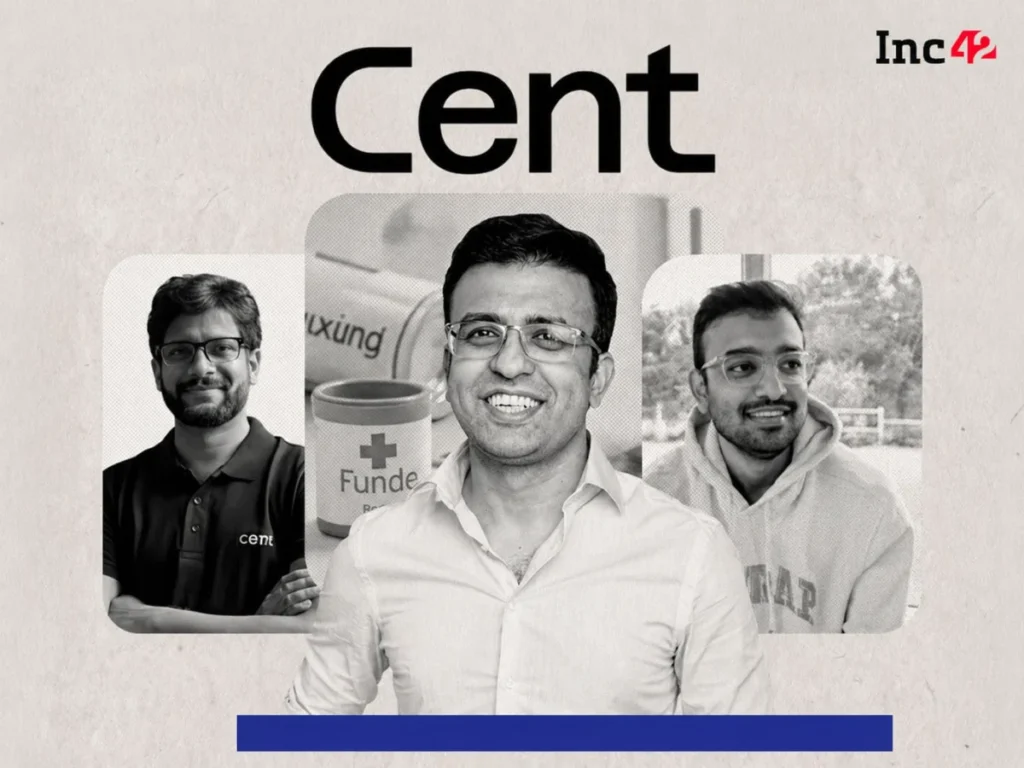
Founded in January 2025, Cent represents the latest venture from a trio of industry heavyweights: Shashank ND, cofounder of the IPO-bound healthtech giant Practo; Anshul Khandelwal, the former Chief Marketing Officer of Ola; and Arpit Garg, the former head of product at Lenskart.
While Shashank ND brings deep-rooted expertise in India’s complex healthtech ecosystem, it is important to note that Cent operates as an independent entity, distinct from the Practo umbrella. The startup’s mission is laser-focused: to combat the four primary drivers of premature, preventable deaths—cardiac disease, cancer, neurological disorders, and metabolic conditions.
"More than 75% of premature deaths globally can be traced back to these four categories," says Anshul Khandelwal, who serves as Cent’s Chief Business Officer. "We initially explored the broader longevity space, including supplements and biohacking interventions. However, we realized the real crisis wasn’t a lack of longevity tools—it was the fact that people were succumbing to life-threatening diseases simply because they weren’t being caught in time. We pivoted from the abstract concept of ‘living longer’ to the concrete reality of ‘clinical prevention.’"
The Infrastructure of Wellness: Beyond the "Gold Package"
India’s relationship with diagnostic healthcare has historically been reactive. Despite the nation’s status as a global hub for medical expertise and the cradle of Ayurveda, most Indians only interact with diagnostic centers when symptoms emerge—chest pains, unexplained lumps, or sudden dizzy spells.
When preventive care is sought, it is often through the "Gold," "Platinum," or "Diamond" packages offered by legacy chains. Critics argue these packages are fundamentally flawed, often focusing on blood-based biomarkers that capture a snapshot of current physiological state rather than a predictive outlook on long-term health.
"Calling something a ‘full-body checkup’ when it fails to cover 80-90% of the body is almost a crime," notes Arpit Garg, Cent’s Chief AI Officer. "Most of these packages rely on basic blood work and limited imaging. They measure what has already happened, not what is about to happen."
Cent aims to disrupt this by offering a singular, mandatory diagnostic protocol. Their flagship offering is built around a 30-minute full-body MRI that generates between 3 to 4 GB of imaging data per patient. This scan is complemented by a CT scan of the heart to identify arterial calcification, an ECG and echocardiogram for cardiac functionality, a DEXA scan for metabolic health, and, for female patients, a mammogram.
Bridging the Gap with Artificial Intelligence
The cornerstone of Cent’s model is its proprietary AI integration. In traditional medicine, a full-body MRI can take upwards of three hours and cost between ₹50,000 and ₹60,000—a price point that renders it inaccessible for routine preventive screening. Cent, through a strategic partnership with Siemens, has utilized AI to slash scan times to 30 minutes, effectively lowering the cost while maintaining clinical precision.

The AI system does not merely take pictures; it correlates results across various modalities to produce a "Clinical Health Score." This provides users with an organ-by-organ risk assessment, offering a prioritized roadmap for lifestyle changes, medication, or further specialist intervention. Each patient is also paired with an AI companion to help navigate their reports, supported by a mandatory consultation with an in-house doctor within 48 hours of the testing cycle.
Supporting Data and Commercial Traction
Since commencing commercial operations in October 2025, Cent has hit the ground running. Having performed approximately 7,000 scans to date, the startup is currently processing 3,000 scans per month. The efficacy of their protocol is highlighted by the startup’s internal data: 25% of their customers have been flagged with "major" health issues requiring immediate intervention, while 3% have discovered critical conditions that necessitated urgent medical care.
Currently, Cent operates three state-of-the-art facilities in Bengaluru, Delhi-NCR, and Mumbai. The company is in the midst of an aggressive expansion phase, with plans to open 20 to 25 new centers across India’s top seven cities—including Hyderabad, Pune, Chennai, and Kolkata—within the next six to nine months.
Strategic Implications and the Road Ahead
The business model for a "once-a-year" diagnostic protocol faces the inevitable challenge of customer retention. To solve this, Cent is launching a membership program. For an initial fee of ₹27,500, customers gain access to the comprehensive annual scan, but also receive follow-up diagnostics, ongoing access to longevity experts, and continuous clinical guidance throughout the year at no additional cost.
The target demographic is primarily middle-aged professionals—those earning between ₹15 Lakh and ₹20 Lakh annually. "These are 45-year-olds who have finally come to terms with their own mortality," says Khandelwal. "Interestingly, a significant portion of our traffic is driven by younger family members—children who want to ensure their parents are protected."
Competitive Landscape
While legacy diagnostic chains like Thyrocare and newer entrants like Pristyn Care dominate the Indian preventive space, Cent occupies a unique niche. Its closest global analogs are high-end, tech-driven screening services like Prenuvo or Function Health. However, unlike these international players, which can cost upwards of ₹2 Lakh, Cent is positioning itself as an affordable, integrated health solution for the Indian market.
The challenge, however, remains one of trust. In the healthcare sector, incumbents possess the advantage of brand history and institutional deep-linking. Cent must prove that its model is not just a high-tech "gimmick," but a reliable, scientifically backed infrastructure.
Conclusion: A New Era for Indian Health
As the startup eyes further expansion into 15 additional cities beyond the top tier, its success will depend on its ability to communicate its value proposition without becoming trapped in a "race to the bottom" on pricing. By focusing on the 45-year-old demographic—a group that is increasingly health-conscious yet underserved by traditional models—Cent is positioning itself as more than a lab; it is framing itself as an essential partner in the pursuit of longevity.
Whether Cent can effectively scale its infrastructure while maintaining the accuracy of its AI-led diagnostics remains to be seen. However, by shifting the conversation from "treatment" to "prevention," the startup is clearly aiming to make the phrase "live a hundred years" a little less like a wish and a little more like a standard of care.