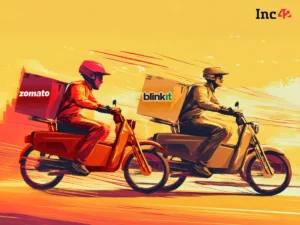
The End of the Discount Era: Blinkit Bets on Infrastructure Over Price Wars as Quick Commerce Hits Maturity
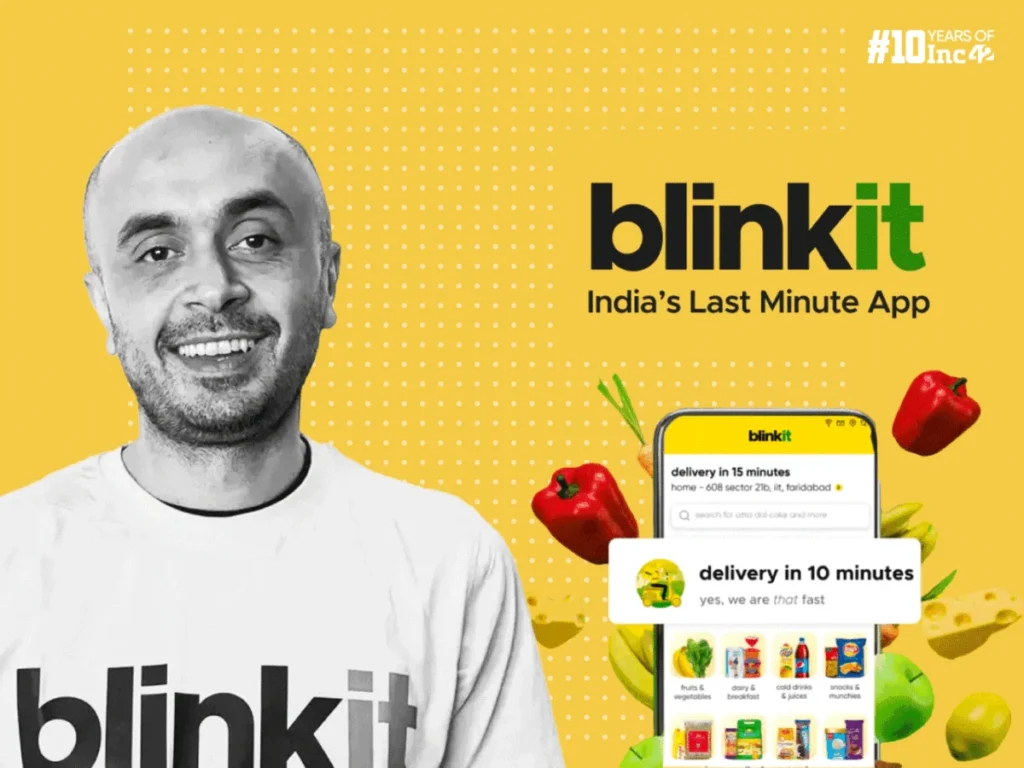
The landscape of India’s hyper-competitive quick commerce sector is undergoing a tectonic shift. For years, the industry has been defined by a relentless "race to the bottom," with platforms burning massive capital on deep discounts and aggressive customer acquisition strategies. However, according to Albinder Dhindsa, CEO of Eternal (the parent company of Blinkit), this era of unchecked promotional warfare may finally be nearing its expiration date.
During the company’s Q1 earnings call, Dhindsa signaled a pivotal change in market dynamics, suggesting that the industry has reached its "peak competitive intensity." As players navigate the thin line between market share expansion and unsustainable losses, the focus is beginning to pivot from subsidizing baskets to building durable infrastructure.
The State of Play: A Market at a Crossroads
The quick commerce industry in India has evolved rapidly, transitioning from a niche convenience to a fundamental pillar of urban retail. Yet, this growth has come at a steep price. The most recent quarter was characterized by what Dhindsa described as the most aggressive phase of competition the industry has witnessed to date. This intensity was fueled by an influx of new entrants and the heightened ambition of established giants, with industry heavyweights like Amazon and Flipkart signaling significant capital deployments to challenge incumbents.
Concurrently, Blinkit’s primary rival, Zepto, has been aggressively scaling its operations, recently moving closer to a public listing with an updated draft red herring prospectus for an IPO aiming to raise INR 8,010 Cr. Amidst this flurry of corporate activity, the pressure on margins has been immense.
However, Dhindsa remains composed. He argues that the market has effectively hit a ceiling in terms of how much further subsidies can be pushed without causing irreparable damage to balance sheets. "We don’t think there is a lot of wiggle room for people to go much deeper than what they are currently doing because that would pollute losses very significantly," he noted.
Chronology of Competitive Evolution
To understand where the market is headed, one must look at how it arrived here.
- The Early Phase (2021–2023): The initial phase of quick commerce was defined by a land grab. Platforms focused on hyper-local penetration, with "10-minute delivery" serving as the primary marketing hook.
- The Discount Era (2023–2025): As the novelty of speed faded, platforms turned to heavy discounting to habituate customers. This period saw companies sacrificing EBITDA to capture wallet share, leading to a "nugget" of losses that became a point of contention for investors.
- The Pivot (Mid-2025–Present): With the shift to an inventory-led model in September 2025, Blinkit began prioritizing unit economics. The current phase, as articulated by the leadership, marks the transition from customer acquisition at any cost to the professionalization of the supply chain.
Blinkit’s journey is illustrative of this shift. Having experimented with aggressive discounting during its expansion into South India, the company found that such growth was ephemeral. When the subsidies were dialed back, customer retention plummeted. This realization acted as a catalyst for a strategic pivot: rather than fighting on price, Blinkit decided to compete on the bedrock of logistics and service quality.
Supporting Data: By the Numbers
Blinkit’s performance in Q1 provides a compelling argument for its "infrastructure-first" thesis. The company reported its fifth consecutive quarter of adjusted EBITDA improvement, a key metric for a business model once dismissed as a "burning" enterprise.
- Financial Growth: Eternal reported a consolidated net profit of INR 92 Cr for Q1 FY27, representing a staggering 3.7x increase year-on-year. Operating revenue surged by 182% YoY and 17% sequentially, reaching INR 20,211 Cr.
- Operational Scale: The company added 200 net new dark stores in the quarter alone, bringing its total footprint to 2,443 locations.
- Investment Intensity: CFO Akshant Goyal highlighted that the company has funneled approximately INR 3,000 Cr into capital expenditure over the past four years. These investments—primarily directed toward larger warehouses, cold chain infrastructure, and localized supply chains—are intended to create a "moat" that is far more durable than temporary price cuts.
The revenue growth, which hit 18.4% sequentially, is largely attributed to the shift toward an inventory-led model, which allows for better demand forecasting and reduced wastage compared to third-party seller dependencies.
Official Responses and Strategic Vision
During the earnings call, the management team was categorical: discounts are not a sustainable business model. Dhindsa’s critique of the current market is philosophical as much as it is financial. He posits that if a brand’s primary value proposition is a lower price point, it effectively ceases to be a service provider and becomes a commodity trader.
"If you acquire customers primarily through discounts, that’s what the business becomes," Dhindsa remarked. He warned that unless a platform builds a differentiated value proposition—such as superior availability, higher product quality, or reliable service—those customers will evaporate the moment the subsidies stop.
CFO Akshant Goyal reiterated that the company’s capital allocation strategy will remain consistent. As long as these investments yield healthy returns, the company will continue to pour capital into the "hard" side of the business. The goal is to reach a scale where the benefits of efficiency can be passed on to the consumer naturally, rather than as a forced, artificial discount.
Implications for the Future: A More Rational Market
What does this mean for the future of Indian e-commerce? The implications are three-fold:
1. The Consolidation of Quality
As the "discount war" cools, the market is likely to see a separation between players who have built deep operational moats and those who have relied solely on venture capital-funded price cuts. The former will likely survive and thrive, while the latter may face consolidation or exit.
2. Infrastructure as the New Battleground
The race is no longer to offer the deepest discount on a bottle of shampoo; it is to ensure that the item is stocked in a dark store within a 2-kilometer radius of the customer. Companies will continue to compete, but the battlefield will move from the "promotions" tab in the app to the "inventory and logistics" layer in the backend.
3. Customer Loyalty and Value Proposition
The end of the discount war suggests a maturation of the Indian consumer. As the industry shifts toward a service-oriented model, players that focus on the user experience—delivery speed, product freshness, and customer support—will secure the long-term loyalty of the urban middle class.
Conclusion: The Path Toward Sustainable Profitability
The pronouncement by Eternal’s leadership that the industry is hitting a ceiling on discounting is a significant signal to the market. It suggests that the "quick commerce" sector is growing up. The shift from an era of growth-at-all-costs to a focus on sustainable, infrastructure-led profitability is not just a strategic choice for Blinkit; it is a necessity for the sector to remain viable in the long run.
While competitors may continue to attempt aggressive maneuvers, the structural reality of the business model—where every delivery carries a cost—means that physics will eventually prevail over marketing budgets. Blinkit’s decision to double down on dark stores and supply chain efficiency appears to be a calculated bet that in the long run, reliability is the only currency that matters.
As the dust settles on the most aggressive quarter in the history of the sector, one thing is clear: the platforms that survive will not be the ones that gave the most away, but the ones that built the most effectively.