The Agentic Shift: AWS Unveils Next-Generation AI Orchestration at NYC Summit
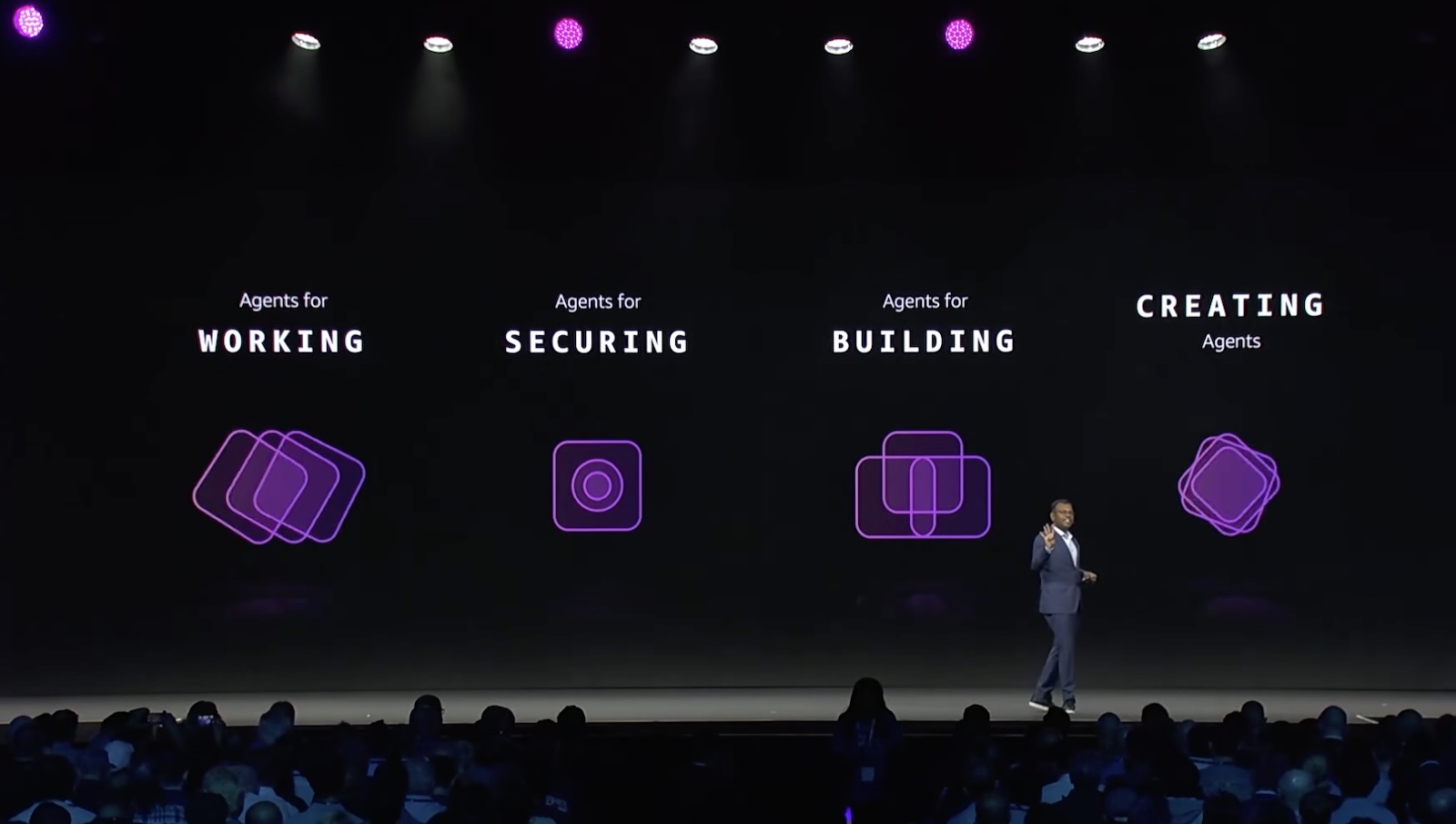
NEW YORK CITY — The landscape of enterprise artificial intelligence shifted significantly this week as Amazon Web Services (AWS) took the stage at the AWS Summit in New York City. With a clear focus on moving beyond simple chatbots toward sophisticated, autonomous “agentic” workflows, AWS Vice President of Agentic AI, Swami Sivasubramanian, delivered a keynote that redefined the company’s roadmap for the coming year.
The message from the Javits Center was unequivocal: The future of the cloud is not just about computing power; it is about the ability of systems to act, reason, and govern themselves. As enterprises struggle with the “implementation gap”—the space between testing a generative AI prototype and deploying a reliable, production-grade agent—AWS is positioning its latest suite of tools as the bridge to bridge that divide.
Main Facts: The New Era of Bedrock AgentCore and Amazon Quick
The headline announcements center on two major pillars: the expansion of Amazon Bedrock AgentCore and the launch of Amazon Quick’s autonomous agents. These developments represent a departure from static AI models, shifting instead toward systems that possess persistent memory, organizational awareness, and the capability to execute complex tasks across multiple software ecosystems.
Bedrock AgentCore Enhancements
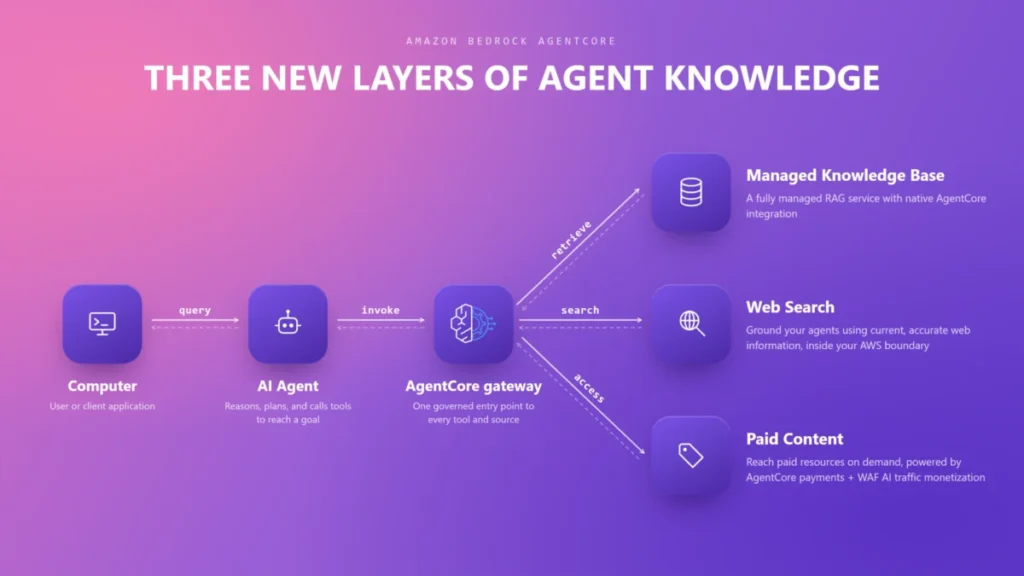
AWS is significantly broadening the capabilities of Bedrock AgentCore, its platform for building AI agents. The new features address three critical bottlenecks in AI adoption:
- Knowledge Integration: Agents can now ingest and synthesize data from diverse sources, including internal organizational silos, real-time web data, and paid third-party knowledge bases.
- Production Observability: AWS is introducing advanced telemetry tools that allow development teams to "look under the hood" of an agent’s decision-making process. When an agent fails or deviates from expected output, these tools provide a diagnostic path to identify precisely where the reasoning logic broke down.
- Scalable Governance: As companies move from one or two agents to hundreds, the security burden grows exponentially. The new controls provide a centralized framework to enforce guardrails, ensuring that agents adhere to compliance standards even as their autonomy increases.
The Rise of Amazon Quick
Perhaps the most consumer-facing announcement was the debut of autonomous agents within the Amazon Quick ecosystem. Designed to function in the background, these agents are configured with specific expertise, tone of voice, and granular tool access.
For instance, a "Finance Agent" can now be tasked with the end-to-end processing of purchase orders, while a "Sales Agent" monitors CRM platforms, email threads, and Slack channels. These agents do not merely report data; they proactively draft follow-ups, flag high-risk accounts, and recommend strategic next steps based on historical performance.
Chronology: A Week of Rapid Innovation
The announcements made at the NYC Summit are part of a broader, accelerated release cycle for AWS.
- June 16, 2026: Initial architectural updates for Bedrock AgentCore are leaked to enterprise partners, focusing on the "knowledge layers" that allow agents to access deep organizational data.
- June 17, 2026: The AWS Summit Keynote officially unveils the "Agentic AI" vision. Swami Sivasubramanian demonstrates the Amazon Quick AI Assistant, showcasing its ability to synthesize multiple communication channels into a unified activity feed.
- June 18, 2026: AWS expands its documentation and developer resources, providing whitepapers on how to govern autonomous agents at scale, following a surge in interest from Fortune 500 CIOs attending the conference.
- Ongoing: AWS continues to roll out additional feature sets, with a focus on integrating these agents into the wider AWS ecosystem, including Lambda and EventBridge.
Supporting Data: The Productivity Imperative
The push toward autonomous agents is driven by cold, hard metrics regarding enterprise inefficiency. AWS data presented during the summit suggests that the average knowledge worker loses approximately 15 to 20 hours per week on context switching and manual data aggregation.
The new "activity feed" introduced in Amazon Quick is a direct response to this "context switching tax." By consolidating email, messaging platforms, and project management tasks into a single prioritized interface, the AI learns user preferences in real-time. It recognizes which threads are high-priority, which tasks are routinely skipped, and which topics are driving the business cycle for that specific role.
Preliminary internal testing by AWS suggests that users of the Amazon Quick AI Assistant could recover up to 10 hours per week by offloading low-level scheduling, summary, and drafting tasks to the agent.
Official Responses and Strategic Direction
The keynote by Swami Sivasubramanian emphasized that we are moving out of the "experimental phase" of generative AI.
"We aren’t just building better models anymore," Sivasubramanian noted during the presentation. "We are building the architecture of the modern workforce. The goal is to provide developers with the tools to build agents that are as capable as an experienced human employee—agents that understand your business, know your tools, and can be trusted to act within defined boundaries."

Industry analysts have noted that this move aligns with AWS’s broader strategy to keep developers within the Amazon ecosystem. By providing native, highly secure, and deeply integrated agentic tools, AWS is making it increasingly difficult for enterprises to justify the overhead of piecing together disparate open-source AI solutions.
Implications: The Future of Enterprise Workflows
The introduction of these tools carries profound implications for the structure of the modern corporation.
1. The Democratization of "Chiefs of Staff"
Every employee is effectively gaining access to a "Chief of Staff." By offloading administrative and monitoring duties to an agent, workers are theoretically freed to focus on higher-order creative and strategic thinking. However, this creates a new requirement: human oversight. Employees must now transition from being "doers" to "managers of AI agents."
2. A New Paradigm for Security and Compliance
As agents gain the ability to read emails and process financial orders, the surface area for security threats expands. AWS’s focus on "controls that scale" suggests they are aware of this. Future IT departments will need to shift their focus from protecting data at rest to protecting data in motion—specifically, the interactions between agents and their environments.
3. The End of the "One-Size-Fits-All" Model
The most significant takeaway from the NYC Summit is the shift toward specialization. We are moving away from the era of a single, omnipotent chatbot. Instead, AWS is encouraging the creation of a "fleet" of specialized agents—Finance Agents, Sales Agents, Technical Support Agents—that communicate with one another to execute a unified business objective.
4. Continuous Learning and Evolution
Perhaps the most overlooked but vital feature is the "continuous learning" component mentioned in the Bedrock AgentCore documentation. Agents are no longer static scripts. They are expected to improve as they gain more experience with organizational data, requiring a shift in how companies approach software maintenance. IT teams will no longer just "patch" software; they will "mentor" agents, refining their knowledge bases to ensure they remain aligned with business goals.
Conclusion: Preparing for the Agentic Wave
The announcements from the AWS Summit in New York City represent a fundamental shift in how the cloud will be utilized over the next decade. AWS is no longer just providing the infrastructure for storage and compute; they are providing the infrastructure for intent.
As these tools become generally available, the competition will shift toward who can build the most reliable, context-aware, and secure agents. For enterprises, the path forward is clear: the integration of autonomous agents into the daily workflow is no longer an optional innovation—it is the new baseline for operational efficiency.
As we look toward the remainder of 2026, the question for business leaders is no longer "How can we use AI?" but rather "How many autonomous agents can we effectively govern, and how much of our operational logic can we entrust to them?" With its latest suite of updates, AWS has provided the tools to answer those questions, setting the stage for a period of rapid, agent-driven transformation.