The Reverse Logistics Revolution: Navigating the Complex Landscape of E-commerce Returns in Europe
The modern e-commerce journey is no longer a linear path from "add to cart" to delivery. In the competitive European market, the transaction lifecycle has evolved into a circular process where the return of goods has become as critical as the initial sale. For merchants, returns are no longer just a logistical nuisance; they are a defining element of brand equity, financial stability, and environmental accountability. As return rates across the continent continue to climb, businesses are facing an urgent mandate to optimize their reverse logistics strategies to balance consumer expectations with operational profitability.
1. The Current State of European E-commerce Returns
The Evolution of the "Return Culture"
In the early days of online shopping, returns were a rare occurrence, often associated with damaged goods or shipping errors. Today, the "return culture"—fueled by free shipping policies and the rise of "bracketing" (buying multiple sizes or colors with the intent of returning the majority)—has fundamentally shifted the landscape.
In Europe, returns have become an integral component of the consumer experience. The convenience of returning an item has become a decisive factor for shoppers when choosing a retailer. However, this convenience comes at a steep price for businesses. The European market, characterized by its diverse regulatory frameworks and high consumer expectations, represents a complex environment where one-size-fits-all strategies rarely succeed.
Statistical Reality: A Continental Snapshot
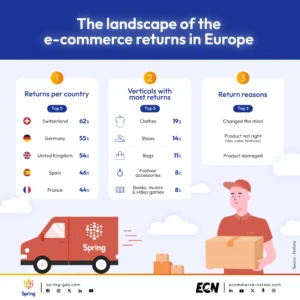
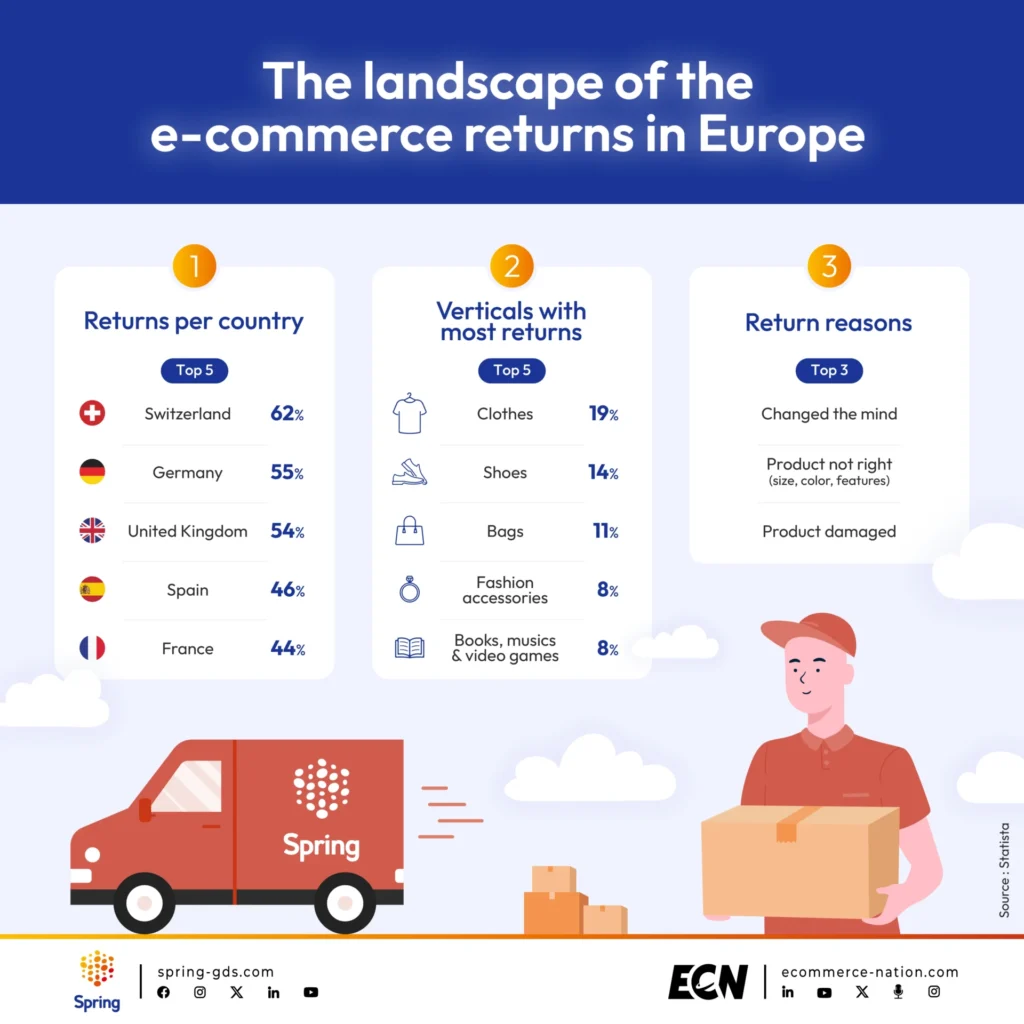
Data from 2023 indicates that the average return rate in Europe sits between 30% and 40%. Yet, these figures mask significant regional disparities. Switzerland leads the continent with a staggering 62% return rate per online buyer, followed closely by Germany (55%) and the United Kingdom (54%).
These statistics are not merely digits on a balance sheet; they represent a significant drain on profitability. When a product is returned, the retailer incurs costs related to reverse shipping, labor for inspecting and repackaging, and the potential devaluation of the item if it cannot be sold as new. As margins tighten, many retailers are reconsidering the feasibility of the "free returns" model that previously defined the market, shifting instead toward hybrid models that balance cost recovery with customer retention.
2. Chronology of the Return Crisis
The escalation of return volumes in Europe can be traced through three distinct phases:
- The Growth Phase (2010–2018): During this period, retailers used "no-questions-asked" return policies as a competitive weapon to gain market share. This created a generation of consumers who viewed the return process as an extension of the fitting room.
- The Acceleration Phase (2019–2021): The global pandemic catalyzed a massive surge in online retail. With physical stores closed, consumers shifted to online-only shopping, leading to a spike in return rates as shoppers struggled to gauge fit and quality without in-person interaction.
- The Optimization Phase (2022–Present): Facing economic headwinds, rising logistics costs, and increased pressure to reduce carbon footprints, retailers have entered a phase of aggressive optimization. This includes implementing return fees, using AI-driven analytics to identify "serial returners," and refining product descriptions to minimize "expectation-reality" gaps.
3. Supporting Data: The Sectors Under Pressure
Not all e-commerce categories are created equal when it comes to returns. The fashion and apparel industry remains the primary driver of high return rates. Because apparel is highly subjective and relies on individual fit, consumers often treat the home as an extension of the dressing room.
- Fashion and Apparel: With return rates often exceeding 40% in some segments, this sector faces the highest pressure to innovate in sizing technology and virtual try-on tools.
- Electronics and Household Goods: These sectors see lower absolute volumes compared to fashion (averaging roughly 6-10%), but the impact is often higher due to the fragility of the goods, the complexity of technical troubleshooting, and the high cost of re-certifying returned items for resale.
Common drivers for these returns remain consistent across categories:
- "Bracketing": Purchasing multiple items with the intent to keep only one.
- Product Mismatch: The item received does not match the online description or imagery.
- Sizing/Fit Issues: A perpetual challenge for apparel retailers.
- Damage in Transit: Often a result of inadequate secondary packaging.
4. Official Perspectives and Regulatory Challenges
Managing cross-border returns in the European Union presents a unique set of challenges. While the EU provides a harmonized legal framework for consumer rights, individual member states retain nuances in implementation, especially concerning the "Right of Withdrawal."

The Regulatory Hurdle
Companies operating across borders must navigate a complex tapestry of national laws. For instance, while EU directives ensure a minimum 14-day cooling-off period, local expectations often dictate that brands provide longer, more flexible windows to remain competitive. Furthermore, the logistical complexity of cross-border returns involves navigating customs regulations for non-EU countries (such as the UK post-Brexit), which requires sophisticated documentation and, often, local return hubs.
The Financial and Environmental Stance
Regulatory bodies are increasingly focusing on the environmental impact of returns. The "Circular Economy" initiative in the EU is putting pressure on retailers to justify the disposal of returned goods. There is a growing consensus that the "take-make-dispose" model is no longer sustainable, and retailers are being pushed to adopt policies that prioritize the refurbishment and resale of returned items over destruction.
5. Strategic Implications for E-commerce Merchants
To thrive in this environment, retailers must move from a reactive to a proactive stance. The goal is to optimize the return process to protect both the bottom line and the customer relationship.
Leveraging Technology for Efficiency
The integration of automated return management systems (RMS) is now a baseline requirement. These platforms allow merchants to:
- Automate Authorization: Reducing the administrative burden on customer service teams.
- Real-time Tracking: Providing visibility into the reverse logistics chain, which is essential for inventory management and cash flow forecasting.
- Predictive Analytics: Identifying patterns in returns—such as a specific batch of products with high defect rates—allowing retailers to take corrective action before more returns occur.
The Human-Centric Approach
While automation is vital, the "human" aspect of the return process cannot be ignored. A rigid, opaque return policy is a primary driver of customer churn. Retailers should focus on:
- Transparency: Clearly stating return costs, timelines, and requirements before the purchase is finalized.
- Local Solutions: Establishing local return centers or utilizing network-based collection points to reduce the physical distance a package must travel, thereby cutting both costs and carbon emissions.
- Feedback Loops: Treating every return as a data point. Why did the customer return the item? Was the sizing chart inaccurate? Was the quality sub-par? This data is the most valuable asset a merchant has to improve their product offering.
Building an Ecological Strategy
Sustainability is no longer a niche marketing trend; it is a business imperative. Retailers can improve their ecological footprint by:
- Batch Shipping: Consolidating returns to minimize transport frequency.
- Eco-Packaging: Utilizing durable, reusable packaging that customers can use to send items back, reducing waste.
- Secondary Markets: Investing in internal "outlet" platforms or partnering with third-party resellers to ensure returned goods find a second life rather than ending up in a landfill.
Conclusion: The Path Forward
The European e-commerce market is at a crossroads. The era of unchecked, free-for-all returns is drawing to a close, replaced by a more disciplined and strategic approach. For the modern merchant, the challenge lies in viewing returns not as a failure of the sale, but as a critical part of the customer journey.
By embracing technological innovation, maintaining transparent communication with the consumer, and aligning operations with the principles of the circular economy, businesses can mitigate the financial and logistical burden of returns. In doing so, they transform a potential liability into a competitive advantage, building the trust and loyalty necessary to flourish in the complex, ever-evolving landscape of European digital commerce.