Beyond the Steering Column: The Evolution and Safety Paradigm of Steer-by-Wire Technology
By Zee Media Bureau
Updated: July 24, 2026, 05:24 PM IST
For over a century, the steering wheel in your vehicle has been the ultimate tactile link between driver and road. A physical column of steel connected the steering wheel to the rack-and-pinion assembly, ensuring that every twitch of your hands resulted in a direct mechanical displacement of the front wheels. However, as the automotive industry accelerates toward an era of autonomous driving, electrification, and software-defined vehicles, that physical connection is vanishing.
Enter "steer-by-wire" (SbW) technology—a radical departure from traditional automotive engineering that replaces the mechanical steering shaft with electrical impulses and high-speed actuators. As this technology moves from luxury niche segments to the mass market, it brings with it a complex web of engineering challenges, safety certifications, and a fundamental shift in how we define the driving experience.
The Mechanics of Disconnection: How Steer-by-Wire Functions
At its core, steer-by-wire is a sophisticated communication loop. When a driver turns the steering wheel in an SbW-equipped vehicle, the system does not physically pull a rack. Instead, a series of sensors measures the steering angle, velocity, and torque applied by the driver. This data is transmitted instantly to a central electronic control unit (ECU).
The ECU processes this information, factoring in current vehicle speed, road surface conditions, and stability control inputs. It then sends an electrical signal to an actuator located at the steering rack, which uses a high-precision electric motor to turn the wheels. Simultaneously, a "force feedback" actuator in the steering column provides the driver with a simulated resistance, replicating the "feel" of the road—a critical component for maintaining driver confidence and situational awareness.
This digital intermediary creates a world of possibilities: variable steering ratios that change based on speed, the ability to eliminate unwanted road vibrations, and the seamless integration of lane-keeping assist and autonomous maneuvering systems.
Chronology: The Journey from Concept to Reality
The transition from mechanical steering to electronic signals did not happen overnight. It has been a decades-long evolution:
- The Early Experiments (1990s–2000s): Automotive engineers began exploring "drive-by-wire" concepts in the late 90s, inspired by the fly-by-wire systems utilized in commercial aviation. While aerospace had successfully moved to digital controls, the automotive world remained skeptical due to the lack of redundancy and the extreme cost of high-reliability electronics.
- The Luxury Pioneer (2014): Infiniti made headlines by introducing the first production-ready steer-by-wire system in the Q50 sedan. While it still retained a mechanical backup shaft that would engage if the electronics failed, it was a landmark moment in proving that the technology was viable for road-legal vehicles.
- Regulatory Adaptation (2018–2022): Global regulatory bodies, including the UNECE (United Nations Economic Commission for Europe), began updating safety standards to accommodate steering systems without a continuous mechanical link, paving the way for wider implementation.
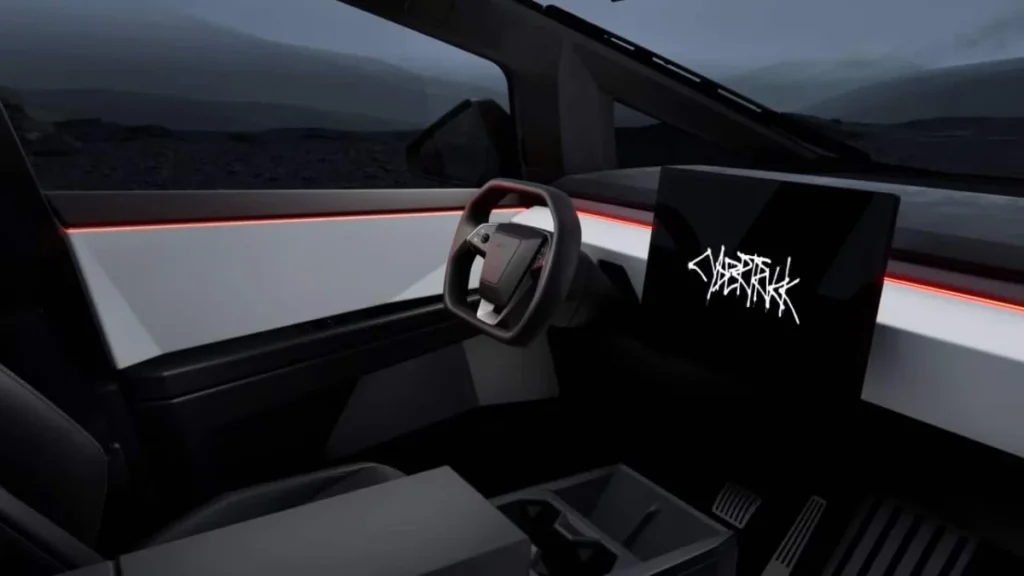
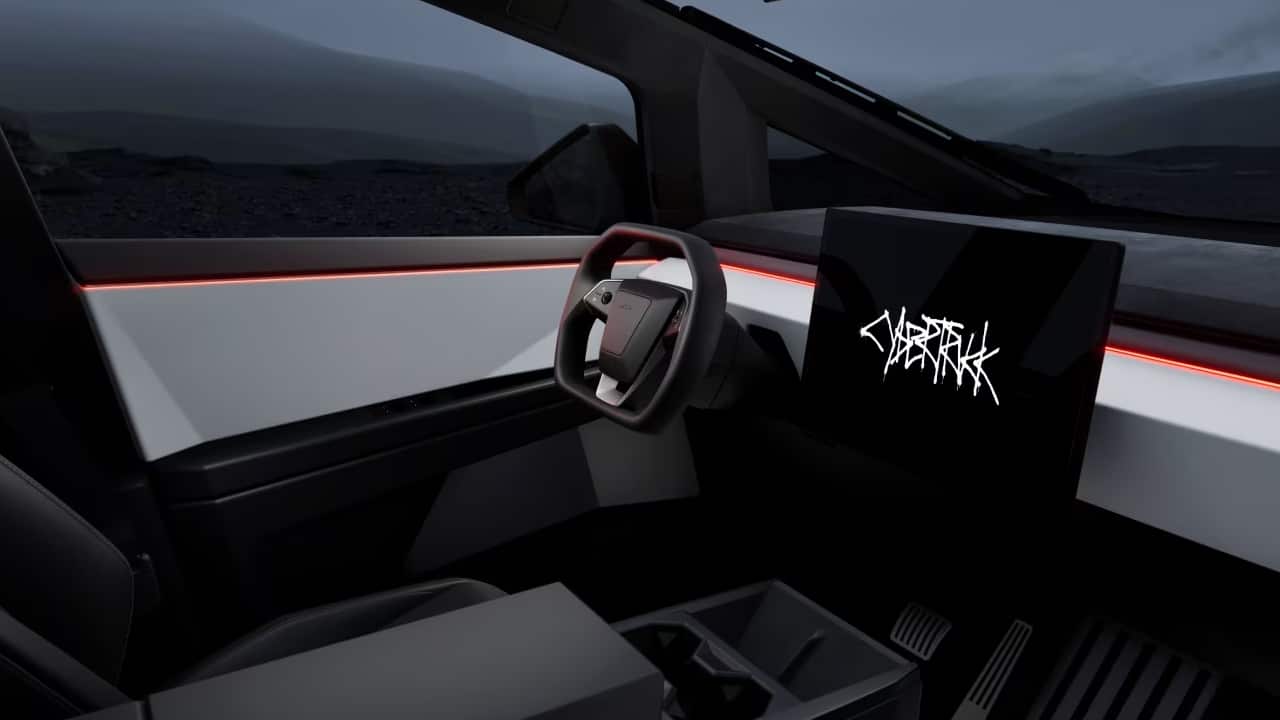
- Mass Adoption and Autonomous Readiness (2023–2026): With the rise of electric vehicle (EV) platforms like Tesla’s Cybertruck and various offerings from Toyota and Lexus, steer-by-wire has transitioned from a niche luxury feature to a strategic pillar for next-generation platforms, particularly those designed for steer-in-wheel-hub and autonomous parking capabilities.
Safety as the North Star: The Rigorous Testing Standards
The most common criticism leveled at steer-by-wire is a fundamental one: What happens when the software crashes?
Because steering is a safety-critical function—one that cannot experience even a millisecond of latency or failure—the system must meet some of the automotive industry’s toughest safety standards. These are governed by ISO 26262, the international standard for functional safety in road vehicles.
Redundancy is Non-Negotiable
To achieve the "Automotive Safety Integrity Level D" (ASIL-D), which is the most stringent classification for safety-critical components, SbW systems utilize massive redundancy. This includes:
- Dual-path power supply: If the primary 12V or 48V battery fails, a secondary, independent power source takes over immediately.
- Triple-redundant sensors: Every input is measured by three separate sensors; if one provides conflicting data, the system performs a "majority vote" to maintain steering integrity.
- Dual-processor architecture: Two independent ECUs run the steering calculations simultaneously. If they disagree, the system enters a fail-safe state.
Manufacturers are also required to perform "Fault Injection Testing," where engineers intentionally simulate hardware failures—such as a short circuit or a sensor blackout—while the vehicle is in motion. The system must be able to switch to an auxiliary channel or a "limp-home" mode without the driver losing control of the vehicle.
Supporting Data: Efficiency and Performance Metrics
The shift to steer-by-wire isn’t just about safety; it’s about efficiency. Research and development data from major automotive suppliers (such as Bosch, ZF, and Nexteer) highlight several performance advantages:
- Weight Reduction: By removing the steering column, which is a heavy, complex assembly, manufacturers can reduce vehicle curb weight by 5 to 10 kilograms, contributing to better range in EVs.
- Variable Ratios: In a traditional car, the steering ratio is fixed. In an SbW car, the steering can be "quick" (few turns lock-to-lock) at low speeds for easier parking, and "slow" (more turns) at highway speeds for greater stability.
- Package Flexibility: Without the column protruding into the cabin, interior designers have newfound freedom. Steering wheels can be made retractable, or moved to different positions to accommodate different driver heights or seating configurations.
Official Responses and Industry Outlook
Automotive manufacturers are overwhelmingly optimistic, viewing steer-by-wire as a prerequisite for the future of transportation. "Steer-by-wire is the gateway to the software-defined vehicle," noted a lead engineer at a major global EV manufacturer. "When we decouple the steering wheel from the wheels, we are no longer building a machine of cogs and gears; we are building a platform that can be updated, optimized, and personalized via software."
However, industry watchdogs remain cautious. Organizations like the Insurance Institute for Highway Safety (IIHS) emphasize that while the technical standards are robust, the long-term reliability of these complex systems in harsh environments—such as extreme cold, high vibration, or high electromagnetic interference—remains a subject of ongoing, real-world observation.
Implications: The Future of the Driving Experience
The implementation of steer-by-wire holds profound implications for the automotive ecosystem:
1. The Autonomous Horizon
For fully autonomous vehicles (Level 4 and 5), the steering wheel is often a hindrance. Steer-by-wire allows for "stowable" steering wheels that can tuck away into the dashboard when the car is driving itself, maximizing cabin space and comfort for passengers.
2. Customization
Future drivers may be able to adjust their steering feel via an app. Want a "Sport" mode that is ultra-responsive? Or a "Comfort" mode that filters out every bump in the road? Steer-by-wire makes this a software adjustment rather than a hardware change.
3. The End of the "Mechanical Feel"
For the automotive enthusiast, the transition represents a cultural shift. The "mechanical connection" that purists cherish is effectively being digitized. Manufacturers are tasked with the difficult challenge of "synthetic feedback"—creating an artificial vibration and weight in the steering wheel that mimics the road surface so that the driver doesn’t feel disconnected from the act of driving.
Conclusion
The move toward steer-by-wire is a testament to the industry’s shift toward high-tech, integrated digital systems. While it eliminates the mechanical link that has defined the automobile for over a century, it replaces it with a layer of safety, flexibility, and intelligence that was once the stuff of science fiction. As long as the rigorous standards of ISO 26262 are met and redundancy remains the cornerstone of design, the steering wheel—and the vehicle itself—is entering its most capable era yet. The road ahead is not just paved; it is programmed.