Internal Strife in Bihar Congress: 29 Leaders Face Disciplinary Action After Delhi Protest
By Political Correspondent
New Delhi/Patna, September 11, 2026
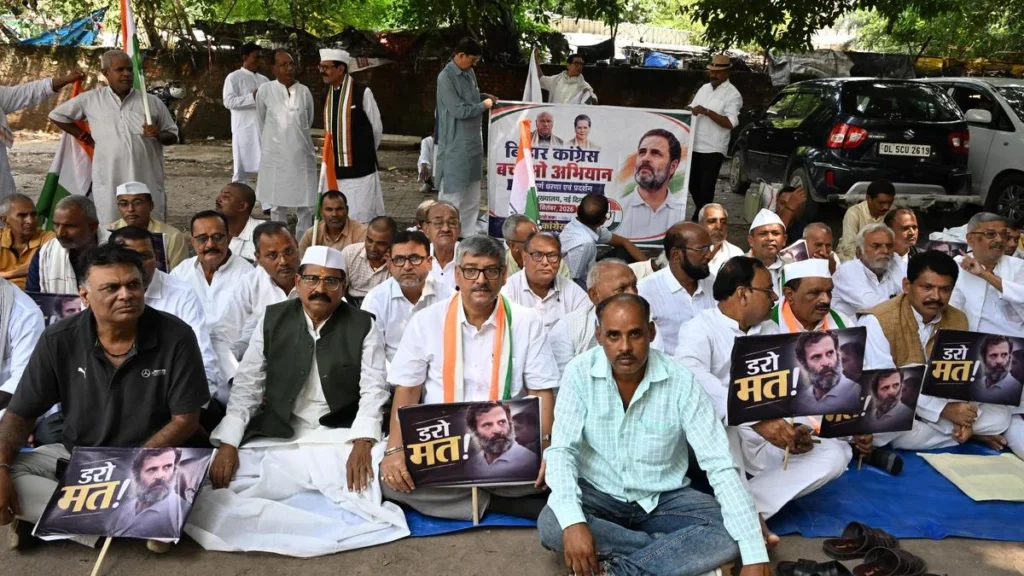
The internal machinery of the Bihar Pradesh Congress Committee (BPCC) has ground to a halt as a fresh wave of disciplinary action threatens to deepen the fissures within the state unit. On Thursday, September 10, the Disciplinary Committee of the BPCC issued formal show-cause notices to 29 party functionaries, citing allegations of "anti-party activities" and "gross indiscipline." This move comes in the wake of a highly publicised protest staged by these members outside the All India Congress Committee (AICC) headquarters in New Delhi on September 8.
The escalation signals a point of no return for a state unit already struggling with electoral relevance and internal cohesion, as the party leadership in Patna and the dissenting voices appear to be on a collision course that could have significant implications for the Grand Alliance’s stability in Bihar.
The Genesis of the Conflict: A Protest at the Doorstep
The tension, which has been simmering for months, culminated on Tuesday, September 8, 2026. A group of senior Congress leaders from Bihar, led by AICC member Anand Madhab, assembled in front of Indira Bhawan—the nerve center of the Congress party in New Delhi. The demonstration was characterized by the participants as a "peaceful sit-in" aimed at drawing the attention of the party’s central high command.
The protesters made their demands explicit: the immediate removal of Bihar unit in-charge Krishna Allavaru and state president Rajesh Kumar. The agitators alleged that the current leadership duo has been instrumental in the party’s "dismal performance" in the state, citing a lack of grassroots coordination, a disconnect with the party’s historical base, and a failure to effectively challenge the political opposition in Bihar.
For the protesters, the AICC headquarters was not a venue for insurrection but a "home" where they sought redress for their grievances. They argued that because their complaints were directed specifically at the state-level leadership, they had no choice but to bypass the local hierarchy and appeal directly to the national leadership.
Chronology of the Crisis
- November 17, 2025: Following a difficult assembly election period, the BPCC disciplinary committee signals a crackdown, issuing show-cause notices to 47 leaders for making statements against the party line and engaging in perceived anti-party activities. This established a precedent for using disciplinary measures to silence dissent.
- September 8, 2026: Bihar Congress leaders, including prominent former MLAs, stage a sit-in at the AICC headquarters in New Delhi, demanding a leadership change in the state unit.
- September 8, 2026 (Evening): Manish Chatrath, an AICC official, engages with the protesters and provides verbal assurances that their grievances will be heard, temporarily defusing the tension on the ground.
- September 10, 2026: In a move that caught many by surprise, the Bihar Pradesh Congress Disciplinary Committee, led by Kapildev Prasad Yadav, issues formal show-cause notices to 29 leaders who participated in the Delhi protest.
- September 11, 2026: The notice period begins, with the 29 leaders given a 72-hour window to submit their written explanations.
The Disciplinary Mandate: A Legalistic Stance
Kapildev Prasad Yadav, the Chairman of the Bihar Pradesh Congress Disciplinary Committee, has adopted a firm, procedural approach. In the formal notice distributed to the 29 leaders, the committee characterized the Delhi protest as a direct violation of party policy and a breach of the directives laid out by the high command.
The document serves as a stern ultimatum: the recipients must explain their actions in writing within 72 hours. The committee has warned that failure to respond, or the provision of a response deemed "unsatisfactory," will empower the committee to move forward with unilateral disciplinary action. This could range from suspension to full expulsion from the party, depending on the severity of the findings.
Among those named in the notices are political veterans and former legislators who have been the bedrock of the party in their respective regions. Notable figures include:
- Anil Singh (Former MLA)
- Poonam Devi (Former MLA)
- Vidhushekhar Pandey
- Bharat Bhushan Dubey
- Satyendra Yadav
- Mrityunjay Singh
Perspectives from the Dissidents: "A Contract to Finish the Party"
Anand Madhab, who has emerged as the voice of the dissenting faction, has hit back with fierce rhetoric. He views the show-cause notices as an act of intimidation and a gross overreach of authority by the very leaders who are the subject of the protest.

"We went to our own home to present our demands," Madhab remarked during a press interaction. "If our grievance is against Krishna Allavaru and Rajesh Ram, where else would we go? We would naturally go to the High Command."
Madhab suggests that the speed at which the notices were issued—despite assurances from AICC officials that their concerns would be addressed—indicates a desperate attempt to consolidate power. He claims that the leadership is effectively running a "contract to finish the Bihar Congress."
Crucially, Madhab has challenged the constitutional validity of the notices. He asserts that under the party’s internal bylaws, the state-level disciplinary committee lacks the jurisdiction to take action against an AICC member. According to him, such authority is vested solely in the National President and the National Disciplinary Committee. By attempting to discipline him and his associates, he argues, the state unit is violating the very party hierarchy they claim to be protecting.
Implications for the Future of Bihar Congress
The current standoff is not merely a bureaucratic dispute; it is a symptom of a broader identity crisis within the Congress party in Bihar.
1. Erosion of Internal Democracy
Critics within the party fear that the reliance on "show-cause notices" as a primary tool for management reflects an authoritarian shift. If the state leadership continues to categorize legitimate dissent as "anti-party activity," it risks alienating a large segment of its veteran cadre who feel unheard.
2. Electoral Vulnerability
With elections always on the horizon, the infighting serves as a major distraction. The public perception of a divided house could prove fatal to the party’s ambitions to regain its former glory in Bihar. Voters in the state have historically favored cohesive political blocks; a fractured Congress may find it difficult to negotiate seat-sharing agreements or maintain the trust of its coalition partners within the Grand Alliance.
3. The "High Command" Dilemma
The burden now rests on the central leadership in New Delhi. By allowing the state unit to pursue these disciplinary actions, the AICC risks alienating the dissenting leaders. Conversely, if the central leadership intervenes to quash the notices, it may be seen as undermining the authority of the Bihar unit, potentially leading to a breakdown in administrative control in the state.
Conclusion: A Critical Crossroads
As the 72-hour deadline approaches, the political atmosphere in Patna remains charged. The 29 leaders find themselves at a crossroads: they must decide whether to offer an apology to preserve their position, or to double down on their demands for a leadership change, potentially risking their careers within the party.
The incident underscores a fundamental tension in modern Indian politics—the balance between party discipline and the right to internal dissent. For the Bihar Pradesh Congress Committee, the coming days will be a test of whether it can manage its internal affairs through dialogue and reconciliation, or whether it will succumb to the politics of exclusion. As of now, the only certainty is that the party’s path to recovery in Bihar has become significantly more complicated.