AWS and Anthropic Redefine Enterprise AI: A Comprehensive Analysis of the Claude Fable 5.1 Launch and Its Ecosystem Implications
Main Facts
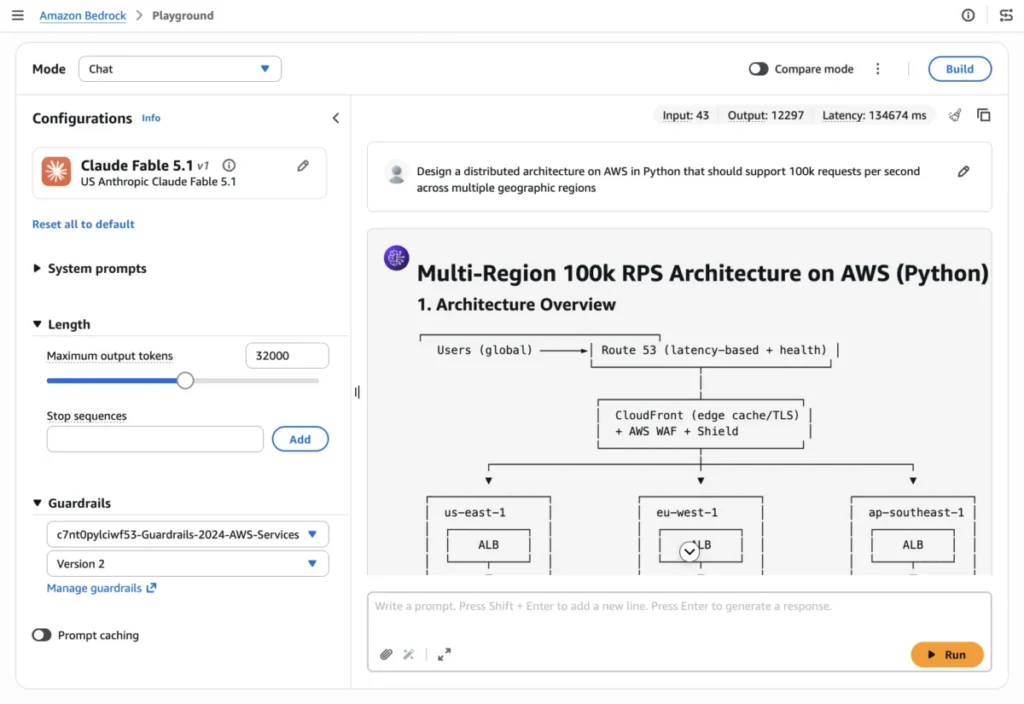
Amazon Web Services (AWS) has officially announced the availability of Claude Fable 5.1 on its cloud infrastructure, marking a significant milestone in the evolution of enterprise-grade artificial intelligence. Developed by Anthropic, Claude Fable 5.1 is engineered specifically to deliver "frontier intelligence" tailored for complex, multi-layered, and long-running tasks. Unlike traditional models optimized for short, transactional prompt-response loops, Fable 5.1 is architected to handle autonomous, high-stakes workloads spanning hours and multiple software applications.
The core facts surrounding the deployment include:
- Target Workloads: The model excels in comprehensive software engineering (managing entire codebases, executing complex code reviews, and running performance optimizations), advanced scientific research, and intricate enterprise workflows.
- Access Channels: Enterprise users can deploy and interact with Claude Fable 5.1 through two primary gateways: Amazon Bedrock and the Claude Platform on AWS.
- Governance and Data Classification: Anthropic has designated Fable 5.1 as a "Covered Model." This classification subjects the system to stringent data retention, safety oversight, and specialized access protocols.
- Security and Data Handling: To address enterprise compliance, AWS introduced the
aws_reviewdata retention mode. Under this configuration, prompts and outputs are retained for up to 30 days exclusively for human safety reviews conducted by Amazon personnel within strict AWS security boundaries. This supersedes legacy sharing methods; notably, Amazon Bedrock does not share proprietary customer data with external model providers. - Enterprise Frontier Safeguards (EFS): Developed jointly by AWS and Anthropic, EFS enables qualifying organizations to leverage advanced Covered Models while maintaining rigorous control over their proprietary cloud environments.
Chronology of Events and Deployment
The rollout of Claude Fable 5.1 represents the culmination of a deeply integrated partnership between AWS and Anthropic, tracing a clear timeline of capability expansion in the generative AI market:
- Foundational Partnerships and Bedrock Integration: Over the past several years, AWS established Amazon Bedrock as a premier managed service for foundational models, giving enterprises secure access to Anthropic’s Claude family. This created the underlying infrastructure necessary to scale complex models safely within enterprise security perimeters.
- The Push Toward Long-Running Agents: As enterprise adoption matured, limitations in short-context, reactive models became apparent. Organizations demanded models capable of autonomous problem-solving over extended durations. Anthropic responded by developing architectures capable of holding complex state and reasoning across vast project structures.
- Pre-Launch Security Architecture Development: Recognizing the heightened risks associated with advanced frontier models capable of deep autonomous execution, AWS and Anthropic collaborated on specialized governance frameworks. This phase yielded the
aws_reviewretention mode and Enterprise Frontier Safeguards (EFS) to guarantee regulatory alignment before public release. - General Availability Announcement: In early June, Claude Fable 5.1 officially launched on AWS. The model immediately became available through Amazon Bedrock and the Claude Platform on AWS, supported by detailed model cards and documentation to assist developer onboarding.
- Ongoing Ecosystem Integration: Following the initial deployment, AWS integrated the model into its broader weekly communications and builder networks, encouraging developers to experiment with autonomous codebases and multi-application workflows at scale.
Supporting Data and Technical Architecture
To understand the practical impact of Claude Fable 5.1, it is essential to examine the technical mechanisms governing its operation within the AWS ecosystem.
Data Retention and Compliance Parameters (aws_review Mode)
Enterprise adoption of frontier models hinges on data privacy. The integration of Fable 5.1 introduces a refined data governance paradigm:
- Retention Window: Up to 30 days for designated safety reviews.
- Review Boundary: Human evaluations are performed strictly by authorized Amazon personnel within defined cloud security perimeters, preventing external data leakage.
- Legacy vs. Current Modes: The legacy
provider_data_shareconfiguration has been phased out for these models. Under current protocols via Amazon Bedrock, proprietary data inputs and outputs are isolated; they are never shared with Anthropic for foundational model training or external analytics.
Access Vectors
Developers and enterprise architects can provision Claude Fable 5.1 through two distinct pathways:
- Amazon Bedrock: Provides fully managed API access, allowing seamless integration with existing AWS services such as AWS Lambda, Amazon S3, and Amazon CloudWatch, backed by enterprise-grade security and VPC endpoints.
- Claude Platform on AWS: Offers specialized tooling and environments tailored specifically for teams deeply embedded in the Claude ecosystem while leveraging the reliability of AWS infrastructure.
Official Responses and Stakeholder Perspectives
The partnership between AWS and Anthropic continues to attract intense industry attention, with leadership from both organizations emphasizing the transformative nature of this release.
- Anthropic’s Perspective: Anthropic positions Claude Fable 5.1 as a generational leap in autonomous enterprise utility. According to official disclosures, the model was explicitly built to shoulder the burden of "ambitious tasks." By allowing AI to own substantial portions of a software project—rather than merely generating isolated snippets of code—Anthropic aims to fundamentally change how engineering teams approach development pipelines.
- AWS Leadership and Engineering: AWS has highlighted the importance of balancing raw capability with uncompromising security. Through the implementation of Enterprise Frontier Safeguards (EFS) and the
aws_reviewmode, AWS aims to alleviate chief information security officers’ (CISOs) anxieties regarding frontier model deployment. By keeping data within customer-controlled cloud environments, AWS reassures regulated industries—such as finance, healthcare, and government—that advanced AI does not require compromising data sovereignty. - The Builder Community: Early reception from the AWS Builder Center and developer communities indicates strong enthusiasm for long-running agentic workflows. Engineers have noted that the ability to delegate multi-file code reviews, refactoring tasks, and system performance evaluations to a single model session drastically reduces context switching and accelerates delivery cycles.
Implications for the Enterprise AI Landscape
The arrival of Claude Fable 5.1 on AWS carries profound implications for software engineering, enterprise workflows, and the broader cloud computing market.

1. Shift Toward Autonomous Agentic Workflows
For years, generative AI in the enterprise functioned primarily as an advanced autocomplete or conversational assistant. Users provided a prompt, received an answer, and manually integrated the output into their workflows. Claude Fable 5.1 accelerates the transition toward agentic AI—systems capable of sustained, multi-step execution. By owning a software project across an entire codebase for hours at a time, the model bridges the gap between static code generation and dynamic software engineering assistance.
2. Redefining Enterprise Security and Governance
As models become more autonomous and capable of handling sensitive operational data, standard privacy policies are no longer sufficient. The introduction of the aws_review data retention mode and Enterprise Frontier Safeguards establishes a new benchmark for how cloud providers and model developers must cooperate. This framework proves that frontier intelligence can be deployed safely without exposing corporate intellectual property to external third parties.
3. Intensified Cloud-AI Competition
The deep integration of Anthropic’s flagship models into Amazon Bedrock reinforces AWS’s competitive posture in the generative AI market. By offering exclusive governance structures, streamlined compliance options, and dual access pathways, AWS provides a compelling argument for enterprise organizations seeking a unified platform to build, scale, and govern next-generation artificial intelligence applications.
As developers begin testing Claude Fable 5.1 across complex enterprise environments, the coming months will likely reveal new paradigms in automated software development, scientific discovery, and operational efficiency. Organizations looking to leverage these capabilities can access comprehensive documentation via the Amazon Bedrock model cards and participate in upcoming AWS events, developer community days, and re:Invent sessions to stay at the forefront of this technological shift.