Beyond the Grind: Rethinking Pipeline Growth in the Age of "Doing More with Less"
In the contemporary marketing landscape, the mandate to "do more with less" has become an all-too-familiar mantra. As organizations face the dual pressures of tightening budgets and ballooning pipeline targets, many marketing departments find themselves trapped in a cycle of diminishing returns. The prevailing industry assumption—that increased output in the form of more webinars, more whitepapers, and more social posts will inevitably yield more revenue—is being challenged by industry leaders who argue that the problem is not a lack of effort, but a fundamental misalignment of strategy.
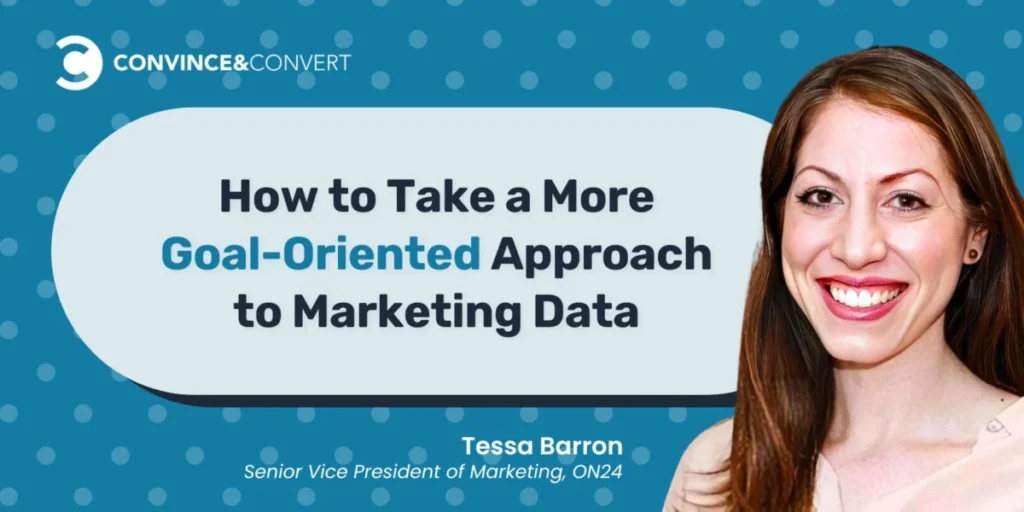
Tessa Barron, former Senior Vice President of Marketing at ON24 and a guest on the Data-Driven Decisions podcast, suggests that the solution lies in a radical shift: moving away from "tactic-oriented" marketing toward a "goal-oriented" framework. By prioritizing high-intent data signals over vanity metrics, marketers can transform their function from a lead-generation machine into a strategic engine that accelerates pipeline conversion.
The Strategy Gap: Why Old Tactics Are Failing
The post-pandemic market has irrevocably altered buyer behavior. Yet, a significant number of marketing teams continue to deploy the same playbooks they relied upon three or four years ago. This inertia is the primary culprit behind the "do more with less" crisis.
"We as marketers have to check in with ourselves," Barron notes. "If we are executing in the same way we were years ago, we cannot reasonably expect that doing more of the same will yield better results."
The trap, according to Barron, is starting with the tactic. When a team decides, "We need to run four webinars in Q1," they have already constrained their strategic thinking. The tactic has become the objective. A goal-oriented approach, by contrast, begins with a business outcome: "In Q1, we need to achieve a 10% uplift in pipeline target." By defining the destination first, the marketing team gains the agility to choose the tactics that are most likely to drive that specific outcome, rather than defaulting to the standard content production line.
Decoding the Data: From Noise to Signals
In an era of "big data," marketers are rarely starved for information. However, the abundance of data often results in "noise"—a collection of metrics that look impressive on a dashboard but provide little actionable insight into the buyer’s journey. Barron advocates for a shift in vocabulary, proposing that marketers focus exclusively on "signals."
A signal, in this context, is any piece of behavioral data that indicates a prospect’s increased likelihood to convert. Once these signals are identified, the marketer’s job shifts from "creating content" to "setting traps." These "traps" are strategic touchpoints—interactive elements within a digital experience—designed to extract high-value information from the prospect.
Real-World Applications of Signal-Based Marketing
The effectiveness of this strategy is best illustrated through its application. Barron highlights two distinct case studies:
- The Technology Sector: A firm looking to reclaim market share identified that prospects using a specific cloud provider were 10 times more likely to convert into a sales opportunity. Instead of blasting generic content, the team used a targeted webinar to ask one critical question: "What cloud provider are you currently using?" This allowed the team to immediately segment high-intent leads for the sales team.
- The Pharmaceutical Sector: A company aiming to reach physicians with specific patient needs hosted a webinar on recent medical breakthroughs. By asking, "How would you rate the risk profile of your patient base?" they were able to identify doctors managing "high-risk" populations. These individuals were prioritized for immediate, high-touch follow-up, as their response signaled an urgent need for the firm’s therapies.
Bridging the Chasm: Sales and Marketing Alignment
One of the most persistent issues in B2B organizations is the disconnect between the department that fills the top of the funnel and the team responsible for closing it. Barron argues that the most effective way to optimize the pipeline is to involve sales in the strategy phase of marketing.
"Marketers often ask questions that assess the quality of their own content," Barron observes. "But that doesn’t necessarily tell you if the lead is ready to buy."
To drive conversion, marketing teams must look beyond their own metrics and sit down with sales professionals. What questions does a sales representative ask to qualify a lead? What are the primary hesitations a prospect voices during a discovery call? By mining these interactions for intelligence, marketers can refine their messaging to address objections before a salesperson even picks up the phone.
The ultimate goal of marketing, according to this framework, is not necessarily to "create" the pipeline, but to deliver the most qualified, informed, and "warmed-up" prospects to the front lines. The salesperson remains the primary architect of the pipeline, but the marketer acts as the architect of the environment that makes the sale possible.
The Micro-Optimization Framework
Pipeline growth is rarely the result of a single, massive initiative. Instead, it is the cumulative effect of small, calculated improvements. Barron suggests that marketers focus on the "in-between" steps—the often-overlooked gaps where potential customers drop off.
This involves a rigorous audit of the customer journey:
- Form Friction: Are your lead forms too long? Do they ask for information that isn’t strictly necessary for the initial stage of engagement?
- Messaging Relevance: Is the content being delivered at the right time? Is the tone consistent with the specific stage of the buyer’s journey?
- Interactive Opportunities: Does the digital experience invite further engagement, or is it a dead-end?
By tightening these gaps, marketers can "turn the dials" on their existing efforts to achieve better conversion rates without necessarily increasing their budget or headcount.
Implications for Stakeholder Communication
The final hurdle in this shift is internal communication. When stakeholders—who may not be deeply involved in the day-to-day operations of marketing—ask about the efficacy of a campaign, they are often presented with complex, noisy data that obscures the truth.
Barron emphasizes that presenting data to leadership should be an exercise in clarity. Stakeholders do not need to see every metric; they need to see the correlation between a specific strategy, the budget allocated to it, and the resulting impact on the pipeline. By stripping away irrelevant data and focusing on the metrics that define success, marketing leaders can build the internal trust necessary to pivot their teams toward more intentional, goal-oriented strategies.
Conclusion: The Future of Intentional Marketing
The "do more with less" dilemma is a byproduct of a tactic-first mentality. When marketers decouple themselves from the pressure to produce high-volume content and instead commit to high-signal engagement, they regain control over their results.
The path forward requires a culture of curiosity and collaboration. It demands that marketers stop being creators of "noise" and start being engineers of "signal." By aligning closely with sales, focusing on the microscopic gaps in the conversion funnel, and presenting clear, goal-linked data to stakeholders, marketing departments can finally break the cycle of exhaustion and move toward a more sustainable, high-performance future.
As the industry continues to evolve, the most successful teams will not be those that worked the hardest, but those that were the most deliberate in their actions. As Barron reminds us, success is not found in doing more—it is found in doing what matters.