Accelerating the AI Revolution: AWS Unveils the Next Generation of Amazon OpenSearch Serverless
In a significant leap forward for developers and enterprises building generative AI applications, Amazon Web Services (AWS) has announced the general availability of the next generation of Amazon OpenSearch Serverless. This fully managed search and vector engine has been re-engineered from the ground up to provide the agility, speed, and cost-efficiency required to support the rapidly evolving landscape of AI agents and complex search-driven workflows.
By introducing capabilities like scale-to-zero, significantly reduced provisioning times, and seamless integrations with modern AI development platforms, AWS is signaling a shift toward a more fluid, "build-as-you-go" infrastructure model. This launch represents a strategic evolution in how organizations handle the data-heavy backends that power today’s intelligent systems.
Main Facts: A New Paradigm for Vector and Search
The core value proposition of this next-generation offering lies in its ability to decouple infrastructure management from application development. Designed specifically for the high-concurrency needs of AI agents, the platform offers several critical improvements:
- Scale-to-Zero and Auto-Scaling: The platform now scales dynamically from zero to thousands of requests per second. When idle, the system scales back to zero, ensuring users only pay for the compute they actually consume.
- Rapid Deployment: Resources are created in seconds, with a performance profile that scales capacity up to 20 times faster than the previous generation.
- Cost Optimization: By shifting away from the need to provision for peak capacity, organizations can achieve up to 60% in cost savings compared to traditional OpenSearch Service clusters.
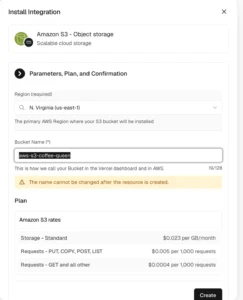
- Developer Ecosystem Integration: Deep native integrations with platforms like Vercel and Kiro ensure that developers can stand up production-ready search and vector backends in minutes.
Chronology: From Concept to General Availability
The path to this launch reflects the accelerated pace of the AI industry. Following the success of the initial Amazon OpenSearch Serverless release, AWS engineers identified a critical bottleneck: the friction involved in scaling infrastructure to meet the intermittent, bursty nature of modern AI agent workloads.
- Early 2026: AWS teams began prototyping the "NextGen" architecture, focusing on reducing the overhead of OCU (OpenSearch Compute Unit) management.
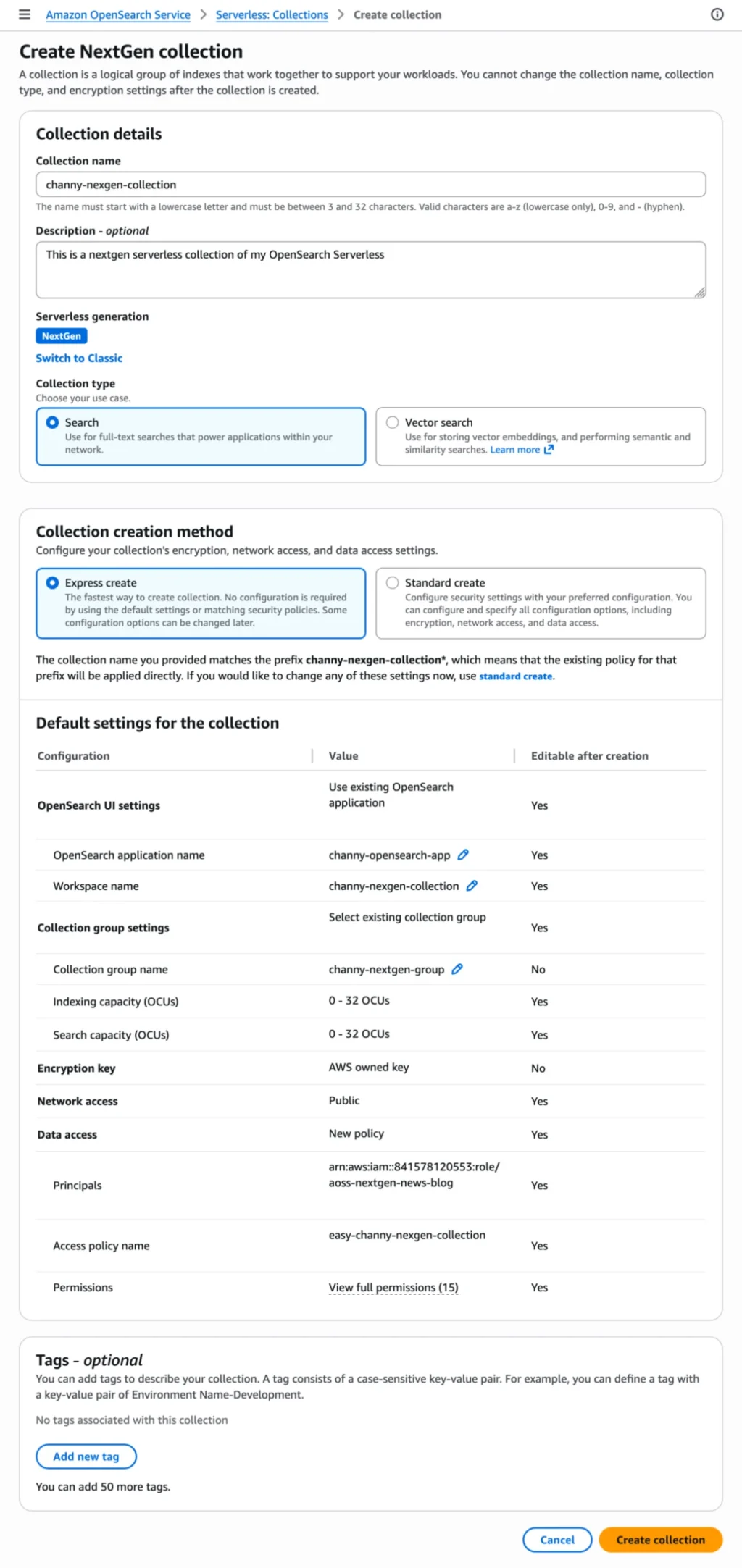
- May 26, 2026: Internal beta testing concluded, validating the "Express Create" workflow, which automates security policies and default configurations.
- May 29, 2026: AWS officially announced the general availability across all commercial Regions, accompanied by a technical update clarifying capacity limits for developers using the AWS CLI.
Supporting Data: Efficiency at Scale
The economic implications of this release are substantial. In traditional provisioned environments, administrators often over-provision to handle potential traffic spikes, leading to significant "waste" during off-peak hours.
The OCU Advantage
The next generation of OpenSearch Serverless operates on a granular billing model centered on OpenSearch Compute Units (OCUs). Users are billed for:
- Compute Usage: OCU consumption for indexing, searching, and GPU-accelerated vector operations.
- Storage: Charged separately at a rate of GB-per-month.
By removing the "minimum floor" of provisioned capacity, the 60% cost efficiency claim becomes a reality for startups and enterprises alike. During stress tests, the system demonstrated the ability to spin up new collections with virtually no latency, allowing for a "Just-in-Time" infrastructure model that aligns perfectly with the event-driven nature of AI agent execution.
Official Perspectives: The Developer Experience
Channy Yun, a leading voice within the AWS developer advocate community, underscored that this release is not merely an infrastructure upgrade, but an "agent-enablement tool."

The integration with OpenSearch Agent Skills is particularly noteworthy. By providing a repository of domain-specific logic, best practices, and multi-step execution flows, AWS is enabling developers to bypass the "reinventing the wheel" phase. The agent does not just retrieve a document; it understands the context of the workflow, thanks to the intelligence embedded directly into the search backend.
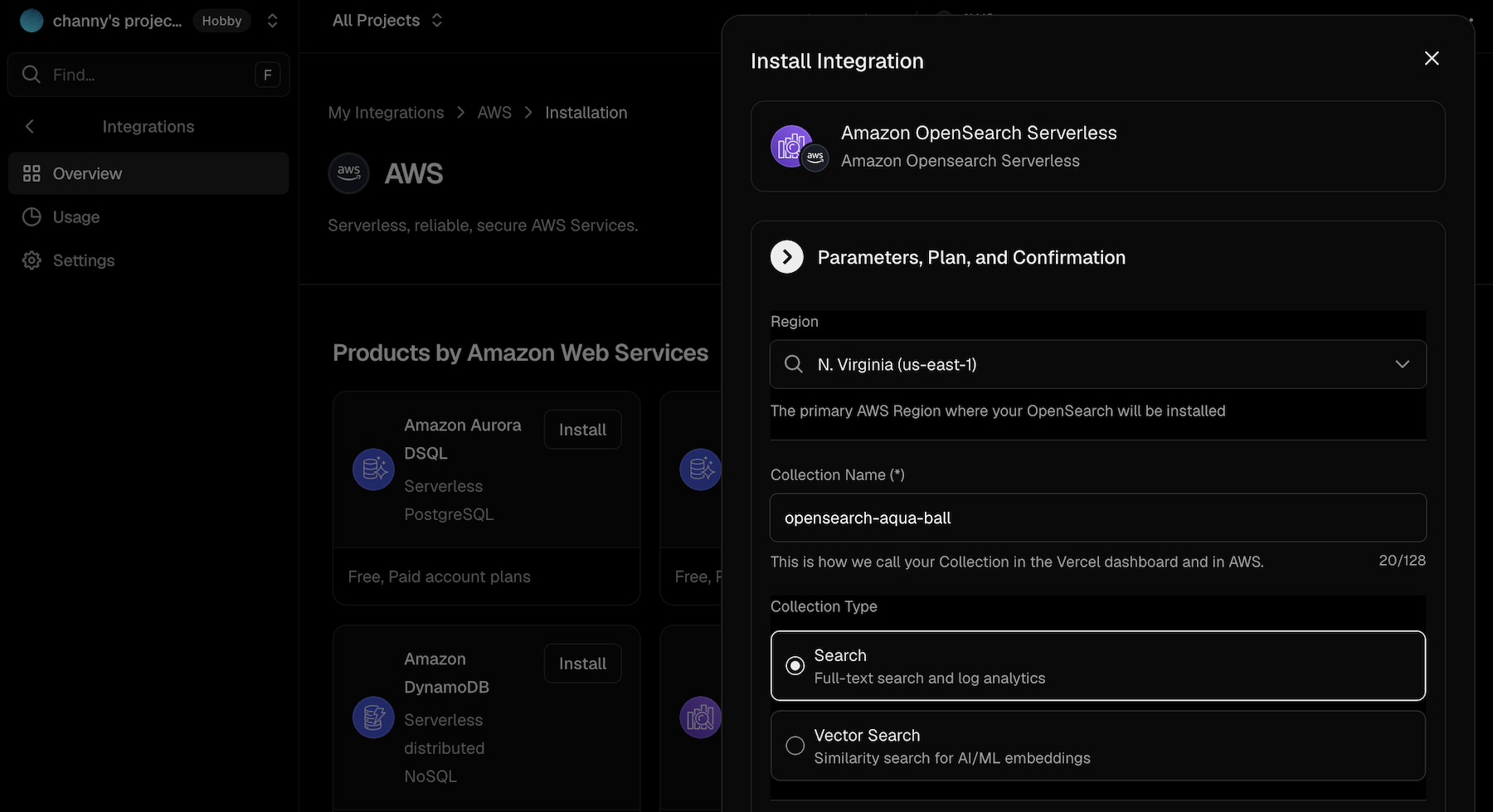
Furthermore, the integration with Kiro Powers and Vercel provides a guided path for architects. Through the Vercel console, developers can connect to an existing collection or spin up a new one, effectively turning a complex backend deployment into a simple UI-driven configuration task.
Implications: The Future of AI Agents
The release of this next-generation service carries profound implications for the software development lifecycle.
1. The Death of Infrastructure "Wait Time"
For years, the "Time-to-Hello-World" for search-heavy applications was hampered by the time required to provision and warm up clusters. By reducing this to seconds, AWS has removed a major barrier to innovation. Developers can now experiment with complex RAG (Retrieval-Augmented Generation) pipelines without the fear of massive upfront costs or long lead times.
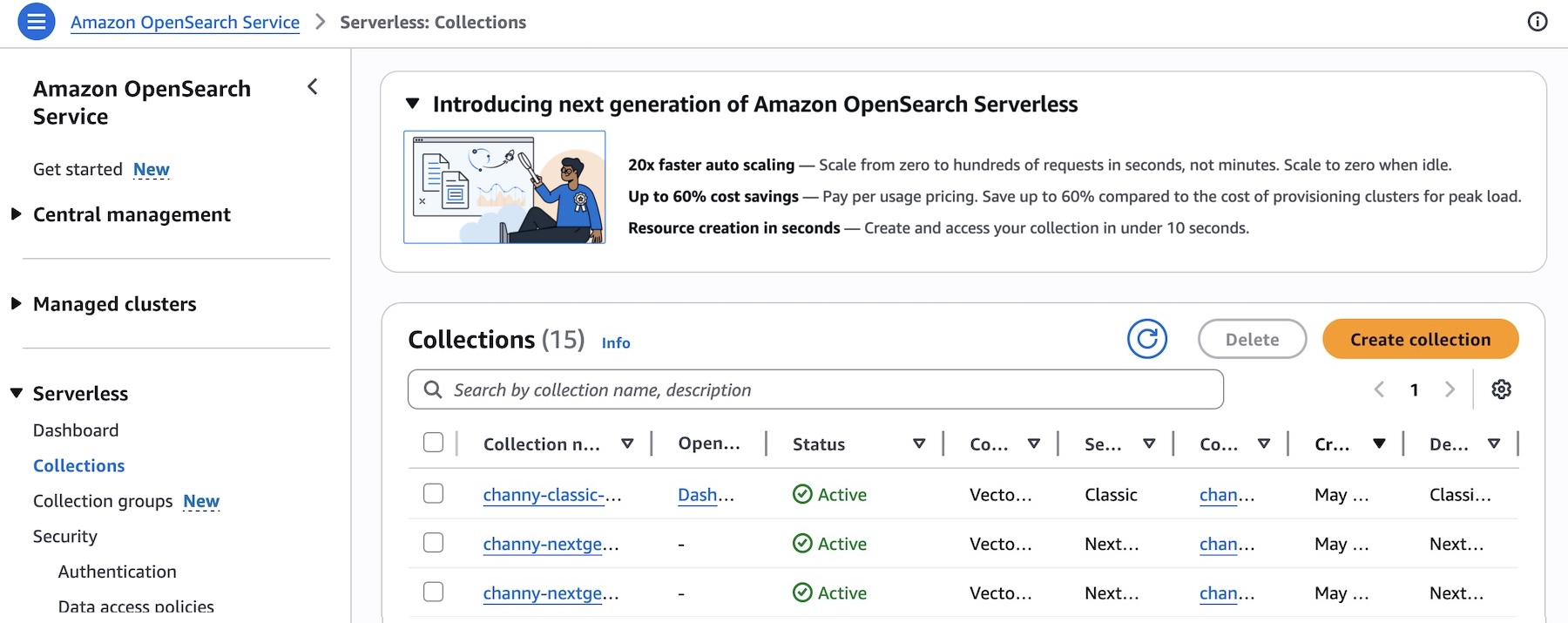
2. Democratizing Advanced Search
By offering "Express Create" functionality—where default security policies and configurations are applied automatically—AWS is effectively democratizing enterprise-grade search. Small teams can now deploy the same level of vector search performance that was previously accessible only to large engineering organizations with dedicated SRE teams.
3. The "Agentic" Shift
We are moving from a world of "static" search (users querying a database) to "agentic" search (autonomous systems querying and reasoning over data). This new generation of OpenSearch Serverless acts as the "memory" for these agents. With native support for GPU-accelerated vector indexes, the platform is optimized for the semantic search tasks that underpin modern LLM interactions.
Technical Implementation: A How-To Guide
For developers ready to migrate or build anew, the process is streamlined via both the AWS Console and the CLI.
Using the CLI
To create a collection group, developers can use the following command structure:
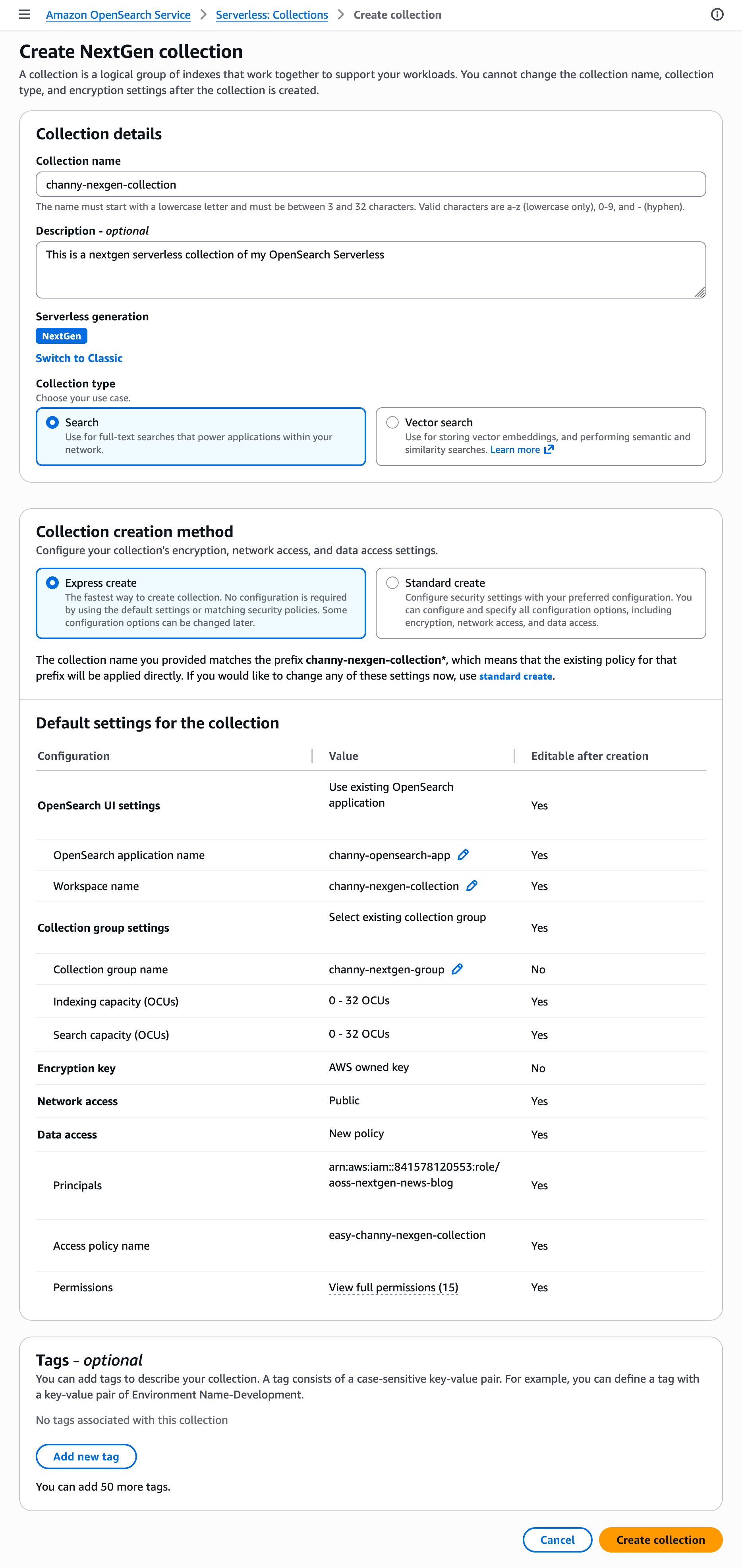
aws opensearchserverless create-collection-group
    --name my-nextgen-group
    --standby-replicas ENABLED
    --generation NEXTGEN
    --capacity-limits '
        "maxIndexingCapacityInOCU": 96,
        "maxSearchCapacityInOCU": 96,
        "minIndexingCapacityInOCU": 0,
        "minSearchCapacityInOCU": 0
    '
    --region "us-east-1"
This flexibility allows for fine-grained control over resource limits while maintaining the serverless, auto-scaling benefits.
The "Switch to Classic" Option
AWS has been careful to provide backward compatibility. For existing applications that rely on specific configurations of the previous generation, the "Switch to Classic" toggle ensures that teams can continue their operations without interruption, while new projects can leverage the NextGen architecture.
Conclusion: A New Standard
The unveiling of the next generation of Amazon OpenSearch Serverless is a clear indicator of where the industry is heading: toward a future where infrastructure is invisible, instantaneous, and intelligent.
By prioritizing developer velocity and cost-efficiency, AWS is positioning itself as the primary infrastructure provider for the next wave of AI-native applications. As agents become more prevalent, the ability to manage vast amounts of vector data with zero-touch infrastructure will be the defining factor for success. For developers, the message is clear: the backend is no longer the bottleneck—the only limit is the scope of your imagination.
For those looking to get started, the AWS documentation and the OpenSearch Project repository on GitHub offer comprehensive resources, including the aforementioned Agent Skills, which are highly recommended for anyone looking to bridge the gap between simple search and sophisticated AI reasoning.