Beyond the Click: Rethinking Digital Marketing Strategy in an Age of Attribution Bias
In the modern digital landscape, marketing budgets are overwhelmingly funneled into a "holy trinity" of platforms: Google Ads, LinkedIn campaigns, and Facebook retargeting. These channels have become the industry standard, not necessarily because they are the most effective at building brand affinity, but because they offer the most convenient, quantifiable metrics. They provide a clear, linear path—an investment is made, a click is tracked, and an ROI is calculated.
However, a growing chorus of industry leaders is questioning whether this reliance on "easy-to-measure" platforms is creating a dangerous blind spot. By chasing the low-hanging fruit of attribution, are marketers missing the forest for the trees?
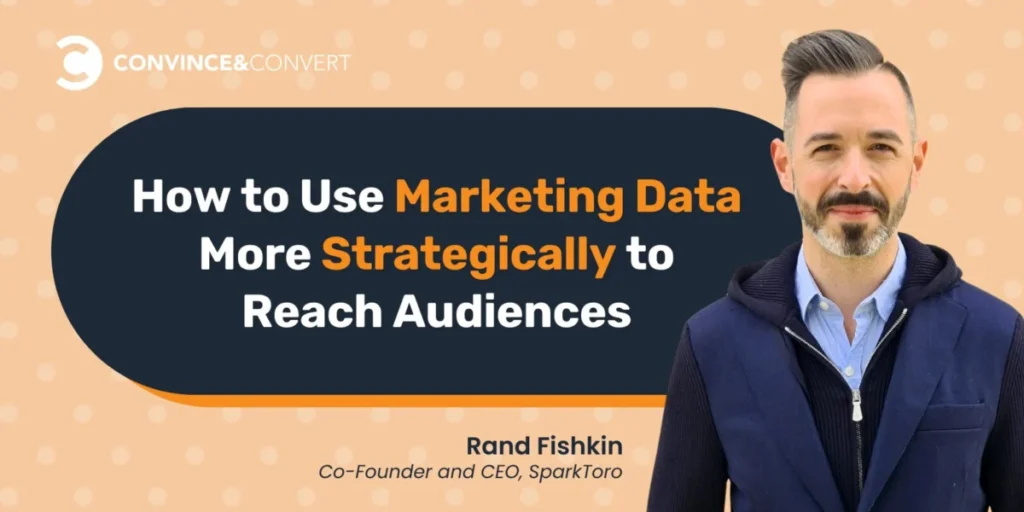
Rand Fishkin, co-founder of SparkToro and a veteran of the digital marketing space, argues that the industry’s obsession with direct attribution is fundamentally flawed. In a recent appearance on the Data-Driven Decisions podcast, hosted by Zontee Hou, Fishkin challenged the status quo, suggesting that the most effective marketing often happens in the "untracked" spaces where audiences actually live, learn, and solve problems.
The Myth of the Attribution "Safe Bet"
The current marketing paradigm heavily favors platforms that provide granular data. If a customer clicks a Google Ad and converts, the credit goes to Google. But as Fishkin points out, this is often a misunderstanding of the customer journey.
"A ton of what happens in Google is actually a response to something else," Fishkin explains. "People who performed a search query in Google, very rarely was that a spontaneous first-touch thing. It was like, ‘Oh, I heard about this software, so I went to Google and searched for it and clicked on it.’ And of course, the attribution looks like Google drove all the value. No, Google was just the middleman."
This phenomenon, often referred to as "attribution bias," leads marketers to double down on channels that act as the final touchpoint rather than the discovery point. By focusing exclusively on the "bottom of the funnel," companies ignore the broader customer experience. They optimize for the click, but they fail to build the trust that leads to the search in the first place.
Challenging the Status Quo: A Chronology of Strategy Shift
The shift toward audience-centric marketing isn’t a rejection of data—it is a re-evaluation of what data matters. For years, the marketing lifecycle has followed a rigid path:
- The Campaign Launch: Broad targeting on Meta or Google.
- The Data Harvest: Collecting impressions, clicks, and conversions.
- The Optimization: Shifting budget to the highest-performing ad sets.
Fishkin proposes an alternative, more nuanced chronology:
- Audience Discovery: Using research tools to identify niche communities, podcasts, and influencers where the target audience currently spends time.
- Value-First Engagement: Creating content that delivers value directly on those platforms (Zero-Click Marketing).
- Brand Recognition: Building trust and familiarity so that when a need arises, the brand is top-of-mind.
- Organic Conversion: Customers seek out the brand, not because of a banner ad, but because they already recognize and value the entity.
Real-World Applications: Audience-Driven Success
The efficacy of this strategy is best illustrated by organizations that have pivoted away from traditional paid-first models.
The Podcaster’s Growth Strategy
A podcaster looking to increase sponsorship revenue faced a common hurdle: how to attract high-value sponsors without an astronomical audience size. Rather than spending money on social ads to drive downloads, they used audience research to identify the specific influencers and content creators their target audience followed. By inviting those influencers as guests, the podcaster effectively "borrowed" credibility and reach. This organic influx of listeners provided the exact demographic data sponsors were looking for, leading to a sustainable, revenue-generating growth loop.
The Technology Event Organizer
Similarly, a technology event organizer shifted their speaker selection process. Instead of picking speakers based on fame, they used data to find niche influencers who held deep sway over specific, highly-engaged communities. By aligning the speaker lineup with the interests of these communities, the organizer attracted sponsors who wanted to reach that specific audience, proving that the most valuable marketing is often found at the intersection of community interest and strategic placement.
The Rise of "Zero-Click" Marketing
One of the most radical departures from traditional strategy is the concept of "Zero-Click" marketing, a term popularized by Amanda Natividad, VP of Marketing at SparkToro.
In a digital world saturated with interruptions, asking a user to click a link to read a blog post or sign up for a newsletter is a significant friction point. Zero-click marketing operates on a different premise: deliver the value within the platform itself.
A prime example is the company Chartr, which utilized the subreddit r/dataisbeautiful. Rather than flooding the community with branded links or aggressive calls-to-action, they simply shared high-quality, relevant data visualizations. They provided utility to the community. By engaging in this way, they built an aura of expertise and brand recognition that far outweighed the value of a traditional, paid-click campaign. The strategy is simple: be helpful, be present, and stop trying to drag the audience away from their preferred environment.
The Limitations of Data: A Balanced Perspective
While Fishkin advocates for data-driven decisions, he is quick to warn against the "data-blind" trap. Data, he argues, is a tool, not a roadmap.
"I’m not saying don’t be data-informed, but I think it pays to be responsible in your recognition of what problems data can solve and what it can’t solve," Fishkin notes.
Data excels at showing "what" happened—it can track clicks, site visits, and purchase history. However, it is notoriously poor at explaining "why" someone chose a product or what a non-user truly desires. If a marketing team relies solely on in-app behavioral data, they risk creating a "survivorship bias," where they only optimize for the habits of people who are already using their platform, while completely ignoring the needs of the much larger population they have yet to reach.
To bridge this gap, businesses must supplement their quantitative data with qualitative insights—interviews, surveys, and deep-dives into community sentiment. These human-centric insights provide the context that spreadsheets lack.
Implications for the Future of Marketing
The implications for CMOs and marketing managers are profound. If the goal is to build long-term brand equity rather than just short-term traffic, the focus must shift from "tracking" to "understanding."
1. Reallocation of Resources
Marketing leaders should examine their top 10% of ad spend. If that spend is going toward platforms where the incremental gain is minimal, that capital should be redirected into content, influencer relationships, or community building. This is not about cutting costs; it is about moving money from "renting" attention to "earning" it.
2. Redefining Success Metrics
Organizations must evolve their reporting. Metrics like "Brand Recall," "Community Sentiment," and "Influencer Engagement" should hold as much weight as "Click-Through Rate." While these are harder to measure, they are often the true drivers of sustainable business growth.
3. Embracing the Middleman
Google and Meta will continue to be vital parts of the ecosystem, but they should be viewed as part of a larger strategy rather than the end-all-be-all. When a brand focuses on being where its audience lives, the search query in Google becomes the result of a successful brand-building exercise, not the source of it.
Conclusion: The Path Forward
The future of marketing is not found in a better algorithm or a more granular tracking pixel. It is found in the willingness to step outside the comfort zone of traditional, high-attribution platforms and engage with audiences in the places where they actually spend their time.
As Zontee Hou highlights in her book, Data-Driven Personalization, true marketing success is about creating relevant, human-centered experiences. By using data to inform our intuition—rather than replacing it—marketers can break through the noise, build authentic trust, and create a brand that survives in a crowded, competitive market.
For those ready to move beyond the click, the opportunity is significant: the "underinvested" channels are precisely where the most meaningful connections are waiting to be made. It is time for brands to stop chasing the middleman and start building a direct, value-driven relationship with their audience.