As the artificial intelligence landscape matures, the conversation among professionals has shifted dramatically. No longer is the primary objective simply experimenting with standalone chatbots or crafting clever single-use prompts. Instead, the focus has pivoted toward deep integration, process automation, and autonomous task execution.
Major tech platforms are overhauling their architectures—most notably through the sunsetting of legacy custom chatbots in favor of fluid "Skills," while simultaneously expanding voice-activated and agentic capabilities. For business owners and marketers, keeping pace requires moving past basic interactions and adopting a structured approach to building reliable, automated AI workflows.
Main Facts: The New Era of AI Skills and Autonomous Workflows
The paradigm of human-AI interaction is undergoing a structural transformation. For years, users relied on standalone custom environments like ChatGPT’s Custom GPTs or Gemini’s Gems. While effective, these tools required users to navigate away from main chat interfaces, creating friction in daily productivity.
The introduction of Claude Skills changed expectations by allowing users to invoke specialized capabilities mid-conversation simply by typing a slash command. Industry developments indicate that both OpenAI and Google are following suit, phasing out traditional custom GPTs and Gems in favor of this more integrated "Skill" framework.
Simultaneously, the definition of "using AI" is evolving. According to AI automation experts, casual prompting is being replaced by the training of dedicated "AI employees"—reusable systems backed by centralized company knowledge bases that can execute multi-step workflows on autopilot. Concurrently, tech giants are releasing powerhouse updates: Google is upgrading Gemini Live into an agentic voice assistant, introducing advanced video-understanding models that slash token costs, and rolling out collaborative image tools within Workspace. Meanwhile, Meta is expanding monetization with tiered AI subscriptions.
Chronology: How the AI Ecosystem Reached This Milestone
The rapid acceleration of generative AI tooling has followed a clear trajectory over recent years, culminating in today’s focus on autonomy and integration:
Phase 1: The Standalone Assistant Era: The initial wave of generative AI introduced customizable chat interfaces (such as Custom GPTs and Gems), allowing users to upload specific instructions and reference files to build isolated helper bots.
Phase 2: Conversational Friction Reduction: Platforms realized that forcing users to switch contexts to access custom bots limited their utility. The introduction of inline commands (such as slash commands for Skills) brought specialized instructions directly into active dialogue streams.
Phase 3: The Rise of Agentic Workflows: AI models graduated from text generators to proactive agents capable of handling multi-step tasks across external applications, culminating in modern voice assistants and agentic vision models.
Phase 4: Ecosystem Standardization and Monetization: Major providers began phasing out fragmented assistant formats in favor of unified skill architectures, while introducing enterprise-grade subscriptions and advanced developer tools for video, transcription, and image generation.
Supporting Data: Efficiency Gains and Infrastructure Metrics
As AI shifts from a novelty to core business infrastructure, performance metrics highlight why these structural updates matter:
Token Optimization in Video Analysis: Google’s new agentic video-understanding approach (integrated across Gemini 3.7 Flash, 3.6 Flash, and 3.5 Flash-Lite) allows models to selectively inspect crucial video moments rather than processing data at a fixed rate. This architecture reduces token usage by up to 88% and cuts operational costs by up to 66%, while simultaneously boosting analytical accuracy by 7%.
Enterprise Adoption Gaps: While industry surveys show that a vast majority of businesses claim to use AI daily, automation experts note that fewer than 5% have built repeatable, scheduled AI systems that function as independent operational units.
Multilingual and Format Support: New transcription tools like Gemini 3.5 Transcribe natively adapt to specialized vocabulary and clean up filler words across more than 85 languages, bridging the gap between raw speech-to-text and human-level comprehension.
Official Responses and Strategic Guidance
Industry leaders and educators are actively guiding professionals through these rapid transitions.
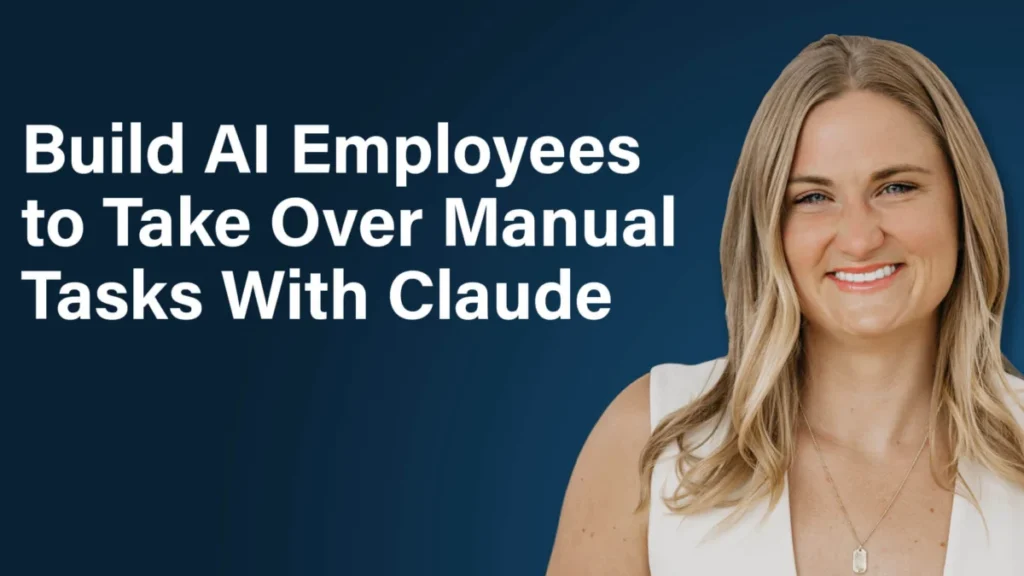
Callan Faulkner, founder of The Uncommon Business and creator of the Automate to Accelerate program, has trained more than 20,000 businesses on closing the gap between casual chatting and deploying trained AI employees. According to Faulkner, the key bottleneck is a lack of structured foundational data:
"Your AI can only work with what it knows. A centralized, organized repository of your pricing, processes, brand voice, and past wins is now a prerequisite for getting real results from AI. A messy Google Drive is no longer something you can get away with."
On the product development side, Google’s engineering and product teams have emphasized the transition from passive data processing to active agentic execution. Regarding the expansion of Gemini Live and agentic video tools, Google representatives noted that the goal is to shift users from merely "talking about tasks to delegating them," empowering AI to coordinate workflows seamlessly across productivity suites without constant human intervention.
Implications: What This Means for Professionals and Businesses
The deprecation of legacy custom GPTs and Gems means that digital creators, marketers, and business owners must audit their existing AI assets. Transitioning these legacy assistants into modern Skills is no longer optional if teams want to maintain operational efficiency.
Actionable Steps for Transitioning to Skills
Extract Legacy Assets: Gather all instructions, knowledge bases, and reference files from your existing custom GPTs or Gems.
Initialize the Skill Creation Area: Open the native Skills creation interface within your preferred AI platform.
Feed and Format: Upload your reference documents, clearly outline the primary objective, and paste in your legacy instructions. Prompt the AI to reformat the package into a properly structured, production-ready Skill.
Test and Iterate: Run diagnostic tests within active conversations, refining the underlying instructions until the Skill consistently delivers outputs that match or exceed human standards.
Building the "Business Brain"
Beyond individual tools, businesses must clean up their internal data structures. Without a centralized "Business Brain"—a clean, well-organized repository of brand guidelines, standard operating procedures, and pricing models—AI agents cannot be effectively trained to act as autonomous employees.
As tech giants roll out agentic voice assistants, advanced multi-modal models, and workspace-integrated creation suites, organizations that master the pipeline from prompt to skill to automated task execution will secure a massive competitive advantage. The future belongs not to those who merely chat with AI, but to those who successfully train, schedule, and delegate work to autonomous digital employees.