The Digital Frontier: Essential Marketing Trends Shaping the 2024–2025 Landscape
The digital marketing ecosystem is in a state of perpetual metamorphosis. Much like the e-commerce sector it supports, marketing is no longer a static discipline defined by fixed annual budgets and traditional media buys. Instead, it is a dynamic, data-driven entity that evolves daily, spurred by the innovative strategies of global industry leaders and the relentless pace of technological advancement.
In recent years, the gravitational center of marketing has shifted decisively toward social-centric communication and video-first storytelling. As consumer habits fragment across a dizzying array of platforms, businesses are finding that the cost of entry—in both financial capital and human hours—is rising. To maintain relevance, organizations are being forced to pivot from broad-spectrum outreach to precision-targeted strategies designed to capture the consumer at the exact moment of intent.
As we look toward the horizon, five key trends have emerged as the pillars of modern engagement. This report explores these shifts, their implications for brand growth, and how companies can adapt to thrive in this new digital era.
1. The Imperative of Responsible Artificial Intelligence
Artificial Intelligence (AI) has moved from an experimental tool to the backbone of modern marketing infrastructure. However, the 2024 narrative is not just about automation—it is about "Responsible AI."
The Ethical Framework
Responsible AI refers to the deployment of machine learning and generative tools through a lens of transparency, equity, and accountability. As brands increasingly rely on AI to generate copy, optimize ad spend, and interact with customers, the public and regulatory bodies are demanding clarity. Key principles include:
- Data Sovereignty: Ensuring that the datasets used to train models do not infringe upon user privacy or perpetuate systemic biases.
- Algorithmic Transparency: Providing "explainability" for AI-driven decisions, particularly when those decisions impact pricing, access to services, or content visibility.
- Human-in-the-Loop: Maintaining human oversight in creative processes to ensure brand voice remains authentic and to mitigate the risks of "hallucinations" or brand-damaging outputs.
The implication is clear: the brands that win the trust of the consumer will be those that treat AI as a partner in human-centric service, rather than a black-box replacement for human interaction.

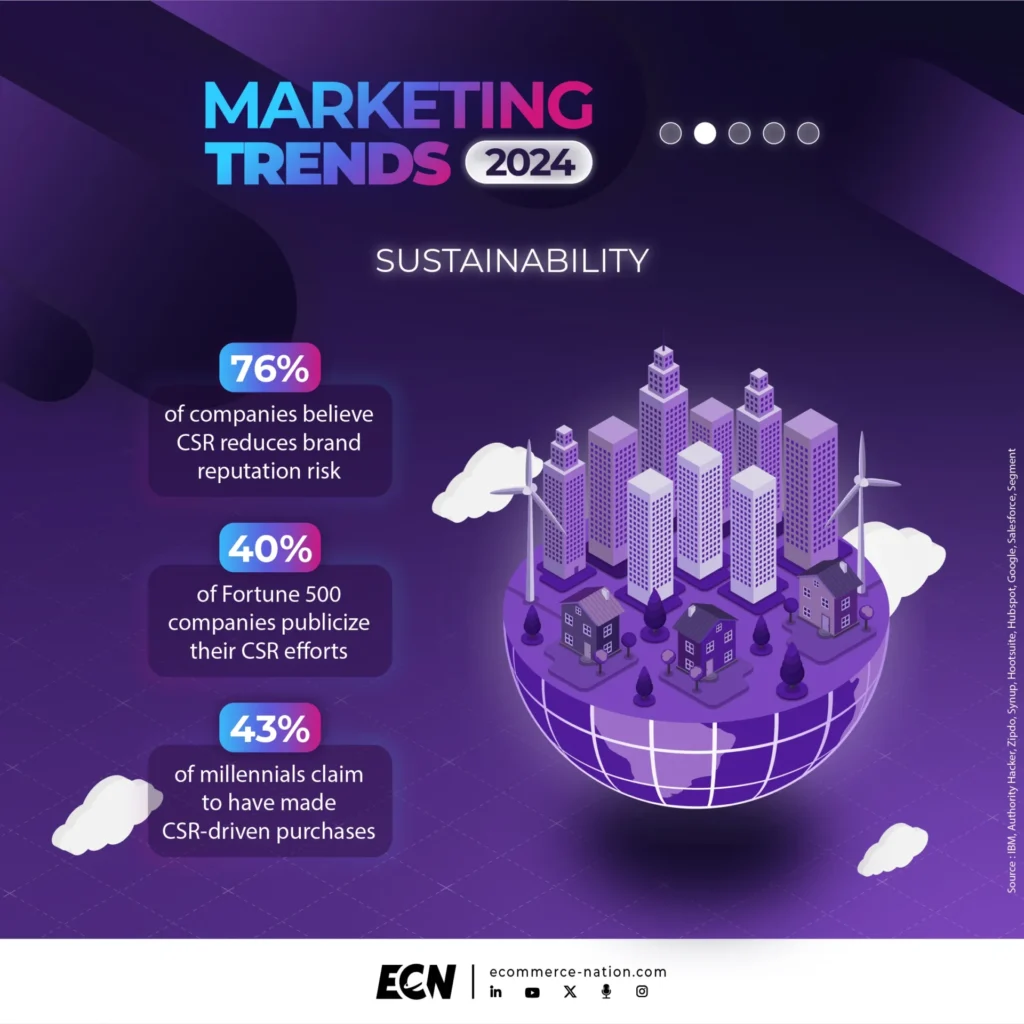
2. Sustainability as a Brand Value Proposition
Sustainability is no longer a "nice-to-have" corporate social responsibility (CSR) initiative; it has become a central component of digital marketing strategy. Modern consumers, particularly Gen Z and Millennials, are increasingly "values-driven," often opting to switch brands or pay premiums for companies that demonstrate tangible environmental commitments.
Communicating Impact
To successfully market sustainability, brands must move beyond vague promises and into verifiable action. This is achieved through:
- Radical Transparency: Utilizing technologies like blockchain to provide an immutable record of a product’s supply chain journey. By allowing consumers to trace the origin of raw materials, brands build a level of trust that traditional marketing cannot replicate.
- Educational Content Cycles: Sustainability provides a wealth of storytelling opportunities. By moving from purely promotional content to educational narratives—such as the lifecycle of a product or the company’s efforts to reduce its carbon footprint—brands cultivate a community of advocates rather than just customers.
- Influencer Synergy: The rise of the "eco-influencer" has changed the game. Partnering with creators whose entire personal brand is built on sustainability allows companies to tap into pre-existing, highly engaged communities that value authenticity over polished, corporate messaging.
3. The Rise of Conversational Search
We have moved past the era of the "keyword-stuffed" search bar. The rise of voice search, powered by increasingly sophisticated AI assistants like Siri, Alexa, and Google Assistant, has fundamentally altered the SEO landscape.

The Shift to Semantic Understanding
Consumers now interact with search engines as if they are talking to a human. Instead of typing "best sneakers running," a user will ask their smart speaker, "What are the best lightweight running shoes for marathon training?"
- Semantic Optimization: To capture this traffic, marketers must pivot to natural language processing (NLP). Content must be structured to answer direct questions—often referred to as "long-tail conversational queries."
- Contextual Relevance: Smart assistants are designed to understand the user’s history and location. Brands that focus on "local SEO" and provide structured, high-quality, and direct answers (often through FAQ pages or schema markup) are far more likely to be featured in the "zero-click" search results or voice-delivered summaries.
4. The Short-Form Video Dominance
The human attention span is shrinking, and the digital landscape has reacted accordingly. Short-form video—typified by TikTok, Instagram Reels, and YouTube Shorts—is the most effective medium for reaching modern audiences.
Capturing the Micro-Moment
The success of short-form content relies on the "first three seconds" rule. If a brand fails to hook the viewer immediately with a compelling visual, an intriguing question, or high-energy editing, the user swipes away.

- Immersive Interactions: Beyond mere entertainment, the frontier of video marketing involves Augmented Reality (AR). By allowing users to virtually "try on" products or interact with 3D models via their smartphones, brands are bridging the gap between digital discovery and physical purchase.
- Conversion via Authenticity: Unlike the high-production commercials of the past, today’s most successful videos are those that feel "native" to the platform. User-Generated Content (UGC), customer testimonials, and "behind-the-scenes" glimpses of product creation are currently outperforming traditional high-budget advertising.
5. Hyper-Personalization: The End of One-Size-Fits-All
The final pillar of modern marketing is the death of the "segment" and the birth of the "individual." Hyper-personalization is the practice of using real-time data and predictive AI to create a unique customer experience for every single user.
Data-Driven Tailoring
Using Machine Learning (ML), brands can now analyze vast datasets—from past purchase behavior and abandoned cart history to browsing dwell-time—to serve dynamic content that evolves with the user.
- Predictive Recommendations: Instead of generic "you might like" lists, brands are using predictive algorithms to suggest products that the user is statistically likely to need at that specific moment, often tied to seasonal or situational triggers.
- Dynamic Landing Pages: The ultimate goal of hyper-personalization is the website that changes its layout, hero image, and CTA based on who is visiting it. By aligning the digital experience with the user’s past history, companies can significantly reduce friction in the conversion funnel, leading to higher retention rates and increased Customer Lifetime Value (CLV).
Chronology of the Digital Shift
To understand where we are, one must observe the trajectory of the last decade:

- 2015–2017: The transition from desktop-first to mobile-first web design.
- 2018–2020: The rise of influencer marketing and the social commerce boom.
- 2021–2022: The pivot toward first-party data in a post-cookie advertising world.
- 2023–Present: The integration of Generative AI and the demand for hyper-personalized, ethical digital experiences.
Implications for Future Strategy
The implications for businesses are clear: the cost of inaction is irrelevance. Marketing in 2024 and beyond requires a hybrid approach. It necessitates the technical infrastructure to support AI and data-driven personalization, combined with the creative agility to produce short-form, human-centric video content.
As we look toward the future, the winners will not necessarily be the brands with the largest budgets, but those that possess the highest degree of "Digital Empathy"—the ability to use technology to understand the consumer’s needs and respond with transparency, sustainability, and genuine value. By aligning these emerging trends, organizations can ensure they are not just reacting to the market, but actively shaping their place within it.