Inside WordCamp US 2026: The Intersection of AI, Publishing Independence, and the Push for Simplicity in Phoenix
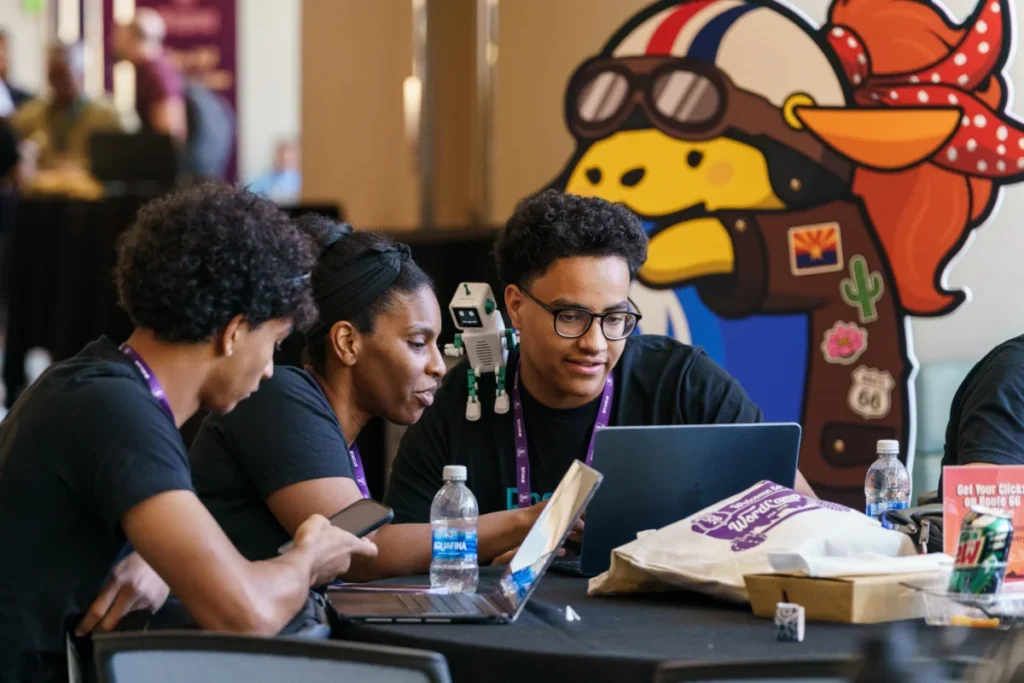
PHOENIX, Arizona — Beneath a punishing desert sun that peaked at 111°F (44°C), the global WordPress community converged on the Phoenix Convention Center for WordCamp US (WCUS) 2026. Over four action-packed days, more than 1,100 registered attendees—with thousands more tuning in via global livestreams—gathered to debate the future of open-source software, grapple with the meteoric rise of artificial intelligence, and celebrate major platform milestones.

From high-stakes migrations of massive publishing operations like The Ankler and Daily Kos to co-founder Matt Mullenweg’s rallying cry for radical software simplicity, WCUS 2026 proved to be a transformative waypoint for the world’s most popular content management system.

Main Facts: A Landmark Event in the Desert
WordCamp US 2026 was structured into four distinct phases: Contributor Day, Showcase Day, and two core conference days featuring upwards of 50 speaker-led sessions across four parallel tracks, alongside hands-on workshops and intensive beginner training.

Despite the intense Arizona heat—which was mitigated for travelers via air-conditioned golf carts ferrying guests between the Sheraton Phoenix Downtown and the venue—the event generated massive momentum for the WordPress project.

Key highlights from the conference included:

- The Launch of WordPress 7.1: Release leads took to the stage to officially press the button on WordPress 7.1, affectionately dubbed "Mary Lou," which immediately garnered hundreds of thousands of downloads worldwide.
- Record-Breaking First-Time Attendees: Organizers noted an unprecedented influx of first-time participants, many of whom discovered the event through AI-driven discovery tools and local community outreach.
- Civic and Municipal Recognition: Phoenix Chief Innovation Officer Michael Hammett presented a mayoral proclamation from Mayor Kate Gallego, officially declaring August 19 as "Phoenix WordPress Day" in recognition of the platform’s immense economic impact on the region’s digital and creative industries.
Chronology: Four Days of Collaboration and Innovation
Day One: Contributor Day (“Real Artists Ship”)
Kicking off under the banner “Real artists ship,” Contributor Day brought together 425 participants—including 29 first-time contributors—divided into 26 hyper-focused teams. Abandoning traditional, sprawling contributor structures, this year’s format emphasized immediate, shippable outcomes within a single day.

Experienced mentors guided newcomers through rapid task execution. By day’s end, teams had closed lingering tickets, shipped pull requests, and performed rigorous accessibility reviews on themes. Notable projects included:

- Building a brand-new Photo Directory importer.
- Creating native description-list blocks for glossaries and product specifications.
- Enhancing email settings, test tools, and recovery/password-reset security protocols.
- Drafting new contribution pathways and courses for Learn WordPress, ensuring accessibility for those unable to attend in person.
Day Two: Showcase Day – The Reality of Scale
Monday shifted the spotlight from code creation to long-term production sustainability. Showcase Day focused on massive, real-world implementations that keep critical digital infrastructure running.

Manny Costa opened the track by exploring civic websites, emphasizing that accessibility, strict governance, and streamlined editor workflows must be treated as essential public services rather than afterthought checkboxes.

Two blockbuster sessions detailed publishers breaking free from third-party platforms to reclaim direct control of their audiences:

- The Ankler: Nicola Catton detailed the publication’s daring migration of 15 newsletters to WordPress, successfully reclaiming sovereign control over subscriber data, complex paywalls, and revenue rules via a custom block theme.
- Daily Kos: Ben Greeley and Allison McHenry walked attendees through the monumental migration of a user-generated powerhouse comprising 1.5 million posts, 88 million comments, and 2.7 million users, backed by a public beta test involving over 500 community members.
Days Three and Four: Core Conference, Keynotes, and the Push for Simplicity
The main conference days tackled the most pressing existential questions facing the web: the integration of artificial intelligence, security, and human judgment.

Keynote speakers like Bo English-Wiczling and Loyal Pyczynski emphasized that AI does not eliminate human labor; it merely shifts it. English-Wiczling stressed that while AI can draft code in seconds, human oversight remains vital for ensuring keyboard navigation, maintaining theme styles, and preventing unsafe dependencies. Pyczynski, drawing on his experience at Disney and Meta, reminded the audience that "success is an iterative endeavor," urging teams to focus on core ownership and intentional design.

The event culminated on Wednesday with a visionary Q&A and presentation featuring WordPress co-founder Matt Mullenweg and Robert Jacobi. Mullenweg challenged the community to re-evaluate the platform’s trajectory, emphasizing a renewed dedication to simplicity over feature bloat.

Supporting Data & Technological Horizons
Behind the human stories and packed session rooms, technical discussions at WCUS 2026 revealed where the core architecture of WordPress is heading.

- WordPress Piplets: Mullenweg introduced an intriguing concept dubbed "Piplets"—a nod to a 2007 idea centering around a single, self-modifying PHP file capable of storing its own data without relying on a database or third-party packages. Capable of holding up to 25 megabytes (roughly four million words) and loading in a blistering 50 milliseconds, Piplets represent an ongoing evolution in lightweight computing, following previous experiments with SQLite and WordPress Playground.
- Profile Identity Simplification: It was announced that w.org profile links are becoming drastically shorter. Redirects like
w.org/@mattare already live, with full global support rolling out days after the conference. - Five for the Future Reform: Mullenweg openly questioned the accuracy of self-reported pledges in the Five for the Future directory—which currently claims two million self-sponsored hours pledged weekly by 150,000 contributors. He advocated moving toward a metrics-driven recognition system based on verifiable impact, such as actual code commits, closed tickets, and organized events.
Official Responses and Perspectives
The dialogue at WCUS 2026 extended far beyond traditional web development, incorporating voices from external tech sectors.

In a standout fireside chat, Amanda Ventura of Waymo joined David Levine to discuss how autonomous vehicle companies build public trust. Ventura highlighted that trust is forged through "repeated work"—actively listening to community feedback, publishing safety data, and iterating on product design. She cited an example where accessibility feedback from blind and low-vision users led Waymo to introduce step-by-step app directions and a distinct musical horn control for easier identification on chaotic city streets.

This philosophy directly mirrored internal WordPress sessions led by Core committer Jonathan Desrosiers and Robert Abela, who emphasized that as AI accelerates the discovery of security vulnerabilities, supply-chain safety and rigorous human code reviews must become core product practices.

Implications for the Future of Open Source
WordCamp US 2026 left attendees with profound questions regarding the trajectory of the open web. As artificial intelligence threatens to flood the internet with machine-translated text and automated code, the WordPress community has doubled down on human judgment, accessibility, and absolute ownership of digital content.

Furthermore, Mullenweg’s pointed critique of open-source tribalism served as a unifying call to action. By inviting leaders from competing open-source projects to speak and encouraging cross-pollination of code, WCUS 2026 signaled that the true strength of open source lies in shared collaboration rather than isolated competition.

Looking Ahead
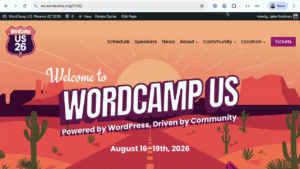
For those who missed the desert heat in Phoenix, session recordings remain fully accessible via us.WordCamp.org/2026/schedule/.

As the global community catches its breath, all eyes now turn toward the upcoming State of the Word, followed by international stops on the 2027 calendar: WordCamp Asia 2027 in Penang, Malaysia, and WordCamp Europe 2027 in Málaga, Spain.

Photo credits: Jaron Quach, Emily Chan, Wini Lao, Kendra Stowe, and Jennifer Swisher.