Early Backer Accel Trims Stake in Logistics Giant BlackBuck in INR 155.5 Cr Open-Market Block Deal
Main Facts
In a strategic move to lock in gains from a resurgent valuation, early-stage venture capital powerhouse Accel has offloaded a significant portion of its shareholding in prominent Indian logistics unicorn BlackBuck. According to recent National Stock Exchange (NSE) bulk and block deal data, Accel—operating through its Mauritius-based affiliate, Accel India IV (Mauritius)—sold 2.7 million (27 lakh) shares of the digital logistics platform via an open-market transaction, raking in approximately INR 155.5 crore.
The transaction saw Accel divest nearly 1.5% of its total equity stake in the company. The shares were disposed of at an average price of INR 576.05 apiece. Notably, this pricing represented an 8.4% discount compared to BlackBuck’s previous closing price on the Bombay Stock Exchange (BSE) ahead of the transaction.
The massive influx of shares into the open market did not take long to find a willing and substantial buyer. Asset management company (AMC) Abakkus Investment Managers swiftly stepped in to lap up the entire block, signaling institutional confidence in the long-term fundamentals of the freight-tech sector. Prior to this divestment, Accel’s affiliate held a robust 7.17% stake in BlackBuck at the close of June 2026. Following this strategic secondary market sale, the venture capital firm’s overall holding in the logistics leader has seen a proportional reduction, even as it retains a meaningful stake to participate in the company’s future growth narrative.
This multi-crore transaction highlights a broader trend within the Indian startup ecosystem: early-stage institutional investors capitalizing on favorable market conditions and a recent rebound in tech stock valuations to secure partial exits and deliver liquidity back to their limited partners (LPs).
Chronology of Events
To understand the context of Accel’s recent block deal, it is essential to trace the historical trajectory of BlackBuck’s evolution and its relationship with its early backers, as well as the immediate timeline leading up to the transaction.
2015: The Inception
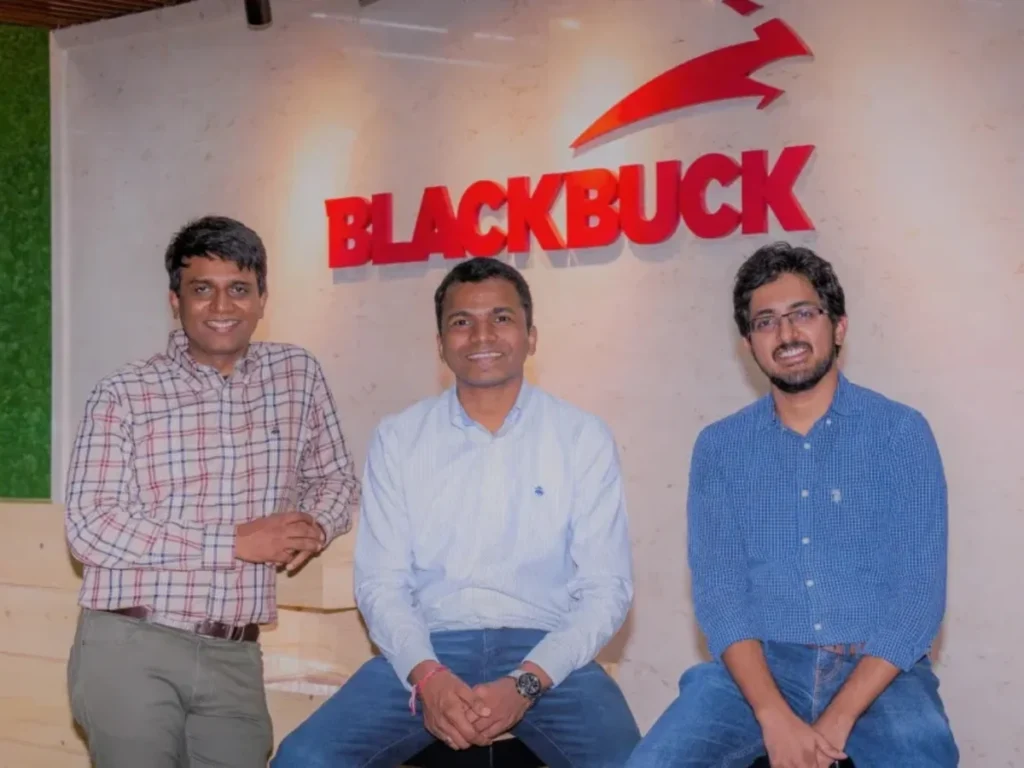
BlackBuck was founded in 2015 by a dynamic trio of IIT alumni—Rajesh Kumar Naidu Yabaji, Chanakya Hridaya, and Ramasubramanian Balasubramaniam. Recognizing the profound inefficiencies, fragmentation, and opacity plaguing India’s legacy offline logistics and trucking sector, the founders set out to build a digital-first ecosystem. Their vision crystallized into an online B2B marketplace dedicated to inter-city full truckload (FTL) transportation, seamlessly connecting enterprise shippers with truck operators.
Early Funding and Growth Phase
Recognizing the massive addressable market and the team’s execution capability, premier venture capital firms lined up to back the startup. Accel India emerged as an early believer, pouring capital into BlackBuck during its formative rounds. Over the years, the company expanded its cap table to include heavyweights such as Peak XV Partners (formerly Sequoia Capital India) and Quickroutes (a subsidiary of e-commerce giant Flipkart).
As the years progressed, BlackBuck evolved from a pure-play matching marketplace into a comprehensive logistics ecosystem. The company diversified its revenue streams by introducing value-added offerings, including advanced telematics solutions for fleet tracking and specialized vehicle financing services tailored specifically for independent truck operators across India.
Mid-2026: The Inflection Point
By the middle of 2026, BlackBuck’s operational scale had reached unprecedented heights, translating directly into financial health. The company reported a stellar performance for the first quarter (Q1) of the fiscal year 2026–27 (FY27). Buoyed by robust top-line growth and disciplined bottom-line management, the company’s stock began witnessing a notable upward trend on the bourses, surging nearly 18% over a three-month window leading up to the transaction.
Late Friday and Yesterday: The Block Deal Execution
- Friday Pre-Deal: BlackBuck shares closed a stellar trading session on the BSE up 7.46%, resting at a healthy INR 629.05. This strong market sentiment created an opportune window for liquidity.
- Yesterday: Capitalizing on this market momentum, Accel executed the open-market transaction via its Mauritius affiliate, offloading the 27 lakh shares at INR 576.05 apiece to Abakkus Investment Managers, successfully completing the INR 155.5 crore secondary deal.
Supporting Data and Financial Performance
The decision by Accel to book profits did not occur in a vacuum; it is firmly anchored in BlackBuck’s impressive financial turnaround and operational metrics reported through mid-2026.
Q1 FY27 Financial Highlights
BlackBuck’s financial health has experienced a remarkable resurgence, driving investor confidence and lifting its stock price out of its earlier year-to-date troughs. Key financial highlights from the company’s Q1 FY27 earnings report include:
- Net Profit Growth: BlackBuck posted a robust net profit of INR 42.2 crore for the first quarter of FY27. This represents a solid 25% year-on-year (YoY) increase compared to the INR 33.7 crore net profit recorded during the corresponding period in the previous fiscal year.
- Revenue Expansion: Operating revenue witnessed an aggressive upward surge, climbing 42% year-on-year and 10% quarter-on-quarter (QoQ) to touch INR 204.2 crore for the quarter under review.
- Customer Acquisition and Engagement: The startup reported serving a staggering 8.83 lakh active customers during Q1 FY27. Furthermore, its stickiness metrics showed structural improvements: monthly transacting customers utilizing two or more of BlackBuck’s integrated services rose by 20% year-on-year to reach 4.6 lakh.
Stock Market Dynamics
Despite a challenging broader macroeconomic environment that has left BlackBuck’s stock down approximately 7.6% on a year-to-date (YTD) basis, the counter has staged an aggressive recovery in the short term. Driven by its consistent path to profitability and dominant market share in the B2B logistics space, the stock jumped nearly 18% in the three months leading up to the block deal.
The transaction itself was executed at a price of INR 576.05 per share—representing a measured 8.4% discount to Friday’s closing price of INR 629.05 on the BSE. Such discounts are customary in large block deals to incentivize institutional buyers like Abakkus Investment Managers to absorb large tranches of equities without triggering immediate downward volatility in the open market.
Official Responses and Market Perspectives
While neither Accel nor Abakkus Investment Managers has released exhaustive, standalone public manifestos detailing every strategic rationale behind yesterday’s block deal, institutional market behavior and regulatory filings provide clear insight into the perspectives of both parties involved.
Accel’s Profit-Booking Strategy
For a venture capital fund of Accel’s stature, lifecycle management of investments is paramount. Having entered BlackBuck as an early-stage backer nearly a decade ago, the firm has watched the company mature from an unproven concept into a publicly traded logistics behemoth.
Market analysts note that Accel’s decision to trim its stake from 7.17% to a lower threshold is a classic portfolio balancing exercise. By booking profits worth INR 155.5 crore at an attractive valuation, Accel successfully generates substantial realized returns for its investors while maintaining a meaningful equity cushion to benefit from BlackBuck’s long-term growth story. The move underscores a pragmatic approach: securing generational wins in a volatile public market environment rather than holding unliquidated paper wealth indefinitely.
Abakkus’ Bullish Bet on Logistics Tech
On the buying side of the ledger, Sunil Singhania-backed Abakkus Investment Managers’ decision to aggressively snap up all 2.7 million shares speaks volumes about institutional conviction in India’s supply chain digitization.
By stepping in as the primary buyer, Abakkus is signaling a strong belief that the structural tailwinds supporting India’s logistics sector—ranging from national infrastructure upgrades and the implementation of GST to the rapid formalization of freight operations—will continue to expand corporate margins for tech-enabled platforms like BlackBuck. For an asset management firm focused on identifying compounding growth stories, acquiring a 1.5% stake in a profitable, market-leading B2B logistics player at an 8.4% discount represents an attractive entry or accumulation point.
Implications of the Block Deal
The secondary market transaction involving Accel, BlackBuck, and Abakkus carries wide-ranging implications for the broader Indian startup ecosystem, public market investors, and the logistics technology sector at large.
1. Reinvigorating Venture Capital Exit Pipelines
One of the most critical structural challenges facing the Indian venture capital ecosystem over the past several years has been the bottleneck in achieving lucrative, timely exits. Traditional initial public offerings (IPOs) and M&A pathways have faced cyclical headwinds.
Accel’s ability to smoothly execute a secondary block deal worth INR 155.5 crore demonstrates that mature Indian tech startups are increasingly capable of providing deep public market liquidity to early backers. This successful liquidity event is likely to bolster confidence among global LPs, encouraging venture funds to continue deploying capital into early-stage Indian enterprises knowing that exit mechanisms via open-market block trades are robust and functional.
2. Maturation of Institutional Participation in Tech Stocks
The seamless absorption of 2.7 million shares by Abakkus Investment Managers highlights the growing maturity of domestic institutional investors (DIIs) in absorbing large tranches of tech equity. Historically, large-scale secondary exits by early VCs occasionally triggered panic selling or sharp stock corrections.
The fact that Abakkus readily absorbed this volume—even at a modest, standard block-deal discount—reflects a sophisticated understanding of equity block pricing and points to a deepening institutional appetite for fundamentally sound, profitable technology companies.
3. Validation of BlackBuck’s Profitability-First Narrative
For BlackBuck, this transaction serves as external market validation of its ongoing pivot toward sustainable, profit-driven hyper-growth. Having successfully weathered the post-pandemic valuation corrections that plagued global tech markets, BlackBuck’s ability to post consecutive quarters of rising net profits and expanding operating revenues has transformed it from a cash-burning startup into a mature enterprise.
The entry of a seasoned domestic fund like Abakkus into its shareholder base further broadens its institutional backing, stabilizing its shareholding pattern and positioning the firm favorably for future institutional research coverage and potential index inclusions.
4. Outlook for India’s Logistics Tech Ecosystem
As India rapidly modernizes its supply chain infrastructure through initiatives like the National Logistics Policy (NLP) and accelerated highway development, technology-driven freight platforms are uniquely positioned to capture massive market share. BlackBuck’s multi-pronged business model—spanning FTL marketplaces, telematics, and embedded vehicle financing—creates a high-moat ecosystem that is difficult for traditional, offline operators to replicate.
Accel’s partial exit, far from being a vote of no confidence, marks the natural transition of BlackBuck from a venture-backed disruptor to an institutional-grade public corporation. As the company continues to scale its customer base—which already exceeds 8.8 million users—market participants will be watching closely to see how effectively management deploys its technological edge to consolidate India’s fragmented freight landscape.