Beyond Dictionaries: Mastering Python Dataclasses for Robust Application Architecture
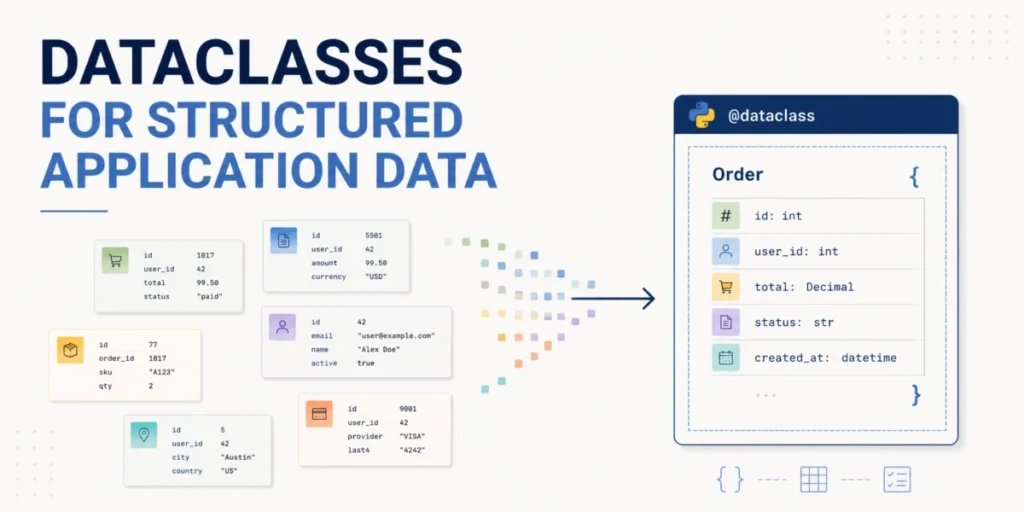
In modern software development, the humble configuration dictionary is often the silent killer of robust applications. What begins as a simple key-value store in a batch processing job frequently devolves into a fragile, "string-ly" typed mess. Misspelled keys, inconsistent default values, and nested structures that lack a defined shape become hidden traps, waiting for a minor refactor to trigger a cascading failure.
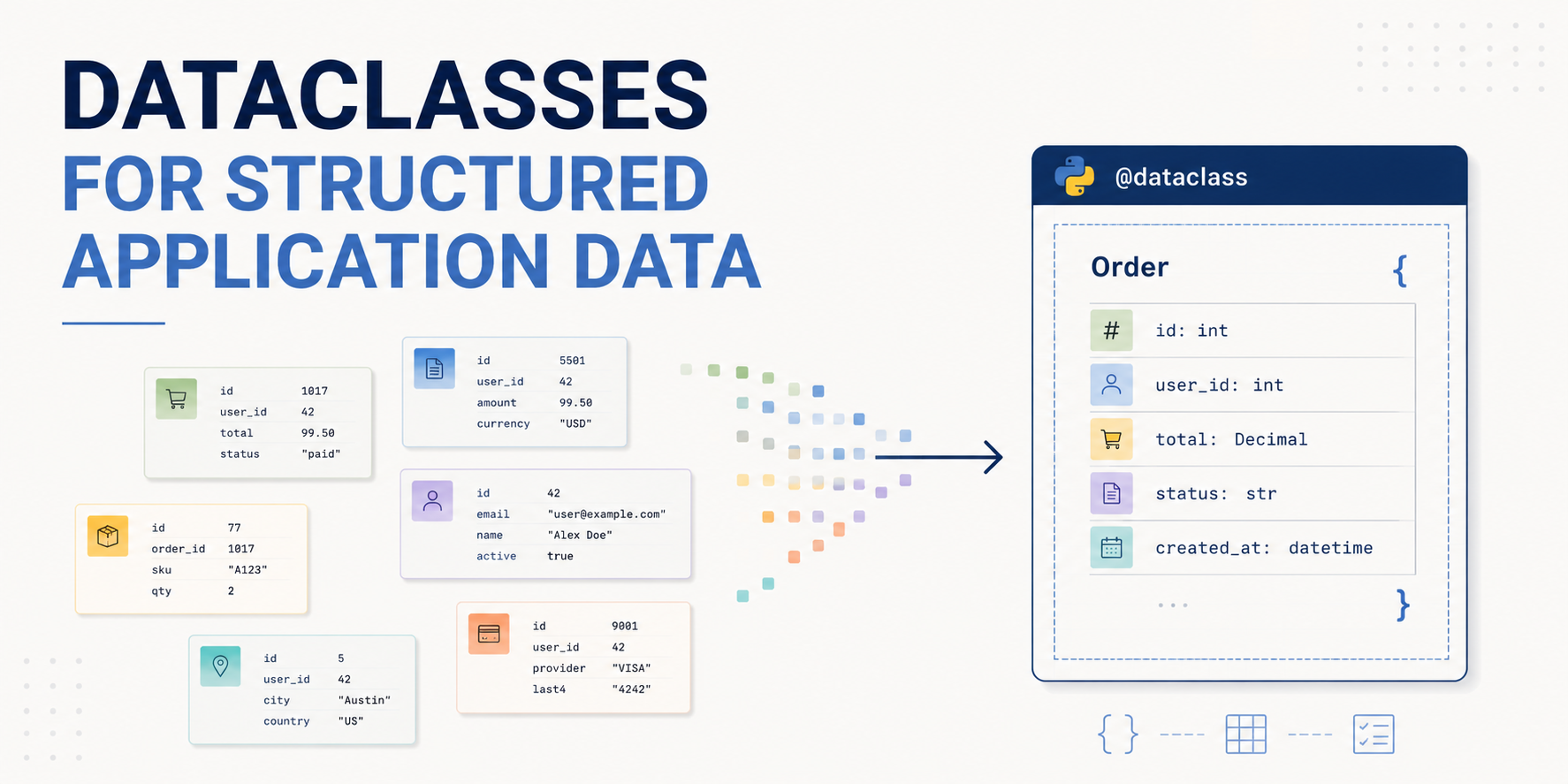
However, since the release of Python 3.7, developers have had access to a powerful, standard-library solution: the @dataclass decorator. By transforming these loose dictionaries into structured, readable, and maintainable data models, developers can turn implicit assumptions into explicit contracts. This article explores how to migrate from dictionary-based configurations to rigorous dataclass-driven architectures, ensuring your application’s data remains predictable, testable, and maintainable.
The Anatomy of a Dictionary Failure
The configuration dictionary is a double-edged sword. Its flexibility allows for rapid prototyping, but that same lack of structure invites technical debt. Consider a standard batch job configuration:
config =
    "batch_size": 500,
    "max_attempts": 3,
    "output": "format": "parquet", "compress": True,

# Three modules away, a developer writes:
size = config.get("batchsize", 100) # Typo: silently defaults to 100
In this scenario, the application does not fail loudly. It continues to execute with a "silent error," leading to performance degradation or incorrect results that only surface long after the initial commit. Because the dictionary has no internal schema, there is no way for the IDE or a static type checker to flag the misspelled key batchsize.
The Shift Toward Structure
The dataclass approach addresses this by providing a blueprint. When you decorate a class with @dataclass, Python generates the essential boilerplate—such as __init__, __repr__, and __eq__—allowing developers to focus on the structure of the data rather than the mechanics of object creation. While it is crucial to note that dataclasses do not perform automatic runtime type enforcement, they provide a "contract of intent" that is visible to developers, IDEs, and static analysis tools like Mypy.
Chronology: From Simple Models to Complex Systems
Phase 1: Establishing the Baseline
The transition begins with the smallest possible model. By defining a class, you immediately gain the ability to use attribute access (e.g., job.batch_size), which is fundamentally more reliable than string-key lookups.
from dataclasses import dataclass

@dataclass
class JobConfig:
    name: str
    batch_size: int = 500
This minimal implementation immediately solves the typo issue. If a developer attempts to access job.batchsize, the Python interpreter will raise an AttributeError, stopping the execution before the logic reaches a point of no return.
Phase 2: Composition and Modular Growth
As applications scale, a single "god object" configuration becomes as unmanageable as a giant nested dictionary. The key to maintainability is composition. By breaking configurations into smaller, domain-specific classes, you create a hierarchy that reflects your system’s architecture.
For example, separating RetryPolicy and OutputConfig from the main JobConfig keeps each component responsible for a single coherent slice of logic. This modularity allows for easier unit testing of specific components and clearer documentation of how nested configuration segments interact.
Supporting Data: Why Invariants Matter
One of the most critical stages in the lifecycle of a dataclass is the initialization phase. The __post_init__ method serves as a hook where developers can define "local invariants"—rules that must hold true for the object to be valid.
Implementing Runtime Invariants
Unlike a dictionary, which accepts any value, a dataclass with a __post_init__ method can validate its state immediately upon creation:
def __post_init__(self):
    if self.batch_size < 1:
        raise ValueError(f"batch_size must be >= 1, got self.batch_size")
This pattern ensures that impossible configurations are rejected at the "gates" of your application. By catching errors at the boundaries, you prevent invalid data from propagating deep into the business logic, effectively narrowing the scope of potential debugging from the entire application to the specific instantiation site.
The Role of Frozen Instances
In many enterprise systems, configuration should be immutable once the application starts. The frozen=True argument turns your dataclass into a read-only object, preventing accidental modification during the application’s lifecycle. For cases where minor adjustments are required, the dataclasses.replace() function allows for the creation of a new, validated instance based on an existing one, maintaining the integrity of the data while offering necessary flexibility.
Official Perspectives: Serialization and the Boundary
A common pitfall in the adoption of dataclasses is the expectation of automatic serialization. Unlike some ORMs, Python’s dataclasses do not automatically handle recursive serialization to JSON or other formats.
The asdict() function is a powerful tool for exporting data, but it must be used with the understanding that it performs a deep copy. When importing data back into your application, you must explicitly reconstruct the objects. This is not a limitation; it is a design choice that enforces deliberate serialization. By writing explicit from_dict factory methods, you ensure that the boundary between "untrusted input" (like a JSON file) and "trusted application state" is clearly defined and rigorously managed.
Implications for Enterprise Architecture
When to Use Which Tool
The choice of data modeling tool should be dictated by the "trust" level of the data source:
- Plain Dictionaries: Best for short-lived, local, and highly dynamic data that is discarded almost immediately.
- Dataclasses: The "sweet spot" for internal application state. They provide structure and readability without the overhead of third-party dependencies, making them perfect for internal logic, configuration, and data transport within a microservice.
- Pydantic: Necessary when the data originates from external, untrusted sources (e.g., public APIs, user-submitted web forms). Pydantic’s powerful validation and coercion capabilities handle the messy reality of external inputs that
__post_init__is not designed to manage.
The Human Element: Readability as Documentation
Perhaps the most significant, yet intangible, benefit of adopting dataclasses is the improvement in code readability. When a developer encounters a function signature that accepts a JobConfig object rather than a generic dict, the expected structure is immediately obvious. The class definition serves as a "living document" that evolves alongside the code, reducing the cognitive load on developers during code reviews and onboarding.
Conclusion
Transitioning from dictionaries to dataclasses is a discipline of clarity. It forces the developer to articulate the shape of the data, define the boundaries of validity, and acknowledge the distinction between mutable state and immutable configuration.
While the change requires slightly more upfront effort than a quick dict declaration, the dividends—fewer production bugs, clearer intent, and a more robust foundation for growth—are substantial. By treating your data as a first-class citizen with a defined contract, you ensure that your application doesn’t just run, but that it communicates its requirements and constraints with total transparency. In the complex world of software engineering, an agreement in writing—encoded in the structure of your code—is indeed worth a great deal.