Zomato Introduces ‘Pay on Delivery’ Surcharge in New Push to Nudge Users Toward Digital Payments
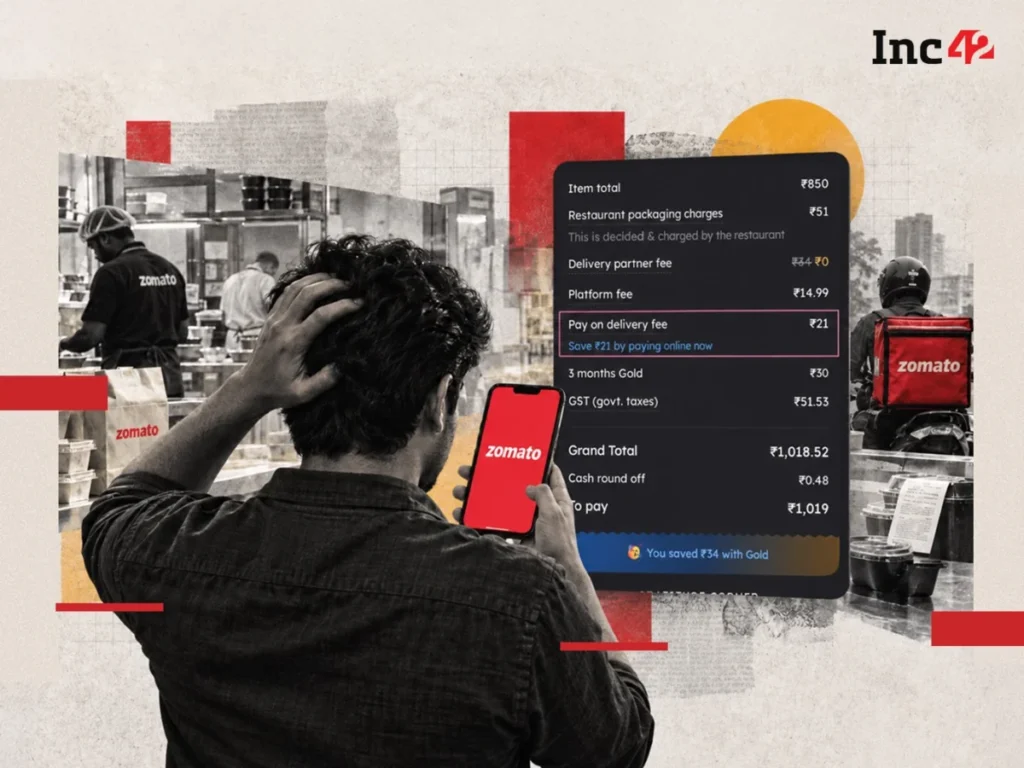
NEW DELHI — Food delivery giant Zomato, operating under its parent entity Eternal, has quietly rolled out an additional fee on cash-on-delivery (COD) transactions. Termed the “Pay on delivery” fee, the variable charge is the latest in a series of monetisation strategies deployed by India’s leading food delivery platforms to boost bottom lines, manage operational overheads, and aggressively steer customers away from physical cash transactions toward digital payment methods.
The introduction of the new levy adds an extra layer of cost for consumers who prefer paying with cash when their meals arrive. While the fee has been observed on multiple transactions across the country, its exact national rollout timeline and calculation framework remain shrouded in ambiguity, creating fresh discourse among tech-savvy consumers and industry analysts alike.
Main Facts: What is the ‘Pay on Delivery’ Fee?
The newly minted “Pay on delivery” charge is explicitly tied to a customer’s choice of payment method at checkout. Unlike platform fees, which are universally applied regardless of how a user chooses to settle their bill, this specific levy penalizes or at least disincentivizes the use of physical currency upon delivery.
- Variable Pricing: Based on inspections of various customer checkouts, the fee is not fixed. Recorded charges typically range between ₹5 and ₹13, though at least one user took to social media to flag a significantly higher levy of ₹21 for a single order.
- Itemized Billing: The surcharge appears as a distinct line item on the final bill. It is displayed separately from other standard additions, such as the platform fee, delivery partner fees, restaurant packaging charges, and applicable government taxes.
- Nudge Toward Digital: Inside the app interface, Zomato actively pairs the charge with a prompt or message encouraging users to complete their transactions online, effectively framing the extra cost as avoidable if the customer opts for digital gateways like UPI, credit/debit cards, or net banking.
At present, Zomato has not officially clarified the exact mechanics behind how the fee is calculated. It remains unknown whether the variable pricing is determined by order value, geographic location, the specific restaurant partner, historical customer user profiles, or a complex algorithm factoring in all of the above.
Chronology and Discovery: How the Fee Came to Light
The rollout of the cash-on-delivery surcharge did not arrive with a formal press release or a prominent consumer announcement. Instead, the levy’s existence was pieced together through organic consumer discovery and media audits.
- Early September 2026: Users placing orders through the Zomato app began noticing an unfamiliar surcharge on their bills when selecting the cash-on-delivery option.
- Public Flagging: Frustrated or curious diners quickly took to platforms like X (formerly Twitter) to share screenshots of their checkout pages. One such viral post highlighted a ₹21 fee exclusively tied to opting for COD, sparking widespread debate about hidden charges in food delivery apps.
- Media Verification: Investigative reviews of multiple transactions confirmed that the fee was active on several accounts, ranging dynamically from ₹5 to ₹13.
- Current Status: While observed on orders placed earlier in the month, the full scope of the national rollout is still being mapped, as the fee appears selectively active rather than uniformly deployed across every single user account or pin code in India.
Supporting Data: The Broader Monetisation Playbook
Zomato’s decision to monetize cash-on-delivery transactions does not occur in a vacuum. It is part of a broader, sustained industry-wide effort to extract higher margins from core food delivery operations and achieve long-term profitability.
The Platform Fee Escalation
For the past year, both major Indian food delivery incumbents—Zomato and Swiggy—have incrementally raised consumer-facing charges.
- In March, Zomato hiked its standard platform fee by nearly 20%, moving it from ₹12.50 to ₹14.90 per order on a pre-GST basis, implemented on a pan-India scale.
- Rival platform Swiggy quickly matched and exceeded this move, raising its platform fee by over 17% to reach ₹17.58 per order (up from ₹14.99), citing the rising costs required to operate and maintain high-traffic digital infrastructure.
Financial Health and Restructuring
The continuous introduction of micro-fees coincides with robust financial performance for Zomato’s parent firm, Eternal. During the first quarter of fiscal year 2027 (FY27), Eternal reported:

- A consolidated net profit of ₹92 crore, representing a nearly 3.7x jump from ₹25 crore in the corresponding quarter of the previous year.
- An explosive 182% year-on-year surge in operating revenue, touching ₹20,211 crore.
However, the company’s pursuit of lean operations has also involved aggressive internal restructuring. Recently, Zomato laid off approximately 240 employees as part of a strategic shutdown of its customer support operations in Hyderabad. Simultaneously, the company is experimenting with innovative operational models, such as "Zomato Now"—a rapid food delivery system utilizing automated vending machines deployed in corporate offices across Gurugram in partnership with select restaurants.
Official Responses and Stakeholder Stance
As of publication, Zomato has maintained a measured silence regarding the strategic rationale, financial targets, and full geographic scale of the “Pay on delivery” fee.
Industry reporters and media outlets, including a formal inquiry by Inc42, have reached out to Zomato’s corporate communications team for detailed clarification on:
- The exact parameters and logic behind the dynamic pricing structure of the COD fee.
- Whether the feature represents a permanent nationwide policy shift or a localized pilot test.
- The specific operational costs associated with cash-on-delivery that prompted the additional levy.
This article will be updated as soon as an official response or statement is issued by Zomato.
Market Implications: Increased Competition and Consumer Shifts
The timing of Zomato’s COD surcharge is particularly significant given the rapidly evolving competitive landscape of India’s quick-commerce and food delivery ecosystem. For years, the market has functioned as a duopoly dominated by Zomato and Swiggy. Today, that duopoly faces fresh challengers from multiple fronts:
- Flipkart’s Foray: E-commerce giant Flipkart has entered the arena by piloting its food delivery service, Eat In, in Bengaluru. Beginning with internal employee testing, Flipkart is reportedly undercutting incumbents by offering restaurants a significantly lower commission model ranging between 10% and 11% per order.
- Rapido’s Expansion: Mobility major Rapido has firmly planted its flag in the food delivery segment with Ownly, which received a formal launch in March following successful local trials in Bengaluru.
- Quick-Service Startups: Hyper-local and rapid food delivery startups are also attracting heavy venture backing. Notably, rapid food delivery startup Swish secured $24 million in a funding round led by Bertelsmann India Investments to expand its cloud kitchen networks and scale into new metropolitan markets.
What This Means for the Indian Consumer
By making cash-on-delivery increasingly expensive, Zomato is forcing a behavioral shift among a specific demographic of users who still prefer physical currency for safety, privacy, or habit reasons. While digital payments (particularly UPI) dominate the urban landscape in India, cash remains a persistent medium of choice for a segment of the population.
By adding a ₹5 to ₹21 tax on handling physical cash—and visually steering users toward free digital payment alternatives—Zomato achieves two goals: it offsets the logistical friction and reconciliation costs associated with handling cash collections through delivery partners, and it further normalizes continuous, frictionless digital checkout flows.
However, in an increasingly crowded market where alternative platforms are trying to win over restaurants and consumers with lower commissions and customer-friendly perks, piling on micro-fees risks alienating price-sensitive diners. Whether consumers will absorb these incremental costs or migrate toward emerging alternatives remains one of the most critical questions facing India’s food tech sector in the months ahead.