Empowering the Edge: AWS Expands Latin American Developer Communities and Launches New Local Zone in Athens

Main Facts
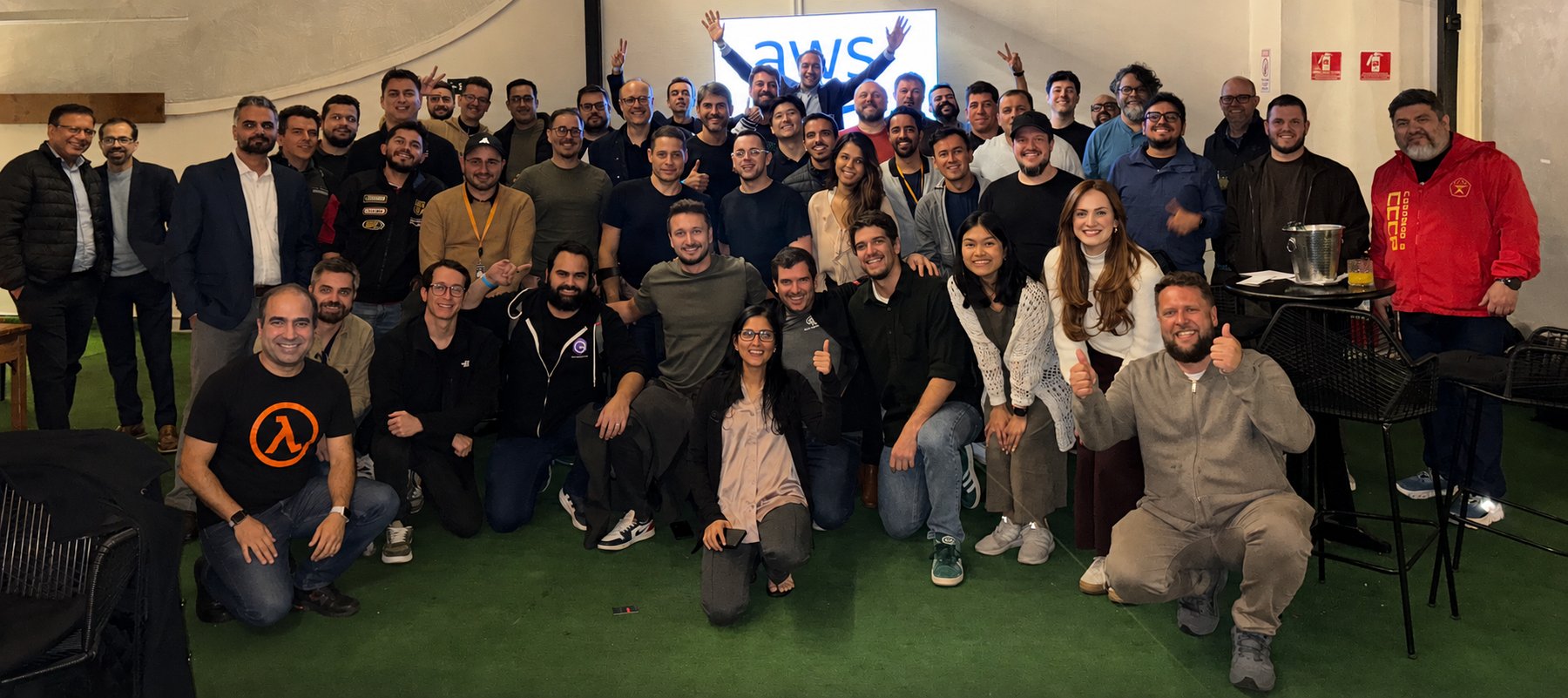
Amazon Web Services (AWS) has continued its strategic dual-pronged approach to global technology deployment, blending grassroots developer community engagement with major infrastructure expansion. Recently, AWS executives and technical teams spent three intensive days in São Paulo, Brazil, hosting a premier regional tech event for builders from across Latin America. The gathering featured deep-dive technical sessions, hands-on architectural workshops, and direct collaboration sessions with customers and partners.
Simultaneously, AWS announced a major infrastructure milestone in Europe: the official launch of a new AWS Local Zone in Athens, Greece. This deployment represents a critical addition to the company’s global footprint, serving as the second Local Zone in the Europe, Middle East, and Africa (EMEA) region to offer native support for Amazon Simple Storage Service (Amazon S3) and Amazon Elastic Block Store (Amazon EBS) Local Snapshots.
The Athens Local Zone is engineered to address two of the most pressing demands facing modern enterprises: ultra-low, single-digit millisecond latency for end-users and strict adherence to in-country data residency requirements. By placing cloud compute, storage, and database capabilities directly within Greece’s primary population and industry hubs, AWS is enabling organizations in regulated sectors—such as financial services, healthcare, media production, and real-time gaming—to process and store sensitive data locally without the operational overhead of managing physical data center infrastructure.
Chronology of Events and Announcements
The past fortnight has been characterized by significant regional outreach and targeted infrastructure rollouts, tracing a clear timeline from community building in the Southern Hemisphere to infrastructure activation in Southern Europe.
- Mid-July 2026: AWS hosts its prominent regional technology summit in Latin America, bringing together hundreds of developers, solutions architects, and technical leaders in São Paulo, Brazil, for three days of peer-to-peer collaboration and whiteboarding sessions.
- Late July 2026: Technical teams finalize deployment preparations for the Athens Local Zone, integrating advanced hardware instances and localized storage classes to meet compliance standards in Greece.
- Early August 2026: AWS officially commissions the Athens Local Zone, marking the milestone on the AWS Global Infrastructure and Sustainability Blog and detailing its unique capabilities for regional data sovereignty.
- Ongoing (Weekly Cycle): AWS integrates these announcements into its ongoing developer support programs, directing regional participants toward the AWS Builder Center and upcoming virtual and in-person events.
Supporting Data and Technical Specifications
The newly inaugurated Athens Local Zone is not merely a localized point of presence; it is a fully integrated extension of the AWS Region, bringing high-performance computing resources physically closer to Greek enterprises.
Infrastructure and Compute Capabilities
The Athens Local Zone supports a robust array of modern AWS services designed to handle heavy computational loads:

- Amazon EC2 Instances: The facility launches with support for advanced, general-purpose, and compute-optimized instances, specifically C7i, M7i, and R7i instance families. These processors deliver enhanced performance for demanding enterprise applications, analytics, and relational databases.
- Containerization: Full support for Amazon Elastic Container Service (Amazon ECS) enables developers to deploy and manage containerized microservices locally with minimal latency.
- Storage and Data Protection: Crucially, the Athens facility is only the second Local Zone in the EMEA territory to incorporate native support for Amazon S3 (utilizing the One Zone-Infrequent Access storage class) and Amazon EBS Local Snapshots. This allows businesses to execute complete backup, recovery, and data retention workflows entirely within Greek borders.
Community Metrics
While infrastructure metrics dictate performance, the human element remains a cornerstone of AWS’s regional strategy. The São Paulo gathering underscored the sheer density of technical talent in Latin America, drawing participants from multiple countries who engaged in dozens of hands-on workshops, cross-pollinating architectural designs that span serverless computing, machine learning pipelines, and hybrid cloud environments.
Official Responses and Strategic Perspectives
The convergence of community-centric events and high-compliance infrastructure deployments highlights a broader philosophy within AWS: that cutting-edge technology requires both robust tools and a connected ecosystem of builders to reach its full potential.
Reflecting on the Latin American tech event in São Paulo, AWS technical leadership emphasized the irreplaceable value of face-to-face collaboration. In a statement highlighting the event, organizers noted that while cloud tooling, APIs, and infrastructure automation form the backbone of modern software development, the shared energy of a physical technical community is what ultimately drives innovation and makes technology "stick." Participants spent hours trading architecture ideas over coffee, sketching complex distributed systems on whiteboards, and leaving with expanded roadmaps for their respective organizations.
Turning to the European expansion, the deployment of the Athens Local Zone reflects an ongoing corporate commitment to data sovereignty and localized performance. Regulatory frameworks across the European Union, such as the General Data Protection Regulation (GDPR) and subsequent national directives, place heavy burdens on organizations handling sensitive citizen data. By enabling enterprises in Greece to store and process data strictly within the country while maintaining single-digit millisecond access times, AWS is directly addressing compliance hurdles that have historically slowed cloud adoption in specific verticals.
Furthermore, industry experts point out that sectors like real-time financial trading and interactive media production cannot tolerate the latency associated with routing data back to distant central European regions. The Athens Local Zone bridges this gap, offering the elasticity and scale of the public cloud coupled with the proximity of an on-premises data center.
Implications for Builders, Enterprises, and the Cloud Ecosystem
The twin developments of community empowerment in Latin America and infrastructure localization in Greece carry profound implications for the global technology landscape.
1. Accelerated Cloud Adoption in Regulated Markets
For businesses operating in Greece and the broader Southeastern European region, the availability of an AWS Local Zone removes major compliance and performance roadblocks. Healthcare providers can process patient records locally, financial institutions can execute low-latency trades while adhering to strict local auditing rules, and media companies can render high-resolution video assets close to production hubs. Because these workloads run on familiar AWS interfaces (such as EC2, S3, and ECS), local development teams do not need to retrain on disparate systems or build custom infrastructure management tools.
2. The Resurgence of Regional Tech Communities
The success of the São Paulo developer event signals a broader industry trend: the decentralization of tech expertise. As cloud computing matures, regional tech hubs in Latin America, Southeast Asia, and Eastern Europe are producing world-class engineering talent. By fostering these local communities through workshops, architectural roundtables, and platforms like the AWS Builder Center, cloud providers are cultivating localized ecosystems capable of driving indigenous software economies.
3. Reduced Operational Overhead
Traditionally, achieving low latency and strict data residency meant deploying and maintaining private on-premises infrastructure or managing complex hybrid setups. AWS Local Zones shift this burden back to the cloud provider. Enterprises gain the agility of the cloud—scaling compute and storage up or down dynamically—without sacrificing local control over where their data lives and how fast it travels.
Looking Ahead
As AWS continues its weekly cadence of product updates, infrastructure rollouts, and community engagements, the focus remains firmly on meeting builders where they are—both metaphorically through regional collaboration and literally through edge infrastructure like the new Athens Local Zone. Developers and enterprise architects are encouraged to monitor the official What’s New with AWS portal and engage with regional builder networks to leverage these expanding capabilities fully.