Leadership Transition: Prabhjeet Singh Departs Uber India to Spearhead OpenAI’s Domestic Expansion
By Editorial Desk
Updated: June 26, 2024
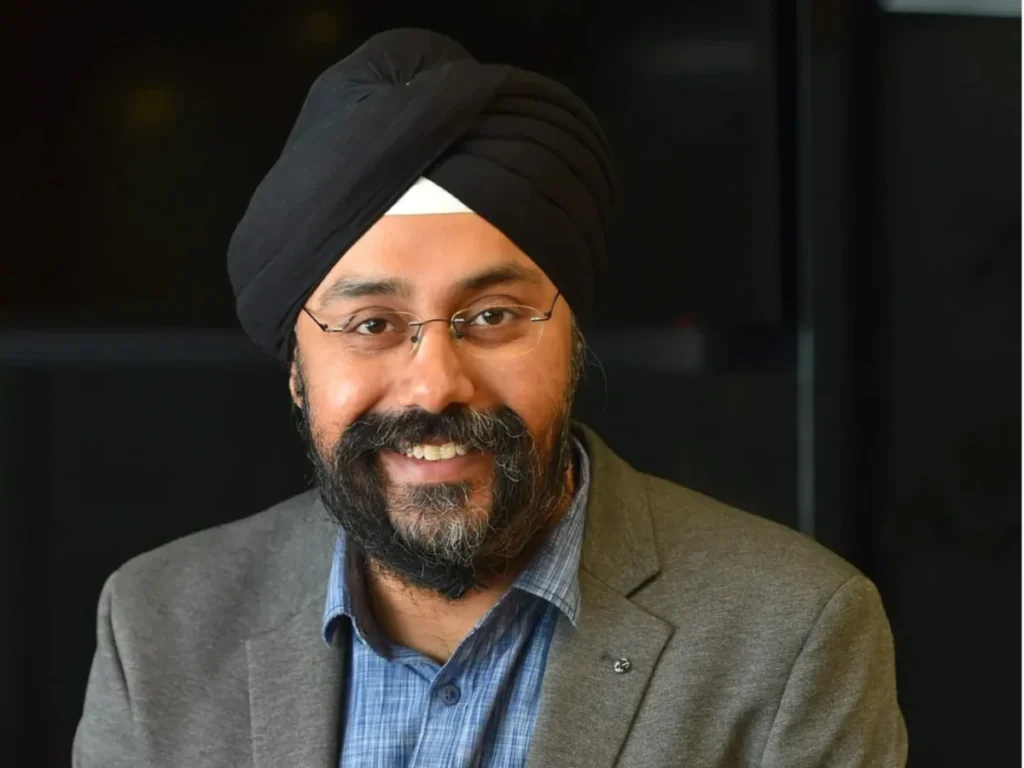
In a high-profile leadership shuffle that signals a seismic shift in the Indian technology landscape, Prabhjeet Singh, the long-standing President of Uber India and South Asia, has announced his resignation. After a distinguished nine-year tenure at the global ride-hailing giant, Singh is transitioning into the burgeoning world of artificial intelligence. He has been tapped by OpenAI, the creator of ChatGPT, to serve as the Managing Director for its India operations, effective this September.
The move marks a significant career milestone for Singh, who will now pivot from navigating the complex, highly regulated mobility sector to spearheading the domestic strategy for the world’s most influential AI research organization.
The Strategic Shift: From Mobility to Machine Intelligence
Prabhjeet Singh’s move to OpenAI is not merely a lateral career change; it is a testament to the shifting gravity of India’s digital economy. According to official confirmations provided to Inc42, Singh will report directly to Kiran Mani, the Asia Pacific Managing Director at OpenAI.
His mandate is expansive and ambitious. As Managing Director, Singh is tasked with overseeing the company’s performance across critical vectors, including consumer growth, enterprise adoption, strategic partnerships, and regulatory engagement. Crucially, he is expected to serve as the primary liaison between the AI giant and India’s multifaceted ecosystem, which includes government bodies, academic institutions, and a rapidly maturing startup landscape.
OpenAI’s decision to appoint a seasoned veteran with a background in complex operations—honed during his time at Uber and McKinsey—suggests that the company is moving beyond the "discovery" phase of its product rollout in India and into a phase of deep, systematic market penetration.
A Decade of Dominance: The Uber Legacy
To understand the magnitude of Singh’s departure, one must look at his trajectory within Uber. Joining the company in August 2015, Singh was part of the foundational team that scaled Uber’s operations during its most aggressive expansion phase in India. By June 2020, amidst the turmoil of the global pandemic, he was elevated to the position of President, India & South Asia.
During his tenure, Singh navigated Uber through some of its most challenging chapters. He oversaw the integration of regional operational strategies, the adoption of localized safety features, and the navigation of a regulatory environment that was often hostile to foreign gig-economy platforms. His career, which began at the now-defunct Lehman Brothers and included a decade-long stint at consulting powerhouse McKinsey & Company, provided him with the analytical rigor required to manage one of Uber’s most vital, yet complex, global markets.
However, the latter half of his tenure was defined by an increasingly crowded competitive landscape. The rise of home-grown platforms like Rapido and the community-driven Namma Yatri challenged Uber’s hegemony, forcing the company to rethink its core business model.
Market Realities: The Competitive Landscape
The ride-hailing sector in India has transformed from a battle for market share into a war of operational efficiency. As newer, leaner players emerged, Uber found itself under pressure to deviate from its traditional commission-based model.
In a notable strategic pivot, Uber transitioned to a subscription-based model to retain drivers and fend off competition from the likes of Rapido, which had gained significant ground by lowering overheads. This shift, while necessary, underscored the difficulty of maintaining profitability in a price-sensitive market.
Despite these challenges, Uber’s commitment to the Indian market remains robust. Earlier this year, the company’s global parent injected nearly ₹3,000 Cr ($330 Mn) into its Indian subsidiary. Furthermore, in an effort to localize its infrastructure, Uber announced a partnership with the Adani Group to establish its first data center in India, a project slated to go live later this year. These moves indicate that while leadership at the helm is changing, the company’s structural bet on India remains firm.
Financial Health: The Burden of Growth
While Uber’s cultural impact on Indian transportation is undeniable, its financial performance tells a more somber story. The company has struggled to achieve sustained profitability in the region.
Financial filings for the fiscal year 2025 (FY25) revealed a stark reality: net losses soared to ₹1,511 Cr—a staggering 15-fold increase compared to the previous year. During the same period, gross revenue remained largely stagnant at ₹2,604 Cr. These figures highlight the "burn-to-grow" model that has historically defined the ride-hailing industry, where customer acquisition costs and driver incentives frequently outpace top-line growth.
As Singh exits, he leaves behind a company that is currently in the midst of a fiscal restructuring, attempting to balance long-term infrastructure investments with the need for immediate bottom-line improvement.
Official Responses and Industry Sentiment
The transition has been handled with the decorum typical of high-level executive movements. An Uber spokesperson released a statement acknowledging Singh’s contribution:
"India is one of Uber’s most important markets globally, an important driver of innovation and long-term growth. The strength of our business today reflects the incredible team and foundation built over the years. We thank Prabhjeet for his leadership and lasting contributions in his decade-long journey with Uber—we remain deeply committed to our next phase of growth in India."
OpenAI’s entry into the Indian market with a local leader of Singh’s caliber is being viewed by industry analysts as a major validation of India’s position as a hub for AI development. By bringing in someone who has successfully managed high-stakes, consumer-facing technology platforms, OpenAI is signaling that it intends to navigate the Indian regulatory framework with precision and strategic intent.
Implications: What Lies Ahead?
The departure of a top-tier executive like Prabhjeet Singh triggers several questions about the future trajectory of both companies:
1. For Uber: A Search for Renewed Vision
Uber India now faces the task of finding a successor who can navigate the twin pressures of aggressive domestic competition and the mandate for profitability. The incoming leader will need to balance the company’s global standardization with the specific, often volatile, demands of the Indian market.
2. For OpenAI: The "India Story" 2.0
For OpenAI, the hire is a play for scale. India’s massive developer base and growing appetite for AI integration in government and enterprise sectors make it a high-priority territory. Singh’s background suggests that OpenAI will likely focus on:
- Strategic Partnerships: Collaborating with India’s IT services giants to integrate LLMs into enterprise workflows.
- Government Engagement: Working with policymakers to ensure AI adoption aligns with national goals, particularly regarding data sovereignty and digital ethics.
- Consumer Growth: Expanding the reach of its tools to smaller businesses and regional language users.
3. The Talent War
Singh’s move from a "Big Tech" firm to an "AI Frontier" company mirrors a broader trend: the migration of top executive talent toward Generative AI. This "brain drain" from traditional tech to AI firms is expected to accelerate, as established companies compete with the agility and disruptive potential of AI-first organizations.
Conclusion: A New Chapter
Prabhjeet Singh’s tenure at Uber will be remembered as an era of immense scale and operational resilience. He helped shepherd the platform from a disruptor to an essential utility for millions of Indians. As he moves to OpenAI, he carries with him the hard-won lessons of building in India—lessons that will be vital as the nation stands at the threshold of an AI-led industrial revolution.
For the Indian tech ecosystem, this transition is a significant development. It underscores the maturity of the domestic leadership pool, which is now being sought after by the world’s most advanced technological entities. Whether OpenAI can replicate its global success in the unique, fragmented, and competitive Indian market remains to be seen, but with Singh at the helm, the company has secured a leader who understands the rhythm of the Indian market better than most.
As September approaches, all eyes will be on how this leadership change shapes the next decade of digital transformation in India.