Google Expands First-Party Data Tools and Introduces Data Strength Uplift Metrics Ahead of Q4 Rush
SAN FRANCISCO — Just in time for the high-stakes fourth-quarter holiday shopping season, Google has rolled out a sweeping suite of updates designed to streamline first-party data integration, cross-platform measurement, and performance attribution for digital advertisers.
The announcement, detailed by Google in late September, focuses heavily on closing visibility gaps as the digital advertising ecosystem transitions further away from third-party cookies. Central to the release is the expansion of Google’s Data Manager into Google Analytics (GA) and Display & Video 360 (DV360), the adoption of the IAB Tech Lab’s universal API standard, and the introduction of a brand-new Data Strength Uplift Metric within Google Ads.
While these tools promise to simplify the often-burdensome technical pipelines required to feed automated bidding systems, industry experts note that while quantity of data is increasing, marketers must remain vigilant about the underlying quality of the signals they feed into Google’s machine learning engines.
Main Facts
The latest update introduces several core changes to Google’s measurement and data infrastructure:
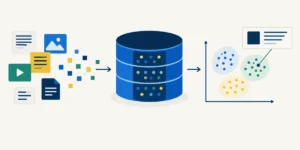
- Data Manager Expansion: Google is directly integrating its centralized Data Manager into Google Analytics and Display & Video 360. This enables advertisers to manage CRM, offline, and app data sources across Google’s product suite without building redundant platform-specific data pipelines. Enhanced conversions are also expanding into GA and DV360.
- Standardized API Integration: The Data Manager API is adopting the IAB Tech Lab’s Event and Conversions API (ECAPI). This universal standard allows developers and technical teams to use a single framework to send conversion and event data across multiple supported ad platforms.
- Automated Diagnostics: Built-in diagnostics are being added to Data Manager to proactively spot and resolve data ingestion errors before they negatively impact live campaigns.
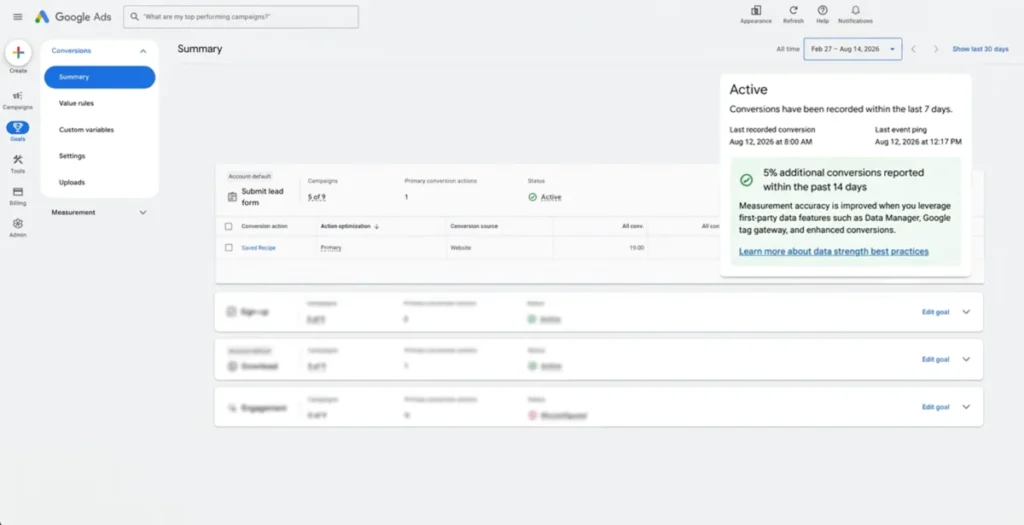
- Data Strength Uplift Metric: Google Ads is launching a new reporting metric that estimates the number of incremental, previously unmeasured conversions "recovered" through enhanced first-party data setups, such as improved tagging or the Google Tag Gateway.
- Performance Claims: Google reports that advertisers connecting offline and app data through Data Manager see an average 26% increase in incremental return on ad spend (ROAS), while those leveraging data strength improvements via the Google Tag Gateway experience an average 14% conversion uplift.
Chronology of Google’s First-Party Data Evolution
To fully understand the significance of these updates, it helps to look at the timeline of how Google has steered the market toward first-party data reliance:
- The Privacy Pivot (2019–2021): Facing mounting regulatory pressure and browser restrictions on third-party cookies (Safari, Firefox), Google announced its intention to deprecate third-party cookies in Chrome, initiating a race toward privacy-safe measurement alternatives.
- The Rise of Enhanced Conversions (2021–2023): Google rolled out "Enhanced Conversions" to help advertisers securely send first-party customer data (hashed email addresses, phone numbers) back to Google, bridging gaps left by signal loss.
- Introduction of Data Manager (2024–2025): Google launched Data Manager as a unified hub to consolidate first-party data streams—such as offline sales and app events—into a single interface, making it easier to feed Google’s automated bidding algorithms.
- The Q4 2026 Ecosystem Expansion (Current): Google bridges the gap between its siloed platforms by bringing Data Manager and Enhanced Conversions directly into Google Analytics and DV360, while adopting the IAB Tech Lab’s ECAPI standard to ease multi-platform friction.
Supporting Data and Quantitative Impact
For digital marketing teams balancing stretched tech budgets and complex attribution models, the numbers behind Google’s ecosystem changes point to tangible efficiency gains, provided they are implemented correctly.
Efficiency Through Centralization
Managing separate pipelines for Google Ads, Google Analytics, DV360, and third-party destinations has historically drained engineering resources. By unifying Data Manager across GA and DV360, Google aims to drastically reduce the engineering overhead required for multi-product advertisers.
Verified Uplift Metrics
- 26% ROAS Increase: Advertisers who successfully feed offline and app data into Google’s machine learning models via Data Manager report an average 26% bump in incremental ROAS.
- 14% Conversion Recovery: Advertisers utilizing the Google Tag Gateway to improve their overall data strength observe an average 14% uplift in captured conversions.
The Diagnostic Safety Net
The inclusion of automated diagnostics within Data Manager serves as an early-warning system. By catching malformed payloads, missing parameters, or broken CRM syncs before campaign performance takes a hit, the system protects automated bidding algorithms from making poor optimization decisions based on corrupted data inputs.
Official Responses and Industry Reception
Google’s positioning of these updates highlights its ongoing message to the market: robust artificial intelligence and automated bidding are only as good as the data fed into them.

"As privacy expectations evolve and signal loss grows, advertisers need a seamless way to connect their own customer data to Google’s optimization systems without getting bogged down in complex, fragmented technical setups," Google noted in its official product release.
Industry analysts have generally praised the move toward the IAB Tech Lab’s Event and Conversions API (ECAPI). By aligning with a broader open standard, Google is lowering the barrier to entry for enterprise brands that manage omnichannel campaigns across Meta, TikTok, Microsoft Ads, and Google simultaneously. Instead of writing bespoke code for every individual publisher, engineering teams can standardize their event architecture.
However, agencies and independent consultants have sounded a note of pragmatic caution regarding the new Data Strength Uplift Metric. While visibility into recovered conversions is a welcome addition to the reporting dashboard, measurement specialists emphasize that tracking more conversions does not automatically translate to tracking better business outcomes.
Implications for Advertisers and Marketing Leaders
As marketing teams rush to finalize their strategies ahead of the Q4 holiday crunch, these updates carry several practical implications:
1. Relief for Technical Teams
For large organizations with heavy enterprise tech stacks, the universal adoption of the IAB Tech Lab’s ECAPI standard within Data Manager is a major win. Maintaining custom API integrations for multiple ad networks is notoriously fragile. Standardizing around ECAPI can free up valuable developer hours.
2. Justifying Measurement Investments
In the past, convincing finance and executive teams to fund "infrastructure projects"—like implementing server-side tagging, upgrading to Google Tag Gateway, or cleaning up CRM data hygiene—was a tough sell because the immediate return was difficult to isolate. The new Data Strength Uplift Metric provides a quantifiable bridge, giving marketers a clear report showing how many conversions were rescued from the dark.
3. The Danger of Optimization Blindness
Despite the allure of a 14% conversion uplift or a 26% ROAS increase, digital strategists must remember a foundational rule of digital marketing: Garbage in, garbage out.
Recovering unmeasured conversions simply means Google is counting transactions or leads that were previously invisible. If those recovered conversions consist of low-intent form fills, spam, or low-value basket items, feeding them unvetted into Google’s automated bidding algorithms (like Target CPA or Target ROAS) will cause the AI to optimize toward the wrong behaviors.
Therefore, marketers must ensure they are passing high-fidelity downstream data—such as CRM lead status, profit margins, customer lifetime value (LTV), and offline purchase values—back through Data Manager. Only by qualifying the quality of the signals can brands ensure that Google’s newly empowered machine learning models drive profitable revenue rather than just inflated conversion volume.
Summary Checklist for Q4 Execution:
- Consolidate: Review your current setup in Google Analytics and DV360 to see if you can leverage the newly expanded Data Manager.
- Standardize: Assess your developer pipelines against the IAB Tech Lab’s ECAPI to minimize redundant custom coding across ad platforms.
- Audit Diagnostics: Turn on Data Manager diagnostics to catch tagging or CRM integration errors before holiday traffic peaks.
- Qualify Data: Do not rely solely on the Data Strength Uplift Metric to evaluate success; pair it with offline CRM data and margin tracking to ensure automated bidding focuses on high-value customers.