The Great AI Harvest: How Model Distillation is Reshaping the Industry
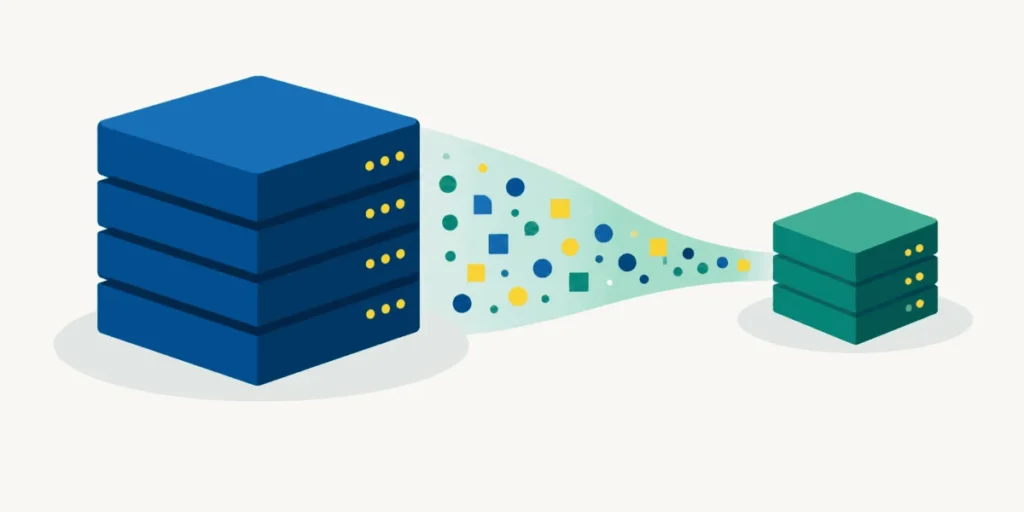
The most formidable artificial intelligence models currently in existence—systems like GPT-4, Claude 3.5, and Gemini 1.5—are technological marvels, but they are also logistical behemoths. Composed of hundreds of billions of parameters, these "frontier models" require massive data centers and gargantuan energy budgets to operate. For a developer or a startup, deploying these models on a smartphone, a local server, or a browser-based application is often impossible due to latency constraints and prohibitive inference costs.
This gap between raw power and practical utility has given rise to a critical technique: model distillation. At its core, distillation is the process of training a smaller, efficient "student" model to replicate the nuanced behaviors of a gargantuan "teacher" model. While the technique has long been a staple of academic machine learning, it has recently moved from the lab to the center of a geopolitical and corporate firestorm. In 2026, the AI industry finds itself locked in a battle over the ethics, legality, and economics of harvesting knowledge from one model to build another.
The Mechanics of "Dark Knowledge"
To understand why distillation is so powerful, one must understand how standard models learn. In traditional machine learning, a model is trained on "hard labels"—for instance, a photo is either a dog or a cat. This binary approach, however, discards a vast amount of contextual information.
When a sophisticated teacher model classifies that same image, it provides a probability distribution: perhaps 85% dog, 13% cat, 2% wolf. This distribution reveals the model’s internal understanding of the relationship between concepts. Geoffrey Hinton, a pioneer of modern neural networks, famously dubbed this the "dark knowledge" of the model—information that exists within the system but is invisible in raw, one-hot encoded labels.
By training a student model on these "soft" probability distributions—often flattened using a process called "temperature scaling"—the student learns not just the final answer, but the underlying logic and error-profiles of the teacher. This allows a tiny model to achieve performance levels that would otherwise require a massive architecture.
A Chronology of the Distillation Arms Race
The history of distillation is a journey from subtle academic optimization to aggressive industrial scaling.
- 2015: Hinton, Vinyals, and Dean introduce the seminal framework for knowledge distillation, primarily applied to image classification and speech recognition.
- 2020–2022: As Large Language Models (LLMs) gain prominence, the technique evolves. Researchers realize that synthetic text generation—having a big model write textbooks or reasoning steps for a smaller model—is a more effective way to "distill" language capabilities than matching raw probability logits.
- 2023–2024: The era of "open" models like Llama 3.1 begins. Meta explicitly licenses its 405B model for distillation, formalizing the technique as a standard industry practice.
- 2025: The first rumors of large-scale, clandestine harvesting emerge. Labs begin reporting abnormal traffic patterns, suggesting that competitors are using automated bots to "query out" the reasoning capabilities of proprietary models.
- Early 2026: The controversy boils over. OpenAI, Anthropic, and Google publish internal reports detailing systematic, multi-million-request campaigns aimed at extracting model weights via API outputs.
- June 2026: Anthropic publicly accuses Alibaba’s Qwen laboratory of orchestrating a massive, 28.8-million-request campaign against Claude, marking a high-water mark in the ongoing geopolitical tension surrounding AI intellectual property.
Modern Distillation: The Synthetic Data Paradigm
Classical distillation, which relies on matching internal probability distributions, requires white-box access to the teacher model’s weights. However, modern LLM distillation has moved largely toward Synthetic Data Distillation.
In this approach, the teacher acts as an automated tutor. It generates high-quality, step-by-step reasoning chains, code snippets, and complex analyses. The student model is then fine-tuned on this high-quality, "teacher-generated" dataset. This method is highly effective because it only requires API access to the teacher’s final output.
This creates a structural vulnerability: any model that is "smart" enough to be useful is, by definition, "smart" enough to be used as a training set for its own competition. The very interface that allows developers to build products—the API—is the same interface that allows rivals to harvest the model’s intelligence.
Supporting Data and Economic Implications
The economics of this practice are staggering. Training a frontier-grade LLM can cost upward of $1 billion when factoring in hardware, electricity, and engineering talent. If a competitor can "distill" the essence of that model using a fraction of the budget, they effectively bypass the R&D costs of their rivals.
A notable example of this tension is the debate surrounding DeepSeek V3. While the company claims a training cost of approximately $5.6 million, industry analysts at SemiAnalysis have suggested the true investment—if one accounts for the "stolen" R&D of the global ecosystem—is significantly higher. If unauthorized distillation is indeed being used to achieve "efficiency," it represents a form of market-wide wealth transfer, where the cost of innovation is externalized onto the labs that pioneer the technology.
Official Responses and the Corporate Stance
The response from the major AI labs has been a mix of technical hardening and legal posturing.
OpenAI has taken a aggressive stance, presenting evidence to the US House Select Committee on China. Their argument is that unauthorized distillation is not merely a competitive tactic, but a national security issue, as it allows foreign actors to leapfrog years of development in agentic reasoning and cybersecurity-relevant code generation.
Anthropic has been equally vocal, providing granular data on the "fake account" networks that have targeted their infrastructure. They argue that this activity is a violation of their Terms of Service and constitutes a form of digital trespass.
Alibaba, for its part, has denied these allegations, maintaining that their improvements in model efficiency are the result of novel architectural research rather than the harvesting of Western models.
Meanwhile, figures like Elon Musk have injected nuance into the debate. During legal proceedings involving xAI, Musk acknowledged that using the outputs of other models to train one’s own is "standard practice." This admission highlights a fundamental divide in the industry: is distillation a legitimate form of model improvement, or is it a parasitic practice that undermines the incentive to innovate?
The Path Forward: Technical and Legal Defenses
The industry is currently in an arms race to secure its intellectual property. Several defensive layers are being deployed:
- Anomaly Detection: Labs are implementing sophisticated behavioral analysis to detect when a user is acting as a "harvester"—requesting specific, reasoning-heavy tasks in a non-human cadence.
- Output Watermarking: Embedding subtle, imperceptible patterns in generated text that can be identified if a smaller model is later found to be mimicking the teacher’s style.
- Rate Limiting and Tiers: Restricting the volume of high-complexity queries for unverified or suspicious accounts.
- Legal Advocacy: Pushing for changes in copyright law to treat "model output" as a protected asset, though such efforts face an uphill battle given the current legal landscape, where raw AI outputs are generally considered ineligible for traditional copyright.
Implications for the Future of AI
The "distillation crisis" exposes a profound truth about the future of computing: we are moving toward a world where AI is ubiquitous, but the ownership of intelligence is becoming harder to define.
If the industry cannot solve the problem of unauthorized distillation, we may see a move toward "closed" models that refuse to output raw text, instead providing only final, highly filtered results. Conversely, if legal protections become too strict, it could stifle the open-source movement, which relies heavily on distillation to create accessible, lightweight models for the public.
For now, distillation remains a dual-use technology. It is the primary engine of democratized, efficient AI, allowing a student to learn from the brightest minds in the field. Yet, it is also the primary tool for the systematic erosion of proprietary R&D. As the boundary between "standard practice" and "unauthorized harvesting" continues to blur, the AI industry must decide whether to build higher walls or to embrace a new, albeit chaotic, paradigm of open intelligence sharing. The resolution to this conflict will determine not only who wins the race for AGI, but who gets to keep the fruits of the labor that builds it.