Beyond the Buy Button: How Stelcore is Engineering the Invisible Operating System for Enterprise D2C Fulfilment
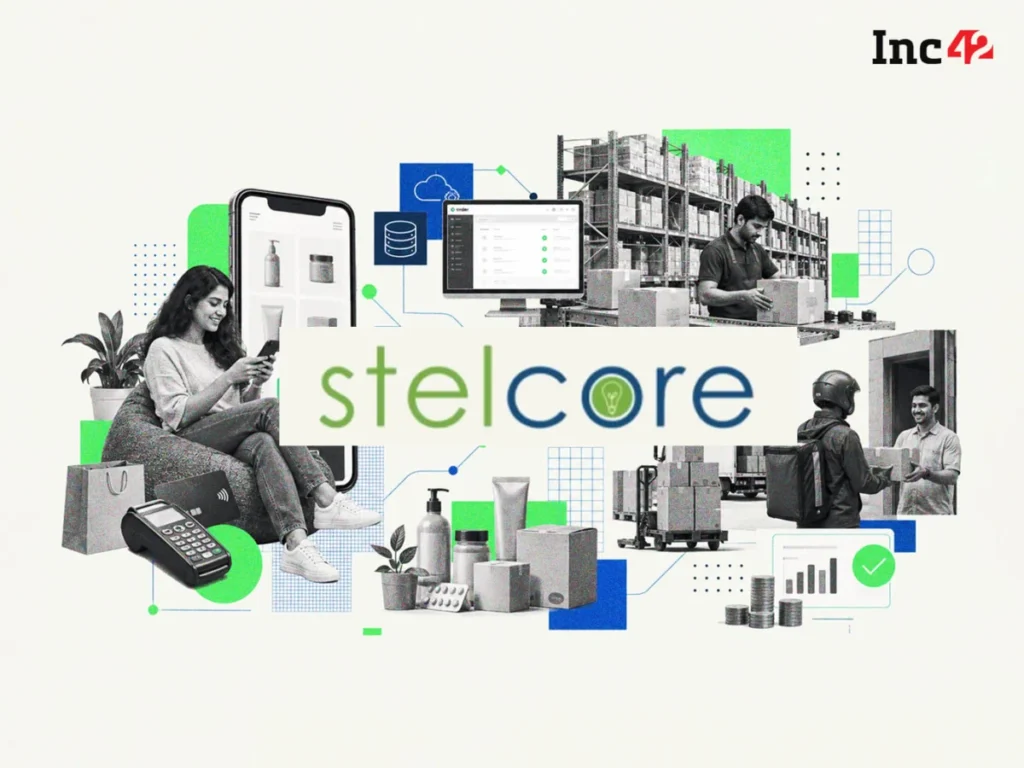
MUMBAI — To the average online shopper, the direct-to-consumer (D2C) experience is frictionless. A few taps on a smartphone, a click on “Buy Now,” and a package arrives at the doorstep within days. But for large consumer brands, that single transaction represents the tip of a massive, complex iceberg. Behind every checkout confirmation lies an intricate web of legacy systems, real-time inventory adjustments, fragmented warehouses, payment gateways, and last-mile logistics networks.
When legacy consumer-packaged-goods (CPG) giants and multi-national enterprises pivot toward digital storefronts, they quickly realize that launching an e-commerce website is the easy part. The real challenge is orchestrating the infrastructure required to fulfill those orders at scale. Orders must flow seamlessly through the right digital channels, inventory must be strategically positioned where demand is highest, and warehouses, payment processors, and delivery partners must exchange data in real time.
Making these disparate moving parts function as a unified operating system is precisely the operational bottleneck that Mumbai-based Stelcore has built its domestic business around. Operating as an enterprise-grade digital and physical bridge, Stelcore sits quietly between a brand’s digital storefront and the physical machineries of fulfillment, redefining what it means to manage supply chains in India’s hyper-accelerated retail market.
Main Facts: The Anatomy of Stelcore’s D2C Operating Layer
At its core, Stelcore is not a traditional third-party logistics (3PL) provider, nor is it merely a software-as-a-service (SaaS) order management platform. Instead, it positions itself as a comprehensive commerce infrastructure and operating layer.
- Founding and Evolution: Founded in 2012 by Bharat Mandot, Stelcore initially carved out a niche in cross-border commerce and regulatory compliance. However, as enterprise clients accelerated their digital transformations, the company identified a glaring market gap: brands lacked a unified operational backbone to integrate their fractured D2C technology stacks.
- Core Functionality: Stelcore connects storefronts with enterprise resource planning (ERP) systems, warehouse management systems (WMS), customer relationship management (CRM) tools, and logistics giants like Blue Dart and Shiprocket.
- Scale and Footprint: Today, the company processes nearly 1.5 million orders per month across its network. It supports over 300 active enterprise clients in India and has historically partnered with more than 3,000 brands globally. Its domestic infrastructure underpins 250 to 300 prominent digital storefronts.
- Enterprise Clientele: Stelcore’s roster of enterprise users reads like a directory of global and domestic retail powerhouses, including GSK, Cipla Health, Zydus, Philips, Hero, and Hindustan Unilever Limited (HUL).
- Fulfillment Network: The platform provides access to more than 260 fulfillment locations spanning over 150 cities across India, leveraging this vast footprint to dynamically route and fulfill orders at peak efficiency.
Chronology: From Cross-Border Compliance to Domestic Commerce Backbone
To understand Stelcore’s current market positioning, it is necessary to examine the evolutionary trajectory of the company over the past decade.
Phase 1: The Foundation (2012–2018)
When Bharat Mandot launched Stelcore in 2012, the Indian e-commerce ecosystem was in its infancy. The primary pain points for ambitious brands looking to scale globally were cross-border logistics, international compliance, and regulatory navigation. Stelcore built its early reputation on untangling these global trade complexities for enterprise merchants.
Phase 2: Identifying the Enterprise D2C Pivot (2019–2021)
As internet penetration surged and consumer shopping habits shifted online, large consumer brands began bypassing traditional retail intermediaries. Enterprises rushed to launch proprietary e-commerce websites. However, these legacy organizations quickly hit a brick wall. Their existing supply chains—designed over decades to push bulk shipments down hierarchical channels to distributors, wholesalers, and mom-and-pop retail shops—were fundamentally incompatible with the granular, single-item demands of digital consumers. Stelcore observed enterprise clients struggling to stitch together siloed tech stacks. The company began pivoting its core competencies toward building a connective tissue for domestic enterprise commerce.
Phase 3: Scaling the Operating Layer (2022–Present)
In recent years, Stelcore has aggressively scaled its domestic footprint. By establishing partnerships with leading logistics players like Blue Dart and Shiprocket while simultaneously building out a dense network of over 260 fulfillment nodes, the company has transformed into a full-stack orchestration layer. Today, it manages millions of monthly transactions, helping legacy giants automate manual operations and manage surging order volumes without ballooning overhead costs.
Supporting Data: The Rising Pressures of India’s Retail Transformation
The necessity for specialized D2C infrastructure providers like Stelcore is underlined by massive shifts in consumer behavior and retail logistics metrics across India.
For decades, traditional Indian retail operated on a linear, multi-layered distribution model:
$$textManufacturer rightarrow textNational Distributor rightarrow textRegional Wholesaler rightarrow textLocal Retailer rightarrow textConsumer$$
In contrast, the D2C model collapses this chain, requiring brands to take direct ownership of individual consumer transactions, distributed warehousing, secure payment processing, rapid fulfillment, and reverse logistics (returns).
This operational pivot coincides with an unprecedented compression of delivery timelines. According to a comprehensive Redseer report on India’s retail transformation, delivery timelines across the country have shrunk by an astounding 65% over the past seven years. Consumers now expect same-day or next-day delivery as standard, even from niche brand websites.
This dramatic tightening of Service Level Agreements (SLAs) places intense pressure on brands. Traditional supply chains, which prioritize bulk cost-efficiency over speed and flexibility, routinely buckle under these demands. Stelcore’s data indicates that its integrated orchestration approach yields cost savings of nearly 80% for enterprise brands, largely by eliminating the need to maintain bloated internal operational teams and custom-build real-time tech integrations.
Official Perspectives: Inside the Machine After "Buy Now"
To understand how Stelcore’s operating layer functions in practice, one can examine the lifecycle of a typical digital transaction—for instance, a customer purchasing daily multivitamins from the wellness brand Centrum.
The Mechanics of an Order
- The Checkout: A consumer visits Centrum’s e-commerce website, selects a product, and completes the financial transaction. To the buyer, the process is instantaneous and complete.
- Order Intake & Routing: Behind the scenes, the order immediately flows into Stelcore’s Order Management System (OMS). Operating against pre-configured rules set by the brand, the OMS evaluates multiple parameters simultaneously: the customer’s PIN code, active SLAs, local inventory availability, and courier performance metrics.
- Dynamic Fulfillment: Based on these parameters, the system determines the optimal point of origin. Order A might be pulled from a fulfillment center in Mumbai and handed to Blue Dart, while Order B—placed from a different region—might be routed through an entirely different fulfillment hub and assigned to a specialized regional carrier.
- Post-Checkout Visibility: Once the package leaves the warehouse, Stelcore’s system maintains continuous data flow, pushing real-time tracking updates to the brand and, where integrated, directly to the consumer. The logistics partner retains responsibility for the physical movement of the box.
- Reconciliation and Returns: Depending on the service tier selected by the brand, Stelcore’s workflow extends beyond delivery. It manages post-delivery reporting, financial reconciliation, and the notoriously complex reverse logistics loop of processing returns.
The Philosophy of the Operating Layer
Traditional 3PL providers focus heavily on the physical assets: trucks, boxes, and warehouse floor space. Stelcore’s leadership argues that modern enterprise D2C requires an abstraction layer above physical assets.
"Instead of starting with inventory sitting passively in a warehouse, Stelcore connects a brand’s storefront with the systems and partners that manage fulfillment, shipping, payments, returns, and reconciliation," notes company documentation.
By separating the orchestration of data from the execution of physical labor, Stelcore allows brands to retain their preferred logistics partners while ensuring that every piece of software and operational team speaks the same language.
Implications: The Future of Enterprise E-Commerce
As more established FMCG, pharmaceutical, and consumer goods conglomerates transition deeper into direct-to-consumer models, the architecture supporting them must mature. The implications of this retail evolution point toward several key industry trends:
1. The Death of Siloed Systems
For large enterprises, managing e-commerce as a side project or treating digital storefronts as disconnected sales channels is no longer viable. Brands like Hindustan Unilever, Philips, and GSK process immense volumes of data daily. The ability to integrate CRMs, inventory systems, marketing automation tools, and warehouse networks without creating friction will define which legacy brands successfully capture digital market share.
2. The Rise of Automation Over Headcount
Scaling a D2C operation historically required linearly increasing operational staff to manage manual order processing, customer queries, and exception handling. Operating platforms like Stelcore demonstrate that future retail growth must be decoupled from headcount expansion. Through deep automation and real-time tech integrations, enterprises can scale transaction volumes exponentially while keeping administrative overhead flat.
3. Redefining Logistics Partnerships
The logistics landscape in India is maturing rapidly, marked by specialized players excelling in hyper-local, regional, and air express shipping. Companies like Stelcore prove that the future does not belong to monolithic conglomerates attempting to own every link in the supply chain. Instead, it belongs to orchestration layers that can fluidly coordinate best-in-class specialized partners—connecting a brand’s digital storefront to agile delivery networks through unified application programming interfaces (APIs).
Conclusion
For the consumer, buying online will always remain a simple, single-click affair. But beneath the digital surface, the ecosystem required to sustain that convenience is becoming remarkably sophisticated. As the Indian retail sector marches toward faster delivery windows and higher transaction volumes, companies operating in the background—connecting the dots between storefronts, warehouses, and carriers—will remain the silent architects of the modern D2C boom.