The New Frontier of Human-AI Interaction: A Comprehensive Roadmap to Mastering Voice Agents
Voice interfaces have transcended their origins as mere novelties, evolving into the primary conduit through which humans interact with artificial intelligence. From the sophisticated customer service bots resolving complex billing issues to healthcare assistants monitoring patient vitals and smart home ecosystems orchestrating our daily routines, voice technology is currently undergoing a paradigm shift.
For developers and engineers who have already cultivated a foundational understanding of Large Language Models (LLMs) and text-based AI, voice agents represent the next logical, albeit challenging, step. While these systems share the core logic of their text-based counterparts, they introduce a critical, high-stakes layer: the ability to listen, process, and respond in natural, real-time spoken language.
The Anatomy of a Voice Agent: Breaking Down the Pipeline
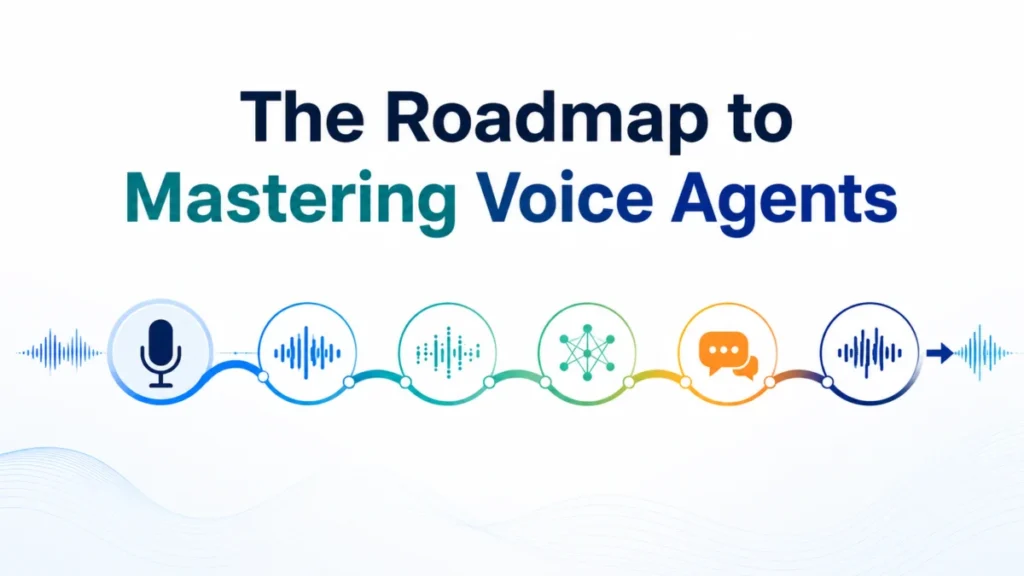
At its core, a voice agent is an orchestration of three distinct technological layers. While a text-based agent is primarily concerned with the "reasoning" phase, a voice agent must act as a translator, a thinker, and an orator simultaneously.
1. Speech-to-Text (STT)
Also known as Automatic Speech Recognition (ASR), this is the gateway. The system must capture raw, often noisy audio data and transcribe it into machine-readable text. This stage is highly sensitive to external variables—background noise, regional accents, and the quality of the recording hardware all play a role in the accuracy of the transcription.
2. Language Understanding and Reasoning
Once the audio is transcribed, the resulting text is fed into an LLM. This is where the agent’s "intelligence" resides. It interprets the user’s intent, retrieves relevant data from internal or external knowledge bases, and formulates a coherent response.
3. Text-to-Speech (TTS)
The final stage is the conversion of the generated text back into high-fidelity audio. Modern TTS engines are no longer robotic; they now offer nuanced inflection, pacing, and emotional range, which are essential for maintaining a human-like rapport.
Why Voice Agents Differ from Text-Based Systems
Transitioning from text to voice is not merely a matter of adding a library to your existing codebase; it requires a fundamental change in architectural philosophy. Several key constraints define the landscape of voice engineering:
- The Tyranny of Latency: In a text-based interface, a three-second delay is acceptable. In a voice conversation, a three-second delay feels like a social catastrophe—an "awkward silence" that erodes user trust and breaks the illusion of a natural interaction.
- The Absence of Visual Cues: You cannot rely on bullet points, headers, or bold text to guide the user. The response must be structured for the ear, requiring a conversational style that is concise, rhythmic, and clear.
- Interruptibility and Turn-Taking: Unlike a chat window, where the user waits for the AI to finish, human speech is fluid. People interrupt, change their minds mid-sentence, and overlap. Engineering an agent that understands when to stop talking and when to listen is a significant technical hurdle.
- Cascading Errors: In a voice pipeline, errors are additive. If the STT misinterprets a word, the LLM will reason based on that error, and the TTS will speak the wrong answer. Robust error-handling at every stage is mandatory for a functional product.
A Seven-Stage Roadmap to Proficiency
Building a production-grade voice agent requires a structured approach. We have developed a seven-stage roadmap designed to take you from a foundational understanding to advanced deployment.
Stage 1: Mastering the Core Pipeline
Before writing a single line of production code, developers must understand the nuances of the audio-to-audio loop. This involves studying audio formats, sampling rates, and the impact of the Word Error Rate (WER) on overall system performance.
Stage 2: The Language Processing Layer
Leverage your existing LLM skills here. The focus should be on prompt engineering specifically for speech. You must learn to optimize responses for auditory consumption—keeping sentences short and avoiding complex lists that are difficult to track in an audio-only format.
Stage 3: Real-Time and Streaming Architectures
To combat latency, developers must move away from "request-response" cycles. Implementing streaming architectures—where the LLM begins generating text in chunks, which are immediately sent to the TTS engine—is the industry standard for creating a responsive, "live" feel.
Stage 4: The Art of Conversation Design
This is the discipline that bridges engineering and psychology. Conversation design dictates how an agent handles ambiguity, how it maintains a consistent persona, and how it guides a user back on track if they wander off-topic.
Stage 5: Tooling and Persistent Memory
A voice agent that cannot perform actions is merely a chatbot that speaks. By integrating tools (APIs, databases, and function-calling capabilities), your agent becomes an active assistant capable of checking schedules, processing payments, or controlling IoT devices. Adding long-term memory allows the agent to recall preferences across different sessions, providing a personalized user experience.
Stage 6: Deployment and Telephony Infrastructure
Moving from the development environment to the real world introduces infrastructure challenges. This stage covers the complexities of WebRTC, telephony integrations, and the realities of scaling concurrent audio streams without ballooning infrastructure costs.
Stage 7: Advancing into Specialized Domains
Once the fundamentals are set, you can explore cutting-edge features: emotion detection (adjusting tone based on user sentiment), custom voice cloning for brand identity, and multilingual capabilities that allow the agent to switch languages dynamically based on the user’s input.
Supporting Data: The Industrial Shift
The economic implications of this transition are profound. Market research indicates that voice-enabled AI is expected to become the standard interface for enterprise software by 2028. Organizations that deploy voice agents report:
- Increased Accessibility: Removing the barrier of physical typing allows for broader inclusion for users with disabilities.
- Higher Throughput: Voice interactions are often faster than typing, leading to shorter session durations in customer support contexts.
- Reduced Cognitive Load: In environments like healthcare or logistics, voice allows users to remain "hands-free" while accessing data, significantly improving operational safety and efficiency.
Official Perspectives: The Developer’s Responsibility
Industry experts emphasize that as voice agents become more prevalent, the ethical responsibility of the developer grows. "When an agent sounds human, users are more likely to anthropomorphize it," says one lead AI architect. "We must ensure that transparency remains a core tenet of design. Users should always know they are speaking to an AI, and the agent must be programmed to handle sensitive information with the utmost security."
Implications for the Future of Work
The rise of voice-first AI suggests a future where software is no longer something we "use" through a screen, but something we "collaborate" with through conversation. For the developer, this shifts the job description from "UI Designer" to "Interaction Architect."
By following this seven-stage roadmap, you are not just learning to code; you are learning to define the next generation of human-machine interaction. The barrier to entry is lowering, but the standard for quality is rising. Those who master the nuances of latency, conversation design, and pipeline optimization will be the architects of the next digital era.
The path forward is sequential and deliberate. Start by understanding the flow of audio, iterate on your prompt strategies for spoken language, and eventually move into the complexities of real-time deployment. Whether you are building an assistant for the home or a complex enterprise tool, the principles remain the same: engineering builds the capability, but conversation design builds the connection.