From Kochi PC Gamers to the Asian Games Stage: Inside India’s Quest for eSports Glory
Main Facts
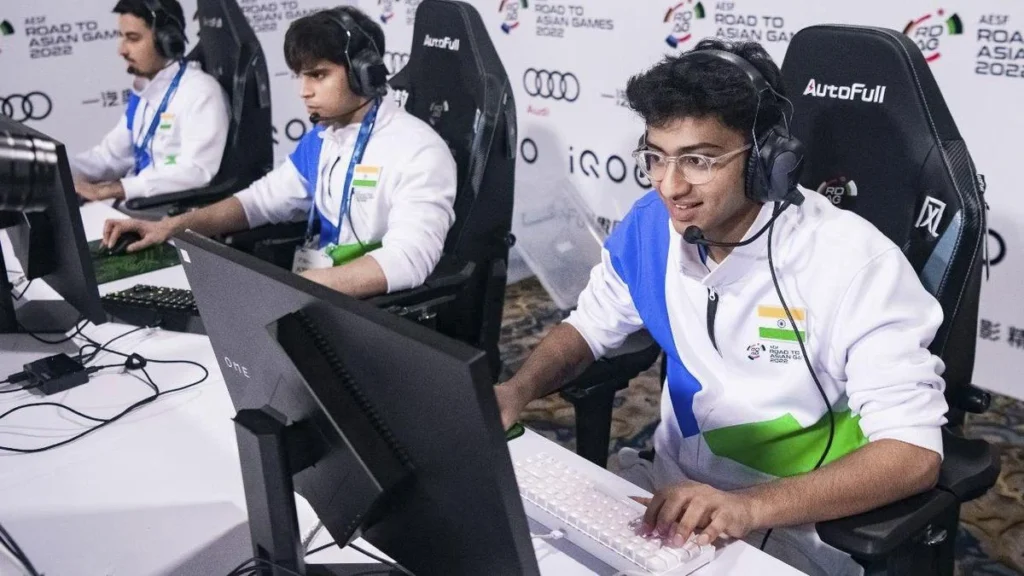
As the global sporting calendar builds anticipation for the Asian Games 2026 in Aichi-Nagoya, Japan—scheduled to run from September 19 to October 4—India is preparing a robust 15-member eSports contingent. This elite squad will contest four of the 11 designated eSports disciplines: League of Legends, Pokémon UNITE, eFootball, and Puyo Puyo Champions.
At the vanguard of India’s League of Legends campaign is 24-year-old Akshaj Shenoy, competing under the gamer tag "Kat Bot." Hailing from Kochi, Kerala, Akshaj serves as the captain and midlaner for the national team. The Indian League of Legends roster is rounded out by Aakash Shandilya ("Infi"), Sanindhya Malik ("Deadcorporal"), Mihir Ranjan ("Lotus"), Ahmed Shahid ("Nero"), and Rahul Bisht ("Bob"). This formidable lineup earned their tickets to Nagoya after emerging victorious in the regional qualifiers held this past June under the S8UL eSports banner.
Following eSports’ successful debut as an official medal event at the 2023 Asian Games (having previously appeared as a demonstration sport in Jakarta in 2018), India’s digital athletes are returning with heightened ambitions. Having secured a respectable fifth-place finish in their inaugural international outing last year, Akshaj and his team are setting their sights firmly on the podium for 2026.
Chronology: The Evolution of a Competitor
Humble Beginnings on Outdated Hardware
Akshaj Shenoy’s journey into competitive gaming defies the stereotype of the modern, ultra-resourced digital athlete. His initiation into the medium began humbly in Kochi, driven by a fascination with late-90s PC classics. He spent his early childhood captivated by Electronic Arts’ motorcycle racing title Road Rash and Naughty Dog’s iconic 3D platformer Crash Bandicoot.
However, hardware limitations plagued his early years. His outdated family computer struggled to handle the rapidly evolving graphical demands of turn-of-the-century PC gaming, forcing him to adapt and seek out titles that could run within his machine’s modest constraints.
Discovering the MOBA Ecosystem
The turning point in Akshaj’s gaming life arrived at age 15, when he stumbled upon YouTube gameplay videos of League of Legends. Developed by Riot Games, the Multiplayer Online Battle Arena (MOBA) title miraculously functioned on his older PC.
Drawn into the intricate tactical depth of lane control, resource management, and team synergy, Akshaj began grinding matches on the Southeast Asian server. His innate aptitude for the game catalyzed leadership qualities; he soon founded his own early competitive team, Temple of Kings, marking his first foray into organized team-based eSports.

From Hangzhou 2023 to Aichi-Nagoya 2026
Over the next decade, Akshaj transitioned from an enthusiastic regional ladder-climber to a seasoned national captain. When eSports made its historic debut as an official medal sport at the 2023 Asian Games in Hangzhou, China, Akshaj led the Indian League of Legends team to a creditable fifth-place finish.
Rather than resting on those laurels, the team re-evaluated their shortcomings against seasoned international powerhouses. Securing qualification through S8UL eSports in June 2026, Akshaj and his squad enter the upcoming Aichi-Nagoya Games with a vastly different preparation pedigree than they did three years prior.
Supporting Data & Operational Insights
Anatomy of a League of Legends Match
For the uninitiated, Akshaj breaks down the tactical mechanics of League of Legends through a strategic lens:
"The main objective of the game is to destroy your enemy base by accumulating resources and getting stronger," Akshaj explains.
Detailing his specific operational role as a midlaner, he notes:
"The game map is a square divided into two triangles with three lanes. I will be on the middle lane, helping the team through the map and acting as a facilitator for the team."
Rigorous Training Regimens and Academic Balance
The intensity of international eSports demands a grueling schedule that mirrors, and often exceeds, traditional athletic conditioning. Akshaj highlights the transformation in the team’s preparation metrics for the 2026 Games:

- Practicing Volume: The team has doubled its practice hours compared to the 2023 cycle.
- Coaching Integration: More face-to-face and remote training hours have been logged with professional coach Samuel Boudrie.
- Daily Split Schedule: Players maintain independent skill sharpening during daytime hours, followed by rigorous evening team sessions lasting four to five hours. These sessions culminate in analytical review meetings dissecting match tape with Coach Boudrie.
Juggling this punishing routine requires exceptional discipline, particularly because Akshaj balances his professional athletic career with the pursuit of a Master of Business Administration (MBA) degree.
"Since practice is usually at night, I spend the day at my dad’s office or studying. Your time-management skills matter a lot," he reflects.
Official Perspectives and Industry Realities
The Double-Edged Sword of Gaming Addiction
Beyond the glitz of international competition, Akshaj maintains a grounded, pragmatic view of video games’ psychological footprint on modern society. Drawing a sharp line between leisure and professional competition, he issues a cautionary note regarding game design:
"They are designed to attract players and retain them. Essentially, games are meant for relaxation. So, once it gets competitive, the entire dynamic changes. People should be self-aware and spend time depending on whether they want to treat it like a competition or a leisure activity."
The Fragility of an eSports Career
Addressing aspiring athletes looking to enter the digital arena, Akshaj emphasizes the compressed career timeline native to competitive gaming:
"Factors such as age will affect your response speed. So, if someone wants to pursue eSports, they should eventually focus on content creation as well."
Because eSports titles rely heavily on millisecond-level reaction times, professional competitors often face early retirement compared to traditional sports athletes, necessitating diversified revenue streams like streaming and media production.

Implications for the Future of Indian eSports
Infrastructure Gaps vs. Government Support
While the inclusion of eSports in the Asian Games marks a watershed moment for legitimizing digital competition across Asia, India still faces structural hurdles that threaten its global competitiveness. Akshaj points out a critical infrastructural disadvantage:
"For instance, the game I play doesn’t have a server for us, which puts us at a disadvantage at the competitive level. We are not used to playing games with low lag or input latency. These titles are reaction-based, so your input and ping levels matter."
High ping (latency) severely cripples a team’s ability to contest high-tier international opponents from South Korea, China, or Southeast Asia, where localized servers provide optimal conditions. However, Akshaj remains optimistic, noting that titles with stronger domestic infrastructure—such as PUBG: Battlegrounds—demonstrate that eSports can indeed be lucrative and viable career paths in India.
Macro Trends: Global Recognition
Globally, the landscape is shifting in favor of the digital athlete. Increased state-level backing, modern training facilities, and surging corporate investments are rapidly turning mobile and PC eSports into mainstream spectacles.
As the Indian contingent boards flights for Aichi-Nagoya, Japan, the nation’s digital sports ecosystem stands at a critical juncture. For Akshaj Shenoy and his teammates—Infi, Deadcorporal, Lotus, Nero, and Bob—the upcoming tournament is not merely about playing video games on an international stage; it is about cementing India’s footprint on the global eSports map.
With heightened discipline, double the practice hours, and invaluable international experience under their belts, the team’s aspirations are clear and uncompromising. As Akshaj concludes:
"We will have a better showing than we did last time and are hoping for a medal."