Google Pixel Watch 5: Incremental Upgrades or Stagnation? A Deep Dive into the Latest Leak
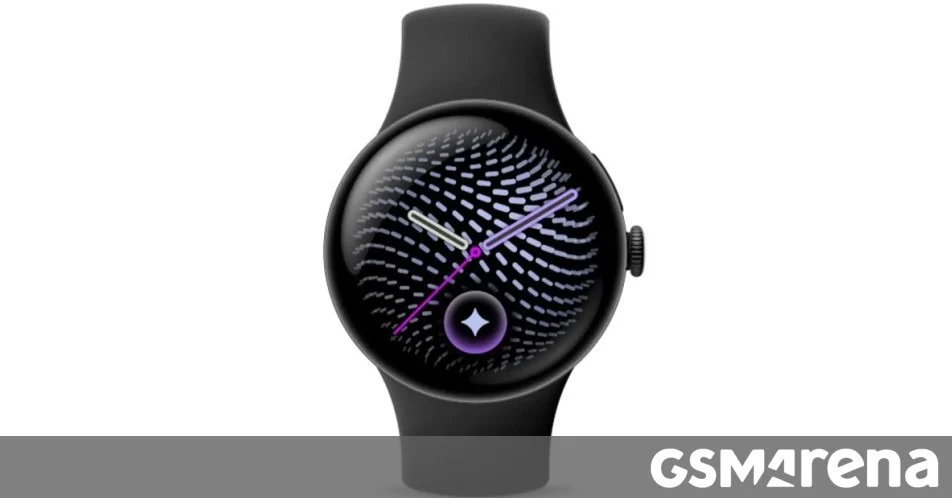
As the tech industry gears up for Google’s highly anticipated hardware event on August 12, the spotlight is shifting from the flagship Pixel 11 series to its wrist-worn companion: the Pixel Watch 5. With a scheduled launch date coinciding with the company’s premier smartphone lineup, the Pixel Watch 5 arrives under intense scrutiny. Recent filings on the Google Play Console have provided a definitive, albeit potentially polarizing, look at the hardware powering Google’s next-generation wearable.
While the device promises to maintain the aesthetic language that has defined the series since its inception, the internal specifications suggest a strategy defined more by refinement than revolution. As we analyze the data emerging from the Play Console, a clear picture forms of a device that prioritizes system fluidity over radical architectural shifts.
Main Facts: The "Godric" Blueprint
The Google Pixel Watch 5, currently operating under the internal codename "Godric," has made its formal appearance on the Google Play Console. The documentation confirms several key hardware pillars, leaving little to the imagination just weeks before the official unveiling.
At the heart of the device remains the Qualcomm SW5100 SoC. This chipset choice is notable for its consistency; it is the same silicon foundation that powered the Pixel Watch 2, 3, and 4. The architecture remains unchanged, featuring four Cortex-A53 cores clocked at 1.7GHz, paired with an Adreno 702 GPU. For users expecting a generational leap in raw processing power, the Play Console listing confirms that the "Godric" is functionally identical to its immediate predecessor in terms of core silicon.
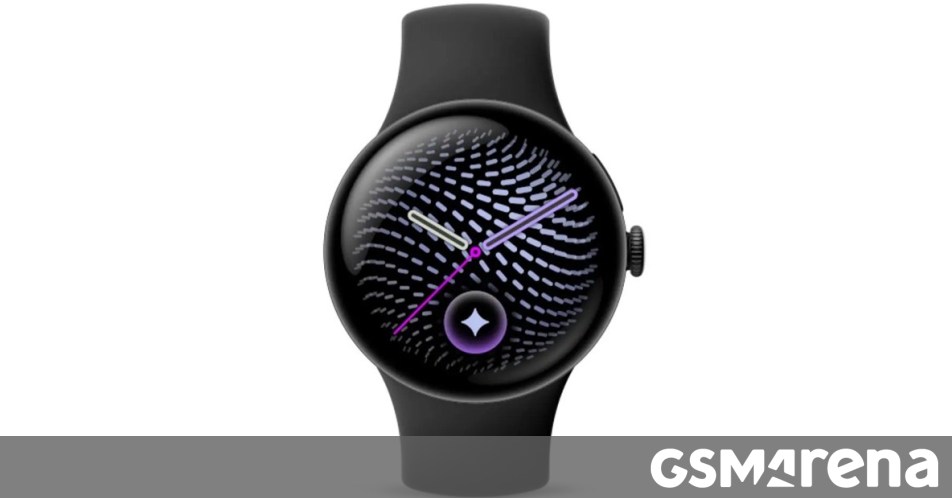
However, the news is not entirely stagnant. The listing explicitly confirms a shift in memory capacity. Since the inception of the Pixel Watch line, Google has consistently equipped its wearables with 2GB of RAM. The Pixel Watch 5 marks the first departure from this standard, boasting 3GB of RAM. This 50% increase in memory is arguably the most significant hardware upgrade listed, suggesting that while the CPU remains the same, Google is aiming to improve background process management and overall system responsiveness.
A Chronological Perspective: The Evolution of the Pixel Watch
To understand the significance of the Pixel Watch 5’s specs, one must view it through the lens of the product line’s history.
- October 2022: The original Pixel Watch debuted, establishing the iconic "pebble" design language and a focus on Fitbit integration. It was criticized for its reliance on an aging Exynos chip, which hindered battery life.
- October 2023: The Pixel Watch 2 arrived with the Snapdragon W5 platform, a massive leap in efficiency that finally allowed for all-day battery life even with the Always-On Display enabled.
- August 2024: The Pixel Watch 3 refined the design and focused on display brightness and health tracking features, cementing the W5 series as the industry standard for Wear OS.
- August 2025: The Pixel Watch 4 introduced refinements in sensors and cellular connectivity, specifically focusing on safety features like Satellite SOS, supported by the Snapdragon W5 Gen 2.
- August 2026 (Upcoming): The Pixel Watch 5 arrives. While the visual design renders leaked earlier this month show a near-identical clone of the Watch 4, the increase in RAM suggests a focus on software longevity and UI fluidity rather than new sensor arrays or processing speed.
This trajectory reveals a company that has reached a "plateau of maturity." Google appears to have found a form factor and hardware architecture that works reliably, opting to iterate on software experiences—such as deeper Gemini AI integration and advanced Fitbit health metrics—rather than reinventing the hardware wheel annually.
Supporting Data: Pricing and Performance Metrics
The leaks have also provided a clearer picture of the financial commitment required for the new model. While these prices are currently pegged to the Euro, they provide a baseline for global market expectations.
Pricing Structure (Leaked)
| Model | Variant | Price |
|---|---|---|
| 41mm | Wi-Fi Only | €419 |
| 41mm | LTE | €519 |
| 45mm | Wi-Fi Only | €449 |
| 45mm | LTE | €549 |
These prices indicate a premium positioning in the market. By maintaining the same processor while raising the RAM, Google is essentially betting that the user experience will be bolstered by the extra memory, making the watch feel "snappier" without the need for a newer, more power-hungry processor.
The inclusion of the Adreno 702 GPU, while older, is well-optimized for the Wear OS interface. The primary bottleneck for previous models has rarely been the raw clock speed of the cores, but rather the memory overhead caused by multiple background sensors and health-tracking apps. By moving to 3GB of RAM, Google is likely addressing the "hiccups" that can occur during heavy multitasking on the watch.
Official Responses and Industry Context
Google has maintained its customary silence regarding unreleased products, providing no official comment on the Play Console listings. However, industry analysts suggest that the company’s strategy is influenced by the current state of the semiconductor market for wearables.
The Snapdragon W5 platform remains the most efficient choice for Wear OS devices. Switching to a newer architecture would require significant re-engineering of the watch’s internal chassis, potentially impacting battery volume—the most precious commodity in a device this small.

Furthermore, Google’s recent pivot toward deep AI integration (Gemini) suggests that the company is shifting its focus from hardware specs to software intelligence. If the Pixel Watch 5 can leverage the additional 1GB of RAM to process more complex AI-driven health insights locally on the device, the lack of a CPU upgrade may be viewed as a calculated trade-off.
Implications: What This Means for Consumers
The implications of this leak are twofold, depending on the consumer’s current position in the ecosystem.
For Current Pixel Watch 4 Owners:
The upgrade cycle for the Pixel Watch 5 is likely not for you. If your current watch is functioning well, the move to the Pixel Watch 5 offers little in the way of performance gains. The processor is identical, and the design is effectively unchanged. Unless there is a breakthrough in the co-processor or the sensors (which remain unconfirmed), the Pixel Watch 5 appears to be a "maintenance release" rather than a true successor.
For Potential New Buyers:
The outlook is more positive. With 3GB of RAM, the Pixel Watch 5 will likely offer the most stable and fluid Wear OS experience available to date. If you are entering the Google ecosystem for the first time, or upgrading from a first-generation Pixel Watch, the Watch 5 will provide a significant quality-of-life improvement. The extra RAM ensures that the watch will likely remain relevant for software updates for several years, protecting your investment.

The Broader Market Impact:
Google’s decision to stick with the W5 chip reinforces a trend toward "incremental innovation." As the smartwatch market matures, manufacturers are finding that the diminishing returns on CPU performance make it more logical to focus on battery efficiency, display technology, and AI-driven software features.
Final Thoughts: The Road to August 12
As we approach the August 12 launch event, the Pixel Watch 5 represents a "safe" bet. It is a refinement of a winning formula—a device that prioritizes the user experience through increased memory and stable, reliable hardware. While tech enthusiasts may clamor for a new chip, the average consumer will likely appreciate the smoother performance and continued commitment to the familiar, sleek design that has made the Pixel Watch a staple of the Android wearable market.
Will the extra gigabyte of RAM be enough to justify the price tag? That will ultimately depend on how well Google utilizes that headroom for its upcoming AI features. With just a few weeks left until the official reveal, we will soon see if "Godric" has any hidden surprises up its sleeve to complement its modest, yet practical, internal upgrades.