RentoMojo Makes History: India’s Pioneer Furniture and Appliance Rental Startup Sparks Investor Frenzy with Stellar Market Debut
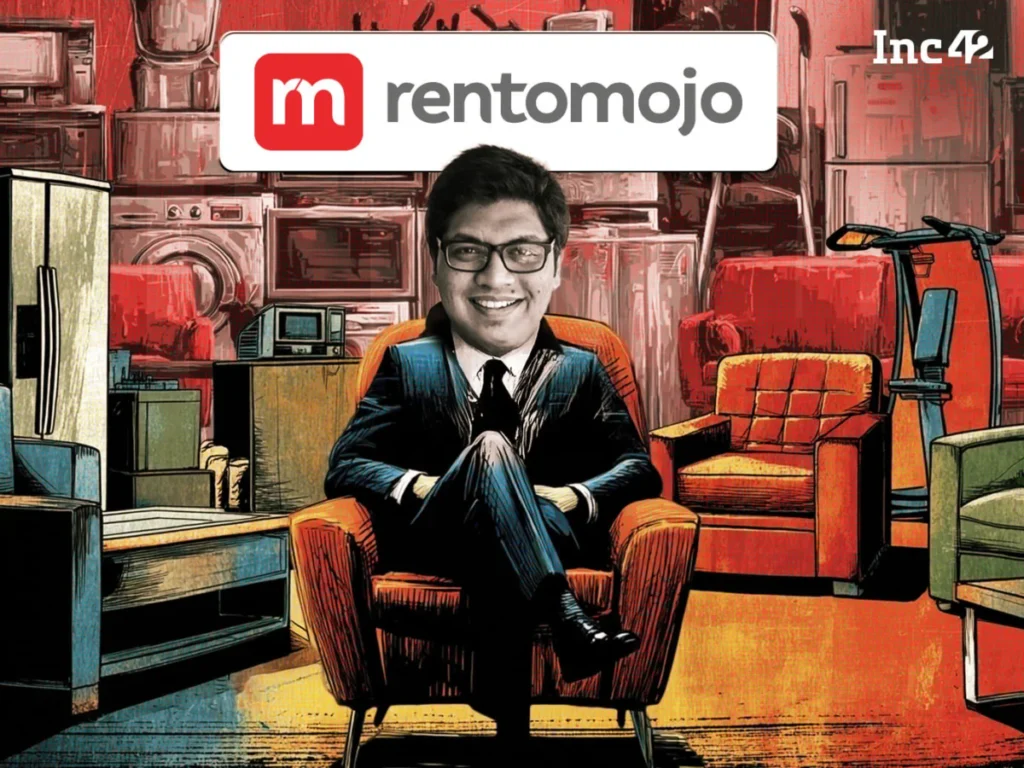
New Delhi: In a landmark milestone for India’s burgeoning subscription and sharing economy, RentoMojo officially etched its name into the history books today by becoming the country’s very first listed furniture and appliance rental startup. The company’s initial public offering (IPO)—which captured the imagination of the street weeks prior—culminated in a stellar stock market debut, leaving early institutional backers richly rewarded and setting a high benchmark for consumer tech listings in 2026.
Trading desks lit up as RentoMojo shares opened significantly higher than their issue price, defying broader macroeconomic jitters and validating the company’s unique asset-light, circular economy business model. With a market capitalization comfortably crossing the ₹5,200 crore threshold ($543 million) within hours of opening, the listing marks a major evolutionary leap for a firm that began a decade ago as a modest peer-to-peer and rental experiment in urban India.
1. Main Facts: The Market Debut and Financial Snapshot
RentoMojo’s debut on the National Stock Exchange (NSE) and the Bombay Stock Exchange (BSE) was nothing short of electric.
- Listing Performance: The company’s shares listed at ₹482.45 on the NSE, representing a healthy 19.42% premium over the final issue price of ₹404. Simultaneously, on the BSE, the stock opened at ₹480, marking an 18.81% jump.
- Intraday Surge: Buying momentum persisted past the opening bell. The stock swiftly climbed to an intraday high of ₹500 on the BSE, trading up roughly 23.76% from its issue price and surging over 4% from its opening tick.
- Valuation Leap: At its peak morning trading price, RentoMojo commanded a market capitalization of approximately ₹5,205.74 crore ($543 million). This valuation sits roughly 30% higher than the ₹4,006 crore valuation sought at the upper band of its IPO price range (₹384–₹404), reflecting overwhelming secondary market confidence.
- The Offering Breakdown: The ₹1,256 crore public issue comprised a fresh issue worth ₹150 crore and an Offer for Sale (OFS) component of up to 2.74 crore shares aggregating to ₹1,105.6 crore.
Underpinning this market enthusiasm was the sheer scale of demand during the bidding phase. The IPO closed with an overall subscription rate of a staggering 72.88 times, driven heavily by aggressive institutional participation and high-net-worth interest. Prior to opening to the public, RentoMojo successfully secured ₹376.1 crore from 41 anchor investors by allotting 93.1 lakh shares at the upper price band of ₹404.
2. Chronology of Events: From Inception to the Public Markets
The journey to the trading floor has been a decade-long crucible of strategic pivots, logistical scaling, and capital restructuring.
- 2014 — The Genesis: RentoMojo was founded by Geetansh Bamania and Ajay Nain. Recognizing the shifting consumption patterns of young urban professionals moving to metropolitan hubs for employment, the founders launched a subscription-based platform designed to offer flexible access to furniture, home appliances, and electronics without the heavy upfront costs of ownership.
- The Scaling Years (2015–2022): Over successive funding rounds, the startup attracted marquee venture capital, including Accel India, IDG Ventures, and various global strategic funds. It navigated the logistical complexities of last-mile delivery, asset maintenance, and reverse logistics, building a resilient pan-India operational footprint across major tier-1 and tier-2 cities.
- Late 2024 to 2025 — Financial Turnaround and Path to Profitability: Having moved past the heavy cash-burn phases typical of early-stage consumer tech, RentoMojo tightened its operational efficiencies. By fiscal 2026, the company was consistently profitable, generating strong operating cash flows that laid the foundational justification for a public market float.
- Early 2026 — Pre-IPO Anchor Allotments: In the weeks leading up to the public issue, RentoMojo locked in vital institutional backing, raising ₹376.1 crore from anchor investors, thereby signaling strong institutional conviction.
- The IPO Bidding Window: The public issue opened to immense retail and non-institutional investor (NII) fanfare, culminating in a 72.88x oversubscription on the final day.
- Listing Day: RentoMojo officially rings the bell, trading under its newly minted ticker symbols and claiming its crown as India’s premier listed rental commerce enterprise.
3. Supporting Data: Financial Health, Metrics, and Stakeholder Exits
A close examination of RentoMojo’s financial disclosures reveals a robust business model supported by strong unit economics, expanding inventories, and disciplined capital allocation.
Revenue and Profitability Metrics (FY26)
- Operating Revenue: Scaled by 45.5% to ₹387 crore, up from ₹266 crore in the preceding fiscal year.
- Profit After Tax (PAT): Surged by nearly 142% year-on-year to reach ₹104.3 crore (though this figure included a notable tax credit of ₹36.6 crore).
- EBITDA: Climbed 38% YoY to ₹163.5 crore, though the EBITDA margin saw a minor compression, narrowing to 41.5% from 43.6% due to aggressive inventory expansion.
- Cash Flow & Capex: The company generated approximately ₹170 crore in operating cash flow during the year, while deploying roughly ₹175 crore in incremental capital expenditures to rapidly scale its rental inventory.
Scale of Operations
As of March 2026, RentoMojo’s platform serves approximately 2.5 lakh live subscribers maintaining roughly 8.5 lakh live items across its expansive catalog of furniture, appliances, and electronics.
The Great Wealth Distribution: OFS Dynamics
The Offer for Sale (OFS) window provided lucrative exits and milestone returns for early backers and founders:
- Accel India: Emerge as one of the biggest financial beneficiaries, pocketing roughly ₹317 crore by offloading 78.47 lakh shares and locking in an impressive 8.6x gross return.
- Geetansh Bamania: Co-founder and CEO Geetansh Bamania realized ₹34.31 crore through the sale of 8.49 lakh shares.
- Angel and Early Investors: Notable returns were recorded by Rajeev Chitrabhanu HUF and Nazara Technologies founder Nitish Mittersain, who netted staggering gross returns of 265.97x and 152.45x, respectively, on the shares they divested.
- Shareholder Restructuring: While investors like Accel, Edelweiss, and ValueQuest chose to retain substantial stakes to participate in the company’s long-term upside, funds such as IDG Ventures India Fund III, GMO Payment Gateway, and GMO GFF executed complete exits.
4. Official Responses and Industry Perspectives
While formal management commentaries during the quiet period immediately surrounding the listing remained measured due to regulatory compliance, the underlying sentiment from the leadership team and early backers reflects profound validation.
In statements leading up to the public offering, CEO Geetansh Bamania repeatedly emphasized that RentoMojo’s pivot toward sustainable profitability was non-negotiable. Rather than chasing mindless top-line growth through unsustainable discounting, the management focused intensely on asset utilization rates, product lifecycle management, and customer retention metrics.
Market analysts and venture capitalists tracking the consumer internet space have hailed the listing as a watershed moment.
"RentoMojo’s successful public debut proves that Indian public markets are fully mature enough to appreciate alternative consumption models," noted a Mumbai-based institutional equities analyst. "For years, the market viewed rental startups with skepticism regarding asset wear-and-tear and high logistics costs. By proving consistent profitability, strong operating cash flows, and stellar inventory monetization, RentoMojo has rewritten the rulebook."
Competitors in the space—including players like Furlenco, Rentickle, and Cityfurnish—are expected to monitor the stock’s post-listing trajectory closely, as RentoMojo’s newfound access to public capital markets could give it a distinct war-chest advantage in scaling operations, marketing, and supply-chain logistics.
5. Implications: What RentoMojo’s Listing Means for India’s Tech Startup Ecosystem
RentoMojo’s triumphant entry into the public markets carries far-reaching implications for the broader Indian startup ecosystem, particularly for consumer-facing subscription models and venture-backed enterprises looking beyond traditional private fundraising.
1. Validation of the Circular Economy
For a long time, Indian consumer culture was deeply anchored in the psychological comfort of personal ownership—buying homes, vehicles, furniture, and appliances outright. RentoMojo’s success demonstrates that a structural demographic shift is underway. Urban millennials and Gen-Z professionals increasingly prioritize mobility, flexibility, and financial liquidity over long-term asset ownership. The public market’s willingness to value the company at over $540 million signals macroeconomic faith in the sharing and rental economy.
2. A Blueprint for Profit-Led IPOs
The days of burning cash indiscriminately to manufacture superficial growth figures are firmly in the rearview mirror. RentoMojo’s prospectus and financial performance outline a clear playbook for modern Indian startups: achieve unit economic viability, demonstrate robust operating cash flows, prioritize path-to-profitability, and then approach the public markets. This rigorous approach is likely to inspire upcoming consumer brands and tech platforms to recalibrate their internal metrics before ringing the stock exchange bell.
3. Liquidity Pipelines for Early-Stage VCs
The stellar returns delivered to early backers like Accel, alongside extraordinary multiples for angel entities, provide undeniable proof points for the Indian venture capital and private equity ecosystem. Successful liquidity events of this magnitude reassure global LPs (Limited Partners) that capital deployed into Indian tech ecosystems can achieve lucrative, realized exits via domestic bourses.
4. Competitive Dynamics in Rental Commerce
As the undisputed first mover in its niche to go public, RentoMojo now holds a significant strategic weapon. With a bolstered balance sheet and public currency, the company can aggressively expand into Tier-2 and Tier-3 urban clusters, deepen its technological infrastructure for asset tracking, and invest heavily in consumer acquisition. Competitors will now face heightened pressure to either match this operational scale or seek strategic consolidation.
Conclusion
As the trading day closed with RentoMojo holding firm near its intraday highs, the overarching takeaway was clear: the narrative around Indian tech IPOs has matured. It is no longer just about high-growth software-as-a-service (SaaS) or massive food-delivery conglomerates; tangible, everyday lifestyle utilities built on sustainable unit economics have officially arrived on the main stage. For RentoMojo, the listing is not the destination, but rather the opening chapter of its evolution as a publicly traded corporate entity.