The Quality Revolution: How AI Personas and Feedback Loops Are Redefining Content Creation and Business Deliverables
As artificial intelligence platforms become universally accessible, the economic cost of generating raw content is rapidly approaching zero. Anyone, from solo creators to enterprise executives, can instantly spin out a hundred short-form ideas, draft comprehensive reports, or build extensive deliverables with a single prompt.
However, this democratization of output has created a secondary, far more pressing challenge: uniformity. Because the vast majority of users rely on standard default configurations and generic prompting techniques, the collective output of the internet has gravitated toward a monotonous average. In a digital ecosystem saturated with homogenized AI-generated material, average holds zero market value.
In a recent collaborative breakdown on the AI Explored podcast, content strategist Austin Marchese and host Michael Stelzner explored a paradigm-shifting counter-strategy. Rather than utilizing AI merely to accelerate production speed, forward-thinking professionals are leveraging custom AI personas, local knowledge bases, and iterative feedback loops to dramatically elevate the quality of their work before it ever reaches an audience.
Main Facts: The Shift from Quantity to Quality
The core thesis of Marchese and Stelzner’s framework is simple yet transformative: the true competitive advantage in the modern AI landscape is not output volume, but exceptional quality.
- The Homogenization Trap: When AI-generated assets—ranging from visual art to corporate reports—are deployed without rigorous human refinement, they immediately trigger consumer skepticism. Audiences have developed a keen eye for unedited AI output, leading directly to an erosion of trust and perceived professional value.
- The Concept of "Owning Intelligence": Moving beyond basic cloud platforms, advanced users are shifting their operations to local file architectures. By housing contextual data, persona logs, and company playbooks locally (utilizing frameworks inspired by researchers like Andrej Karpathy), professionals stop merely "renting intelligence" and begin building proprietary, portable intellectual property.
- The Power of AI Clones: By replacing slow, human-to-human feedback loops (such as endless revision cycles with managers or clients) with rapid, highly calibrated human-to-AI-clone loops, creators can catch and rectify 80% to 100% of potential critiques in private.
Chronology: Building an End-to-End AI Quality Control System
For professionals looking to transition from generic AI users to master architects of automated quality control, Marchese outlines a structured, chronological implementation roadmap.
Phase 1: Establish the Technical Infrastructure
Establishing a robust quality assurance architecture begins with environment setup. Beginners can start with platform-specific workspaces—such as Claude Projects—where audience data, historical feedback, and communication samples can be uploaded directly into a centralized context window.
For more advanced workflows utilizing local execution environments (like Claude Cowork or Claude Code), users can establish an organized dual-layer file structure:
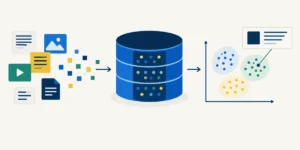
- The "Raw" Layer: Contains unprocessed, raw data inputs, such as raw customer call transcripts, direct message logs, and unedited meeting notes.
- The "Wiki" Layer: Comprises AI-processed summaries, behavioral models, and distilled preferences that allow the system to operate with high computational speed while retaining the ability to drill down into raw source material when necessary.
Phase 2: Isolate High-Impact Force Multipliers (The 80/20 Rule)
Not every daily task requires elite-tier optimization. Professionals must apply the 80/20 rule to identify the 20% of their operational tasks where a leap from "good" to "great" yields 80% of the overall business impact. For a corporate analyst, this might be the weekly executive summary; for a consultant, client deliverables; for a digital creator, YouTube video packaging (titles and thumbnails).
Phase 3: Construct Data-Driven AI Personas
To ensure high standards, creators must build AI clones of their actual target audience or critical stakeholders. This requires feeding the AI authentic historical data—including past email threads, Slack conversations, text messages, and critical feedback logs. The more granular and authentic the underlying data, the more accurate the AI persona’s subsequent critique will be.
Phase 4: Deploy an Internal AI Focus Group
Instead of relying on a single perspective, users can configure an internal "focus group" comprising multiple distinct archetypes (e.g., day-job builders, technical operators, price-sensitive buyers, and risk-averse managers). When an output is generated, it is passed through this panel, which evaluates the asset on a rigorous numerical scale (0 to 10) and provides individualized, actionable critiques.
Phase 5: Calibrate Through Iterative Real-World Testing
The system achieves perfection through continuous calibration. Creators test an AI-generated asset against the virtual persona, then cross-reference it against feedback from the real human counterpart. If discrepancies arise, the exact conversational delta is fed back into the system, updating the specific persona skill until the AI’s predictive critique matches reality.
Supporting Data and Empirical Results
The practical efficacy of this methodology is not merely theoretical; it is backed by radical real-world results. Marchese reported that after fully implementing his internal AI focus-group system, his primary content channel (YouTube video packaging and subscriber acquisition) experienced a 10x growth trajectory, pointing directly to the deployment of automated persona critique loops as the inflection point.
Furthermore, industry data highlights a structural shift in how organizations view AI competency. While early enterprise adoption focused entirely on cost-reduction and labor-replacement metrics (doing things faster), contemporary market valuation is rapidly pivoting toward output differentiation—measuring success by how effectively human strategic oversight can be scaled through automated quality-assurance frameworks.
Official Perspectives and Expert Methodology
A critical nuance emphasized throughout the framework is the rejection of manual prompt engineering. Marchese notes that he rarely writes a prompt or builds a skill by hand. Instead, he utilizes advanced voice input technologies (such as Claude’s native voice features or specialized dictation tools like Wispr Flow) to converse naturally with the AI. Spoken communication naturally captures cadence, nuance, and structural detail that typed prompts frequently omit.

When establishing new skills, experts recommend utilizing an interview-style prompt rather than a static command:
"Interview me to create an internal focus group skill where I want to take an output, have an audience set review it, and provide me with feedback. Ask me any questions to help develop this skill, and identify things I might not be thinking of."
By allowing the AI to interview the expert, the resulting prompt structure adapts precisely to the nuances of the user’s specific operational environment, vastly outperforming generic, pre-packaged templates.
Implications for the Future of Work
As generative AI models continue to advance, the barrier to entry for creating superficial content will effectively vanish. Consequently, the future marketplace will draw a stark, unforgiving line between two classes of professionals:
- The Commodity Producers: Those who rely on default AI setups to generate high-volume, unedited output, suffering from declining trust, audience fatigue, and eventual market irrelevance.
- The Quality Architects: Those who maintain rigorous intellectual ownership, building proprietary local knowledge bases, dynamic AI personas, and relentless automated feedback loops to ensure that every outward-facing asset represents human-level craftsmanship augmented by machine-speed iteration.
Ultimately, the goal of modern artificial intelligence integration is not to abdicate human thinking, but to construct systems that force our work to be rigorously tested, refined, and perfected before it ever meets the scrutiny of the real world.