The AI Evolution: Transitioning from Custom Assistants to Autonomous Digital Employees and Major Industry Updates
As artificial intelligence continues its relentless integration into modern business workflows, the paradigm of human-AI interaction is shifting. The era of passive chat interfaces and isolated custom configurations is rapidly giving way to dynamic "Skills," agentic productivity suites, and fully autonomous digital employees.
Industry developments signal a major pivot across major tech ecosystems—most notably Google and Meta—requiring professionals to rethink how they build, scale, and monetize artificial intelligence. This report breaks down the core structural shifts, provides a chronological overview of recent announcements, analyzes critical supporting data, outlines official ecosystem responses, and explores the broader implications for the future of work.
Main Facts
The artificial intelligence landscape is currently undergoing three simultaneous transformations:
- The Deprecation of Custom GPTs and Gems: Major AI platforms are shifting away from standalone custom GPTs and Gemini Gems in favor of modular "Skills"—a system popularized by Claude that allows users to trigger specialized instructions via a simple slash command directly within a conversation.
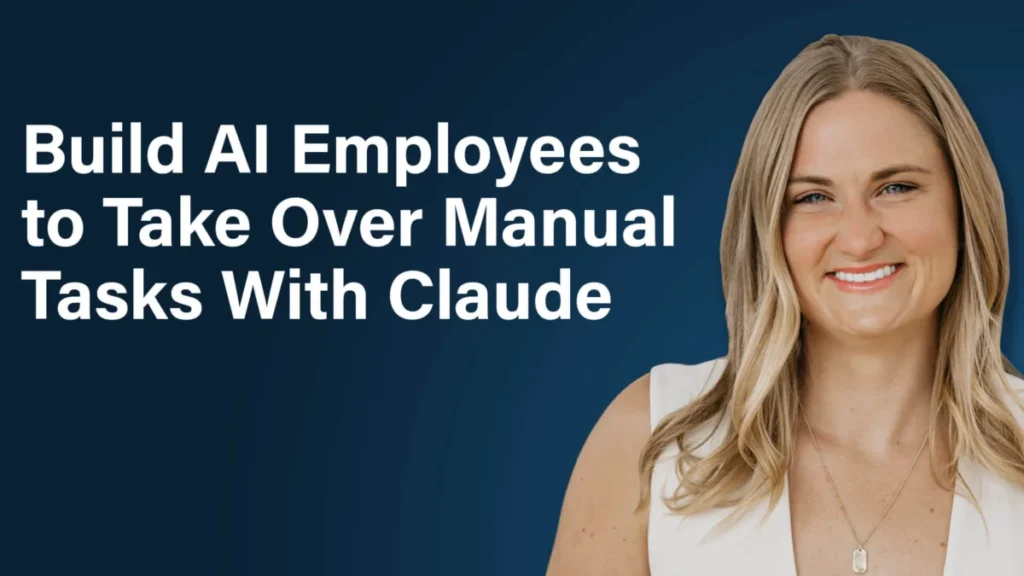
- The Rise of Autonomous AI Employees: Business automation is moving past simple prompt engineering. Experts like Callan Faulkner emphasize that building "AI employees" requires centralized foundational databases (a "Business Brain") and automated pipelines that transition chats into scheduled, unattended background tasks.
- Major Ecosystem Upgrades: Google has drastically expanded its product suite—upgrading Gemini Live into an agentic voice coordinator, introducing Gemini Omni 1.1 Flash for professional video controls, deploying agentic video understanding to cut tokens, launching Gemini 3.5 Transcribe, and introducing Google Pics. Simultaneously, Meta has rolled out tiered subscriptions (Meta AI Core and Premium) to monetize advanced generation capabilities.
Chronology of Recent AI Developments
Understanding the swift pace of generative AI innovation requires tracking the sequence of recent technological rollouts:
- Mid-2026 Shift to Modular AI: Claude’s introduction of inline "Skills" sets a new industry standard. Users abandon navigating to separate auxiliary windows, opting instead for slash-command prompts.
- Early September 2026 – Google’s Productivity & Voice Push: Google upgrades Gemini Live, integrating Spark, Daily Brief, Gmail, and Personal Intelligence to handle multi-step, hands-free voice delegation.
- Early September 2026 – Advanced Media & Transcription Tools: Google launches Gemini Omni 1.1 Flash (bringing 4K output and scene extensions to creators) alongside Gemini 3.5 Transcribe, supporting over 85 languages with advanced filler-word filtration and contextual formatting.
- Early September 2026 – Visionary Efficiency and Asset Creation: Google introduces agentic video understanding across the 3.x Flash model lineup to dynamically parse key video moments, alongside Google Pics for Workspace-integrated AI image creation and editing.
- Early September 2026 – Monetization Milestones: Meta formalizes its AI monetization strategy by rolling out Meta AI Core and Meta AI Premium subscription packages, bundling advanced media generation caps with platform verifications across Facebook, Instagram, and WhatsApp.
Supporting Data and Metrics
The quantifiable efficiency gains driving this technological shift underscore why businesses are moving quickly to adopt agentic workflows:
- Token and Cost Reductions: Google’s new agentic video understanding approach—which lets models actively decide which video moments to inspect rather than processing files at a fixed linear rate—reduces token usage by up to 88% and slashes operational costs by up to 66%.
- Accuracy Improvements: Despite drastically lowering computational costs, agentic video analysis boosts overall task retrieval and anomaly detection accuracy by as much as 7%.
- Enterprise Scaling: Industry training programs spearheaded by automation experts have successfully mobilized over 20,000 businesses to bridge the gap between casual AI chat and structured, repeatable digital employee pipelines.
- Multilingual Reach: New speech-to-text infrastructure, such as Gemini 3.5 Transcribe, now natively adapts to specialized vocabularies and regional nuances across more than 85 languages.
Ecosystem Responses and Strategic Pivots
As platforms race to capture market share, their respective responses reflect a unified vision: moving users from conversational assistants to autonomous operational agents.
The Conversion Imperative: From Custom GPTs to Skills
With ChatGPT and Gemini phasing out traditional custom GPTs and Gems, users are forced to adapt. The transition process requires a systematic approach:
- Extract Core Assets: Harvest original system instructions, knowledge bases, and reference files from legacy GPTs or Gems.
- Initialize via Chat: Open the native Skills creation interface in your platform of choice.
- Migrate and Format: Upload reference files, define the overarching goal, and paste legacy instructions. Instruct the AI to synthesize these components into a properly formatted, modern Skill.
- Test and Iterate: Run diagnostic test prompts to refine tone, accuracy, and output consistency before deploying the Skill into daily production.
Building the "Business Brain"
Industry leaders argue that ordinary employees fail to extract maximum value from AI because they lack foundational structure. To successfully train autonomous AI workers, organizations must build a centralized, pristine repository containing:
- Comprehensive pricing sheets and product catalogs.
- Standard operating procedures (SOPs).
- Explicit brand voice guidelines.
- Historical organizational wins and case studies.
According to automation specialists, relying on a disorganized Google Drive or scattered folders guarantees mediocre, generic AI outputs. Moving from prompt to skill to scheduled task requires rigorous, structured onboarding—treating the AI model less like a search engine and more like a human employee undergoing a probationary training period.
Implications for Businesses and Marketers
The convergence of modular skills, agentic video understanding, voice-driven multi-step workflows, and tiered subscriptions carries profound implications for the professional landscape:
1. The Death of Isolated Prompting
The competitive advantage no longer belongs to the individual who writes the cleverest prompt. Instead, value is captured by professionals who design reusable operational pipelines. When tasks can be triggered automatically via slash commands or executed on the clock via scheduled agentic tasks, ad-hoc chatting becomes obsolete.
2. Democratized Video and Visual Production
With developer tools like Gemini Omni 1.1 Flash offering first-to-last-frame interpolation, video references, and 4K output—alongside Workspace-native tools like Google Pics—the barrier to entry for high-end digital media creation collapses. Small marketing teams can now iterate on video concepts and visual assets at speeds previously reserved for major studios.

3. Voice as a Primary Operating System
The expansion of Gemini Live into a genuine agentic productivity tool signals that keyboards and screens are no longer the exclusive gatekeepers of software interaction. Being able to delegate complex, multi-step email management, daily briefs, and schedule coordination through continuous, hands-free conversation transforms how busy executives manage their day.
4. The Cost of Doing Business with AI
Meta’s introduction of Core and Premium subscriptions, alongside Google’s tiered developer architectures, confirms that advanced AI capabilities are shifting firmly into premium enterprise territory. Businesses must budget for recurring platform investments, viewing them not as software expenses, but as payroll allocations for their new digital workforce.

Conclusion
The transition from static custom GPTs to fluid Skills, combined with the explosive growth of agentic tools across Google and Meta ecosystems, marks a definitive turning point. Organizations that cling to casual chatting and messy, unstructured data repositories will find themselves outpaced by competitors who treat AI as a trainable, autonomous employee. By investing in foundational data hygiene, mastering modern Skill conversions, and integrating voice and video agents into daily workflows, businesses can secure a massive operational advantage in the AI-driven economy.