Telangana Government Establishes ‘Green Channel’ for Rapid Victim Compensation: CM Revanth Reddy Sets New Governance Standard
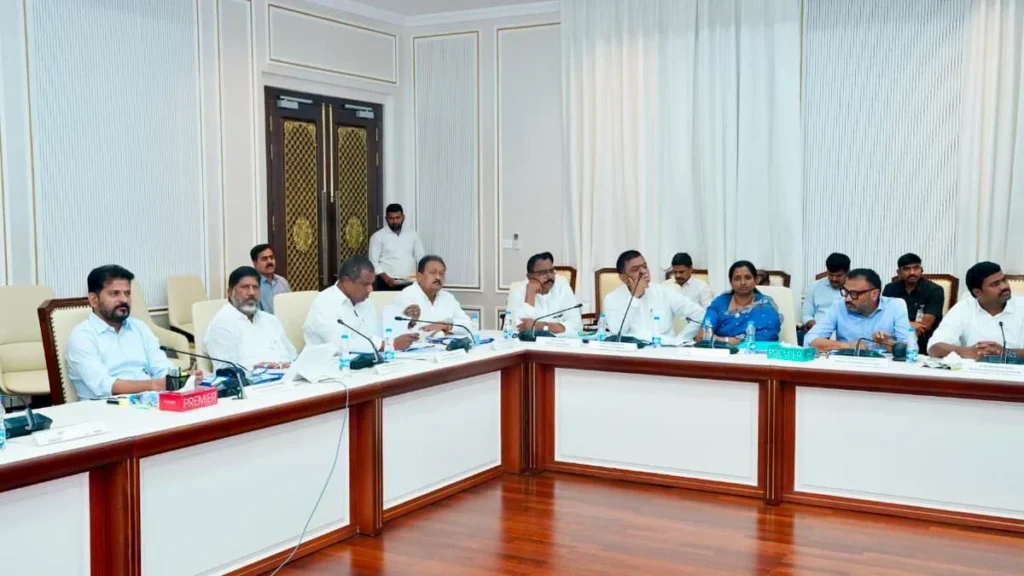
Hyderabad, September 22, 2026 – In a significant policy shift aimed at bolstering justice and support for marginalized communities, Telangana Chief Minister A. Revanth Reddy has ordered the immediate creation of a "Green Channel" to expedite compensation payments for victims of sexual assault belonging to Scheduled Castes (SC) and Scheduled Tribes (ST).
The directive was issued during a high-stakes meeting of the State-level Vigilance and Monitoring Committee, tasked with overseeing the implementation of the Scheduled Castes and Scheduled Tribes (Prevention of Atrocities) Act, 1989. The Chief Minister’s intervention underscores a broader commitment to placing humanitarian concerns at the heart of administrative decision-making, ensuring that bureaucratic delays do not exacerbate the trauma of the most vulnerable.
The "Green Channel" Initiative: A Paradigm Shift in Victim Support
The announcement of the "Green Channel" marks a departure from conventional, often sluggish, administrative processes. By establishing a dedicated, fast-tracked pipeline for financial aid, the state government intends to bypass the standard red tape that frequently hinders victims from receiving timely assistance.
During the session held in Hyderabad, Chief Minister Revanth Reddy emphasized that the state’s duty transcends mere legal compliance. "The government must respond to such heinous incidents on humanitarian grounds," he remarked, signaling that the administration views the financial relief as a fundamental pillar of its social justice framework. The "Green Channel" is expected to streamline communication between the police, the revenue department, and treasury officials to ensure that compensation reaches victims within a strictly defined, abbreviated timeframe.
A Milestone Meeting: Oversight and Accountability
The meeting, held on Tuesday, September 22, 2026, holds historical significance. According to government records, this was the first instance since the formation of Telangana that the State-level high-power Vigilance and Monitoring Committee convened under the direct chairmanship of the Chief Minister.
The presence of the Chief Minister, alongside Deputy Chief Minister Mallu Bhatti Vikramarka, suggests a top-down mandate to improve the enforcement of the SC/ST (Prevention of Atrocities) Act. The committee engaged in a comprehensive review of the state’s performance, scrutinizing:
- Case Registration Trends: Analyzing the efficacy of local police stations in filing First Information Reports (FIRs) under the Act.
- Investigation and Trial Proceedings: Identifying bottlenecks in the judicial process that lead to prolonged litigation.
- Disposal Rates: Evaluating the current speed of the legal system and the reasons behind pending cases.
- Rehabilitation Metrics: Assessing the effectiveness of the assistance programs currently in place to support survivors and their families.
Chronology of Social Welfare Integration
The administration’s focus on the SC and ST communities is not an isolated development but part of a multi-year effort to address systemic inequality. The current government’s approach can be traced through several key milestones:
- Initial Policy Formulation: Upon taking office, the current leadership prioritized the integration of social welfare programs into the broader development agenda.
- Expansion of Nutritional Support: The state launched initiatives to provide fine rice and specialized nutritional supplements to Dalit and tribal communities, viewing food security as the foundation for social advancement.
- The Indiramma Housing Initiative: A central pillar of the administration’s platform, the housing scheme was restructured to ensure equitable distribution. Recent data indicates that 31% of the total houses sanctioned under the scheme were allotted to SC beneficiaries, while 17% were dedicated to ST beneficiaries.
- Universal Breakfast Scheme: A massive educational intervention saw the rollout of nutritious breakfast programs for 27.5 lakh students across the state, covering nursery through Class XII, aimed at reducing school dropout rates among marginalized groups.
- September 2026 High-Power Committee Meeting: The recent assembly serves as the current culmination of these efforts, pivoting from general development to targeted judicial and safety protections.
Supporting Data and Socio-Economic Context
To understand the scale of the government’s commitment, one must look at the data provided during the committee meeting. Chief Minister Reddy highlighted the philosophy of proportional allocation, drawing inspiration from the tenure of former Prime Minister Indira Gandhi. He specifically referenced the historic distribution of 25 lakh acres of assigned land to SC and ST beneficiaries—a benchmark that his administration intends to emulate in its current land-distribution policies.
Distribution Metrics
- Education: 27.5 lakh students receiving free breakfast.
- Housing: 48% combined allotment (31% SC + 17% ST) of total housing units under the "Indiramma" project.
- Economic Empowerment: The government continues to utilize demographic-based funding models to ensure that budgetary allocations align with the actual population percentages of these communities.
Official Responses and Stakeholder Involvement
The high-level meeting saw a broad spectrum of political and administrative representation, indicating the importance the state places on these issues.

Deputy Chief Minister Mallu Bhatti Vikramarka reinforced the CM’s sentiment, calling for greater accountability from district-level officials. Meanwhile, SC Welfare Minister Adluri Laxman Kumar highlighted the need for better legal aid clinics in rural areas to assist those who may be unaware of their rights under the 1989 Act.
Government Adviser Shabbir Ali, along with MPs Mallu Ravi, Balaram Naik, and Kadiyam Kavya, provided input on the unique challenges faced by tribal communities in remote regions of the state. The meeting also included input from noted MLC Gorati Venkanna, who has long advocated for the cultural and educational rights of the state’s tribal populations.
From the administrative side, Chief Secretary Sanjay Jaju and DGP C.V. Anand were tasked with drafting the standard operating procedures (SOPs) for the new "Green Channel." The presence of the SC and ST Commissions ensures that the implementation of these new directives will be subject to independent oversight, preventing the "Green Channel" from becoming a mere administrative formality.
Implications for Telangana’s Social Policy
The implementation of the "Green Channel" and the renewed focus on the SC/ST (Prevention of Atrocities) Act carry profound implications for the state’s political and social landscape.
1. Strengthening the Rule of Law
By focusing on the "disposal of cases," the government is acknowledging that justice delayed is justice denied. If the committee succeeds in accelerating trials, it could serve as a model for other states in India, demonstrating how high-level political will can break the inertia of the judicial system.
2. Addressing Generational Poverty
The Chief Minister’s call for SC and ST communities to prioritize education and sports suggests a shift toward long-term human capital development. By providing the basic needs—food, housing, and protection—the government hopes to create a climate where the next generation can focus on upward mobility rather than survival.
3. Political Accountability
The fact that this committee met under the direct chairmanship of the Chief Minister sends a clear signal to the state bureaucracy: discrimination and negligence in handling atrocities will no longer be tolerated. It forces district collectors, superintendents of police, and other local officials to prioritize these cases, as they are now directly under the watchful eye of the state’s executive head.
Conclusion: A Forward-Looking Approach
As Telangana moves into the final quarter of 2026, the administration’s focus on the marginalized sectors remains a defining feature of its governance. The "Green Channel" is not merely a bureaucratic mechanism; it is a symbol of a state acknowledging that, in the face of tragedy, the government must move with urgency.
"We must encourage our children to dream," Chief Minister Reddy concluded at the meeting, acknowledging that the path to true equality is paved with both the immediate protection of the law and the long-term investment in opportunity. With the full force of the state administration now focused on the rigorous implementation of the 1989 Act, the coming months will be a critical test of whether these procedural changes can deliver tangible, life-changing results for the most vulnerable citizens of Telangana.