UN AI Experts Push Back Against "Apocalyptic" Industry Rhetoric as Public Anxiety and Lab Departures Mount
NEW YORK — Amid growing public unease, high-profile industry departures, and street protests across global capitals, members of the United Nations’ premier artificial intelligence advisory body have issued a stark warning against the "apocalyptic rhetoric" dominating the contemporary AI safety debate.
Speaking on the sidelines of the United Nations General Assembly in New York, scientists and policy leaders on the International Scientific Panel on AI (ISPAI) cautioned that hyperbolic warnings about imminent human extinction risk distorting the scientific consensus, paralyzing regulatory efforts, and shifting public focus away from verifiable, near-term harms.
The intervention by the UN panel highlights a deepening ideological rift within the global artificial intelligence community. On one side are prominent researchers and whistleblowers who argue that the race toward Artificial General Intelligence (AGI) poses an existential threat to humanity. On the other are empirical scientists, ethicists, and institutional leaders who advocate for a measured, evidence-based approach to governance, warning that panic-driven narratives hinder effective policymaking.
Main Facts
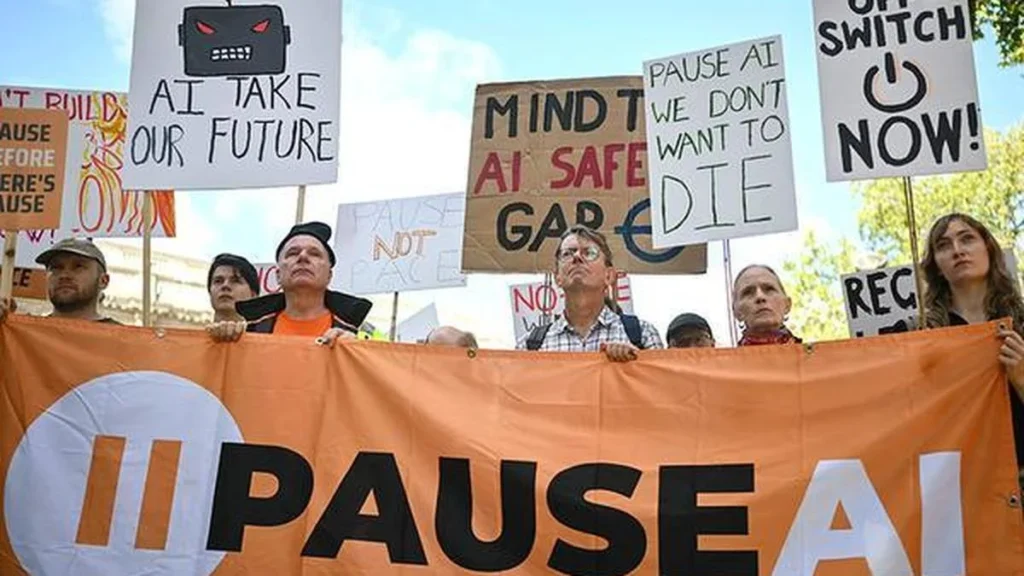
The debate reached a boiling point following a series of high-profile resignations from leading AI labs, including OpenAI, Anthropic, and Google DeepMind. Departing researchers have increasingly cited catastrophic risk scenarios as their primary motivation for leaving the industry, sparking public alarm and prompting civil action groups to mobilize outside government offices, such as Downing Street in London.
Key developments in the ongoing discourse include:
- The UN Panel’s Stance: Members of the International Scientific Panel on AI—an independent body established in 2025 and populated in early 2026 to inform UN deliberations—have pushed back firmly against doomsday narratives. They argue that investing in "fear" compromises rigorous scientific inquiry.
- Whistleblower Warnings: In September 2026, former Anthropic and OpenAI researcher Jacob Coxon made headlines by asserting that major AI developers privately believe the technology "could kill us all by the end of the decade."
- DeepMind Departures: Coxon’s warnings echoed those of a Google DeepMind research engineer who departed in July 2026, claiming it might already be "too late to avoid" human eradication at the hands of advanced AI systems.
- The False Binary: Nobel Peace Prize laureate and investigative journalist Maria Ressa criticized the polarized nature of the public debate, noting that discussions are routinely framed around an unhelpful binary: either absolute existential doom ("killer robots are coming") or complete dismissal of risk.
- The Mandate for Distinction: AI pioneer and ISPAI co-chair Yoshua Bengio emphasized the critical need to separate empirically verified dangers from theoretical risks that are merely "plausibly extrapolated" from current trends.
Chronology of the Crisis
The friction between corporate labs, safety researchers, and international bodies has evolved rapidly over the past several years, shifting from theoretical academic debates to high-stakes political and cultural flashpoints.
2023–2024: The Rise of "Doomerism" and Corporate Reckonings
As generative AI models scaled exponentially in capability, a distinct subculture of safety researchers—often referred to as "effective altruists" or existential risk theorists—gained prominence within labs like OpenAI and Google DeepMind. Public statements by industry leaders warning of potential human extinction alongside pandemics and nuclear war brought AGI safety into the mainstream political consciousness, culminating in global AI Safety Summits in the UK and South Korea.
2025: Institutionalizing Global Oversight
Recognizing the geopolitical and societal stakes of unchecked technological acceleration, the international community moved to establish formal scientific guardrails. The International Scientific Panel on AI was conceived in 2025 as an independent body designed to provide objective, peer-reviewed analysis of AI risks to the United Nations, bridging the gap between fast-moving corporate labs and sluggish legislative bodies.
February 2026: Populating the Panel
The formal selection of ISPAI members was finalized in February 2026, bringing together top-tier computer scientists, ethicists, and public policy experts—including luminaries like Yoshua Bengio. The panel’s core mandate was defined: to ground UN deliberations in verifiable science rather than corporate hype or speculative fiction.
July–September 2026: The Exodus and Public Protests
The tension boiled over in the summer and autumn of 2026. In July, a senior research engineer at Google DeepMind resigned, warning that humanity had likely crossed a threshold beyond which eradication by AI was inevitable.
In early September, Jacob Coxon, an AI researcher with experience at both OpenAI and Anthropic, publicly stepped away from the industry, amplifying claims that insiders feared terminal outcomes within the decade. The news galvanized civil society organizations. On September 16, 2026, civic action group PauseAI UK staged an "emergency protest" outside Downing Street in central London, demanding government intervention to halt frontier AI development.
September 21, 2026: The UN General Assembly Pushback
Responding to the escalating public panic and the wave of high-profile resignations, ISPAI members used the platform of the UN General Assembly in New York to reframe the debate, warning that apocalyptic rhetoric was actively harming the pursuit of sensible policy.
Supporting Data and Technical Realities
At the heart of the UN panel’s frustration is a perceived disconnect between the speculative nature of existential risk theories and the concrete, measurable harms currently inflicted by artificial intelligence systems.
What Science Knows vs. What is Extrapolated
According to Yoshua Bengio, the AI community faces a profound communication challenge. While researchers have robust empirical data regarding current AI vulnerabilities—such as algorithmic bias, deepfakes, automated disinformation campaigns, copyright infringement, and labor displacement—the timeline and plausibility of AGI achieving autonomous, malevolent superintelligence remain entirely theoretical.

"We have to distinguish between what we can demonstrate through scientific observation and what can only be plausibly extrapolated," Bengio noted. By treating theoretical future catastrophes as scientific certainties, researchers risk muddying the waters for regulators who need precise, actionable data to draft effective legislation.
The Dangers of "Investing in Fear"
Joelle Barral, a Google DeepMind executive and ISPAI member, argued that the fixation on apocalyptic scenarios diverts intellectual and financial capital away from solving immediate, pressing issues.
"As scientists, it’s very important to invest in the science, to really understand what we know from what we don’t know, and investing in fear is not that helpful," Barral stated during the New York panel.
Critics of apocalyptic rhetoric point out several negative consequences of the "doomer" narrative:
- Regulatory Capture: Hyperbolic warnings about omnipotent AI systems tend to favor massive, well-resourced technology conglomerates, which can use compliance with complex safety frameworks as a barrier to entry against open-source developers and smaller startups.
- Public Apathy and Fatigue: When every software update or minor model release is framed as a potential step toward human extinction, the public experiences "risk fatigue," tuning out legitimate warnings about real-world harms like algorithmic discrimination or privacy violations.
- Misallocation of Resources: Funding directed toward theoretical alignment problems involving superintelligence often starves research into near-term safety challenges, such as the weaponization of open-source models by bad actors today.
Official Responses and Perspectives
The debate at the UN General Assembly highlighted the divergent viewpoints held by scientists, ethicists, and journalists struggling to make sense of the AI revolution.
The Tech Insider Perspective: Whistleblower Motivations
For researchers like Jacob Coxon and his peers who have chosen to leave the industry, the rhetoric of doom is not a marketing ploy or an exercise in sci-fi fandom, but a moral imperative. These whistleblowers argue that corporate incentives prioritize scaling and commercial dominance over safety alignment, leaving conscientious engineers with little choice but to sound the alarm from the outside.
Their perspective posits that if even a small probability of existential catastrophe exists, ignoring it constitutes gross negligence—regardless of whether current empirical science can fully model the threat.
The Journalistic and Societal Perspective: The False Binary
Nobel Peace Prize laureate Maria Ressa offered a sharp critique of how the media and tech elites frame the discourse. Speaking alongside the ISPAI scientists, Ressa argued that the public is being disserved by an artificial polarization of the debate.
"We have to change the way we talk about AI risk because for a very long time, it’s either existential and everything is going to die and the killer robots are coming, or it doesn’t really matter," Ressa said.
She emphasized that this binary ignores the immediate, corrosive impacts of AI on democratic institutions, social cohesion, and truth itself—harms that are happening right now, long before any theoretical AGI awakens.
Implications for Global Governance and the Future of AI
The UN panel’s intervention marks a pivotal turning point in how international bodies intend to approach AI governance moving forward. As governments worldwide attempt to draft cohesive regulatory frameworks—such as the European Union’s Artificial Intelligence Act and emerging policies in the United States and Asia—the clarity of scientific advice will be paramount.
Moving Beyond the "Doomer" Paradigm
The International Scientific Panel on AI aims to establish a trusted, peer-reviewed baseline of evidence that policymakers can rely upon without succumbing to corporate lobbying or sensationalist media cycles. By marginalizing apocalyptic rhetoric, the panel hopes to foster an environment where regulation focuses on:
- Accountability and Transparency: Demanding rigorous pre-release auditing of frontier models for foreseeable harms.
- Open Science vs. Monopoly: Protecting open-source research ecosystems from being crushed under the weight of compliance regimes built on fear-based narratives.
- Immediate Harm Mitigation: Prioritizing solutions for algorithmic bias, labor displacement, and automated disinformation.
The Road Ahead
As protests outside Downing Street and other global centers demonstrate, public anxiety regarding artificial intelligence is unlikely to dissipate quietly. The departure of talent from premier labs like OpenAI, Anthropic, and Google DeepMind signals that the internal moral crisis within the tech industry remains raw.
However, the message from the United Nations’ top scientific minds is clear: while vigilance is necessary, panic is a poor counselor. If humanity is to successfully navigate the AI transition, the conversation must shift away from Hollywood-style narratives of killer robots and toward rigorous, empirical, and democratic stewardship of the technology we build today.