The Patch Tsunami: Microsoft’s Record-Breaking Update Highlights the AI-Driven Security Arms Race

In what security professionals are describing as an unprecedented deluge of software remediation, Microsoft Corp. has issued its largest single batch of security updates in history. The September 2026 "Patch Tuesday" release addresses a staggering 974 security vulnerabilities, a figure that has sent shockwaves through the IT industry. This massive undertaking marks a new, precarious chapter in cybersecurity, where the speed of vulnerability discovery—accelerated by artificial intelligence—is rapidly outpacing the human capacity to test and deploy fixes.
As the software giant scrambles to secure its ecosystem, security experts are warning that the sheer volume of patches is creating a "patch fatigue" crisis, leaving corporate environments and individual users alike vulnerable to the very threats these updates are meant to extinguish.
Main Facts: A Historic Security Milestone
The September update bundle is not merely a routine maintenance event; it is a historic outlier. With 974 distinct vulnerabilities addressed, this release shatters the previous record set just two months ago in July 2026, when Microsoft patched 570 flaws.
The scope of this month’s updates is vast, covering everything from the core Windows operating system to peripheral software suites. Most alarming is the inclusion of two "zero-day" vulnerabilities—CVE-2026-81963 and CVE-2026-85880. Both flaws are currently being actively exploited in the wild, allowing malicious actors to escalate their privileges on targeted Windows systems. Privilege escalation is a critical step in the "kill chain" of an attack, often serving as the gateway for ransomware deployment or lateral movement through a corporate network.
Beyond these zero-days, Microsoft identified 113 vulnerabilities as "Critical." These flaws are the most dangerous in the company’s taxonomy, as they require little to no user interaction to trigger, effectively granting attackers the "keys to the kingdom" simply by sending a malformed data packet or tricking a user into opening a malicious file.
Chronology of an Escalating Crisis
To understand the current state of affairs, one must look at the trajectory of Microsoft’s patch releases over the last few years. In 2020, Microsoft set a then-record by releasing 1,245 patches over the entire calendar year. Today, with three months still remaining in 2026, Microsoft has already issued over 2,600 patches—more than double the 2020 record.
- 2020 (The Baseline): Microsoft reaches a then-unprecedented 1,245 security fixes for the year.
- July 2026: A new record is established with 570 patches in a single month, signaling a shift in the vulnerability discovery landscape.
- September 2026: The current "Patch Tsunami," featuring 974 patches in one release, confirms that the frequency and volume of vulnerabilities are trending exponentially upward.
This acceleration is not occurring in a vacuum. Throughout 2026, other tech titans—including Adobe, Cisco, Google, and Oracle—have reported similar trends. Google, in a move reflective of the new industry reality, recently announced it would shift to a bi-weekly security update schedule to keep pace with the influx of reported bugs.
Supporting Data: The AI Paradox
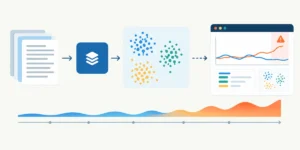
The primary driver behind this sudden explosion in patch volume is the integration of artificial intelligence into vulnerability research. Automated tools, powered by machine learning, are now capable of fuzzing code and identifying memory-corruption bugs at speeds that human researchers simply cannot match.
However, this has created a paradox. While AI is undeniably effective at finding "the haystack," it is not necessarily finding more "needles." Satnam Narang, a senior staff research engineer at Tenable, argues that the industry is experiencing a surge in theoretical vulnerabilities that may never be practically exploitable.

"AI-assisted vulnerability discovery in 2026 is creating larger haystacks, but it isn’t finding more needles," Narang notes. "It is critical that organizations understand which vulnerabilities actually apply to them, whether they pose a threat by being reachable and exploitable, and prioritize remediation based on this risk context."
The data supports this perspective. While 974 patches sounds catastrophic, many of these flaws exist in edge-case configurations or legacy components that are not present in modern, hardened enterprise environments. The challenge for modern IT departments is the labor-intensive process of filtering through these hundreds of patches to determine which ones represent an immediate, existential threat to their specific infrastructure.
Official Responses and Industry Implications
The burden of this patch volume falls squarely on the shoulders of CISOs (Chief Information Security Officers) and their IT operations teams. The traditional "Patch Tuesday" workflow—where administrators test patches on a subset of machines before deploying them to the wider fleet—is breaking under the strain.
Tyler Reguly, associate director of security research and development at Fortra, highlights the human cost of this trend. "It’s time to put our CISOs and CSOs on notice," Reguly states. "How are you helping your teams through these difficult times? Do you have your teams deploy after hours and on weekends to avoid disruption to the business environment? Do you reward them for that effort?"
Reguly’s call to action is a sobering reminder that cybersecurity is a human endeavor. When 974 patches are released at once, the risk of "breaking" production software increases exponentially. Incompatible drivers, legacy application crashes, and configuration conflicts are common after-effects of such massive update bundles.
For the average Windows user, the situation is different but equally frustrating. While the average user does not need to perform complex enterprise testing, the sheer size of these updates can lead to extended downtime, performance degradation, and "nag" notifications that users eventually learn to ignore—a behavior that attackers are all too happy to exploit.
Critical Vulnerabilities: A Closer Look
Among the September 2026 haul, two specific flaws warrant immediate attention from administrators:
- CVE-2026-69730 (DNS Weakness): Affecting Windows Server 2012 through modern Windows 10 iterations, this flaw is particularly dangerous. An unauthenticated attacker can send a specially crafted packet to a server to exploit the system. Because it affects DNS, the potential for widespread disruption or man-in-the-middle attacks is high.
- CVE-2026-69829 (Windows Shell Remote Code Execution): With a CVSS score of 9.8 out of 10, this is as severe as it gets. It requires no authentication, no user interaction, and low attack complexity. This is the type of vulnerability that worms and automated malware kits are designed to weaponize within hours of disclosure.
Recommendations for Navigating the Storm
In an environment where patch volume is ballooning, a "patch everything, immediately" strategy is no longer viable for large enterprises. Instead, experts recommend a risk-based approach:
- Prioritize Exploitable Flaws: Use threat intelligence platforms to identify which of the 974 patches address vulnerabilities that are already under active exploitation (like the two zero-days identified this month).
- Leverage Monitoring Tools: Utilize resources like the SANS Internet Storm Center, which provides a per-patch breakdown ordered by severity and urgency. This helps IT teams identify which patches carry the most risk if left unpatched.
- Monitor Community Reports: Before pushing updates to production, check forums such as AskWoody.com to see if other administrators are reporting "blue screens of death" or application instability resulting from specific patches.
- Automate, but Verify: While automation is necessary to handle the volume, it must be paired with robust testing environments. Rolling out 974 patches to a production environment without testing is a recipe for operational failure.
As we look toward the final quarter of 2026, the industry is left with a daunting question: Is this the "new normal"? If AI-assisted discovery continues to accelerate, the 1,000-patch month may soon become a reality rather than an anomaly. For the IT professionals tasked with holding the line, the battle against cyber threats has just become significantly more complex, demanding not only faster tools but a more strategic, human-centric approach to risk management.