Apple Hit with Record-Breaking $5.7 Billion Patent Verdict Over iPhone and Apple Watch Taptic Engine
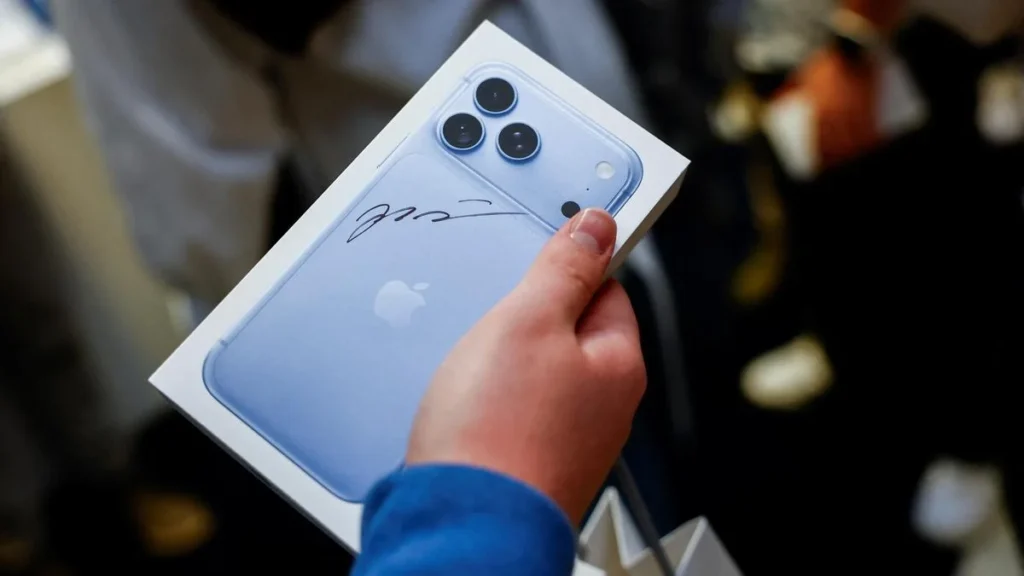
SAN DIEGO — In what stands as the largest patent infringement verdict in United States history, a federal jury has ordered tech giant Apple Inc. to pay more than $5.7 billion to San Diego-based technology firm Taction Technology. The landmark decision, handed down on a Friday following a closely watched trial, concludes that Apple utilized Taction’s proprietary haptic feedback technology without authorization in the manufacturing of its widely popular iPhones and Apple Watches.
The astronomical financial penalty centers on the "Taptic Engine"—the sophisticated internal hardware component responsible for generating the distinct, subtle tapping vibrations and physical sensations that users experience when interacting with their Apple devices. Taction, a specialized technology company known for developing advanced audio and haptic solutions implemented in high-end headphones and gaming headsets, originally initiated the legal battle in 2021.
Apple has swiftly condemned the verdict, maintaining its innocence and confirming plans to aggressively pursue an appeal. The case now transitions into a higher-stakes appellate phase, threatening to reshape how big tech companies navigate patent ownership, intellectual property licensing, and hardware design.
Main Facts of the Case
The core of the legal dispute revolves around intellectual property rights tied to advanced haptic feedback systems—technology that simulates the sense of touch by applying forces, vibrations, or motions to the user.
- The Plaintiff: Taction, an innovator specializing in audio and tactile feedback systems predominantly deployed in headphones and gaming accessories.
- The Defendant: Apple Inc., the multinational technology behemoth headquartered in Cupertino, California.
- The Infringed Patents: The jury determined that Apple’s Taptic Engine directly infringed upon two foundational patents held by Taction.
- The Financial Penalty: The jury awarded Taction over $5.7 billion, making it the largest single patent verdict recorded in the United States legal system to date.
- The Affected Products: Millions of consumer electronic devices, specifically flagship iPhone models and Apple Watches equipped with the Taptic Engine.
According to court documents, Taction argued that its proprietary innovations were crucial in achieving the precise, realistic tactile responses that have become a hallmark of modern smartphone navigation, physical button simulations, and notification systems. Apple, conversely, built its defense around the assertion that its hardware design is an independent, proprietary creation entirely divorced from Taction’s intellectual property.
Chronology of the Legal Battle: From 2021 to the Present
The road to this historic $5.7 billion verdict was arduous, winding its way through district courts and appellate panels over a span of half a decade.
2021: The Initial Lawsuit
Taction formally filed its patent infringement complaint against Apple in a U.S. federal court, alleging that the tech giant incorporated patented haptic technology into the iPhone and Apple Watch lineups without permission or compensation. From the outset, Apple denied all allegations, countersuing and arguing that Taction’s asserted patents were fundamentally invalid and unenforceable.
2023: The District Court Setback
The case experienced a major turning point in 2023 when a federal judge in San Diego ruled decisively in favor of Apple. The district court judge found that Apple’s products did not infringe upon Taction’s patents, dealing what appeared to be a fatal blow to the smaller firm’s legal aspirations and temporarily vindicating Apple’s design independence.
2025: Appellate Revival
Refusing to accept the district court’s dismissal, Taction appealed the decision to the U.S. Court of Appeals for the Federal Circuit. In a significant win for the plaintiff, the appellate court ruled to revive the lawsuit, determining that errors had been made in the initial claim construction and assessment of evidence. The case was sent back down to the lower court for a full jury trial, setting the stage for the dramatic 2026 proceedings.

September 2026: The Landmark Verdict
Following a rigorous trial in which technical experts dissected the engineering of both Taction’s research and Apple’s Taptic Engine, the federal jury returned its verdict on Friday. Siding firmly with the San Diego startup, the jury slapped Apple with the historic multi-billion-dollar penalty, upending expectations and sending shockwaves through the consumer electronics industry.
Supporting Data and Technical Context
To comprehend the magnitude of the $5.7 billion judgment, it is necessary to examine the economic and technical dynamics of modern consumer electronics.
Haptic feedback has evolved from simple, unbalanced motor-driven vibrations (rumble packs found in older cell phones and gaming controllers) to highly nuanced, linear resonant actuator (LRA) systems. Apple’s Taptic Engine is widely recognized as an industry benchmark in this domain, providing haptic illusions that mimic the click of a physical home button, confirm digital transactions, and sync haptic feedback with audio-visual cues in applications and games.
- Scale of Impact: Apple sells tens of millions of iPhones and Apple Watches annually. Because the Taptic Engine has been a staple across multiple product generations over the years, the cumulative number of allegedly infringing units sold globally runs into the hundreds of millions. This massive volume explains the unprecedented size of the damages awarded, which likely reflect a combination of past royalties, lost profits, and potential willful infringement multipliers.
- Taction’s Portfolio: While Taction is not a consumer-facing brand, its intellectual property portfolio is heavily invested in transducers and actuator technologies that enhance immersion in headphones and gaming headsets. Licensing these technologies or successfully defending them against larger market players represents a critical revenue stream for research-and-development-driven firms.
Official Responses and Statements
Reactions from both legal camps underscore the sharply contrasting views on the technology at the heart of the dispute and the validity of the jury’s conclusions.
Apple Inc.’s Position
Apple issued a strongly worded public statement immediately following the verdict, signaling its intent to fight the decision through every available legal avenue.
"Apple’s Taptic Engine is fundamentally different from Taction’s technology, which Taction’s own testing of Apple’s products confirmed during trial," an Apple spokesperson stated.
"Apple does not use Taction’s technology, and we will appeal."
Apple’s legal strategy has consistently maintained that its engineering teams developed the Taptic Engine independently, utilizing distinct physical mechanisms and control algorithms that do not cross the boundary into Taction’s patented claims.
Taction’s Legal Representation
Conversely, lawyers representing Taction praised the jury’s diligence and celebrated the outcome as a monumental defense of independent invention and intellectual property rights.

"We’re happy the jury found for Taction and vindicated its patent rights," said Lance Yang, lead attorney for Taction.
The legal team maintained throughout the trial that internal Apple documents and expert testimony demonstrated a clear reliance on principles pioneered and patented by Taction long before the mass adoption of advanced smartphone haptics.
Broader Implications for the Tech Industry
The staggering $5.7 billion verdict carries profound implications that extend far beyond the legal ledger books of Apple and Taction.
1. Precedent for Big Tech vs. Small Innovators
Patent litigation involving small technology developers and trillion-dollar corporations often leans heavily in favor of well-resourced defendants who can outspend challengers in prolonged legal battles. This verdict serves as a stark reminder that juries can—and occasionally will—deliver catastrophic financial consequences if they believe intellectual property rights have been trampled. It may embolden other smaller tech firms and patent holders to pursue aggressive legal remedies against dominant market players.
2. Potential Impact on Product Availability and Design
While the immediate financial penalty is monetary, successful patent plaintiffs frequently seek permanent or preliminary injunctions to block the sale of infringing goods. Although courts often weigh the broader economic disruption of halting sales of flagship devices like the iPhone against the rights of the patent holder, the threat of an injunction gives T immense leverage in potential post-trial settlement negotiations. Should an injunction ever be considered or enforced, it could force emergency engineering redesigns or massive licensing agreements.
3. The Road Ahead: The Federal Circuit Appeal
Because Apple has formally announced its decision to appeal, the legal saga is far from over. The U.S. Court of Appeals for the Federal Circuit will ultimately review the trial court’s proceedings, evidentiary rulings, and claim constructions. Given that this same appellate court revived the case in 2025, observers expect a protracted legal battle that could take many more months—or even years—to reach a final, definitive resolution.
As the case moves forward, the tech industry will be watching closely to see whether this record-setting verdict withstands appellate scrutiny or becomes subject to a negotiated settlement between the Cupertino titan and the San Diego innovator.