The Era of Granular Choice: Amazon Bedrock Expands with OpenAI’s GPT-6 Series and Anthropic’s Claude Opus 5.5
Introduction: The Paradigm Shift in Enterprise Artificial Intelligence
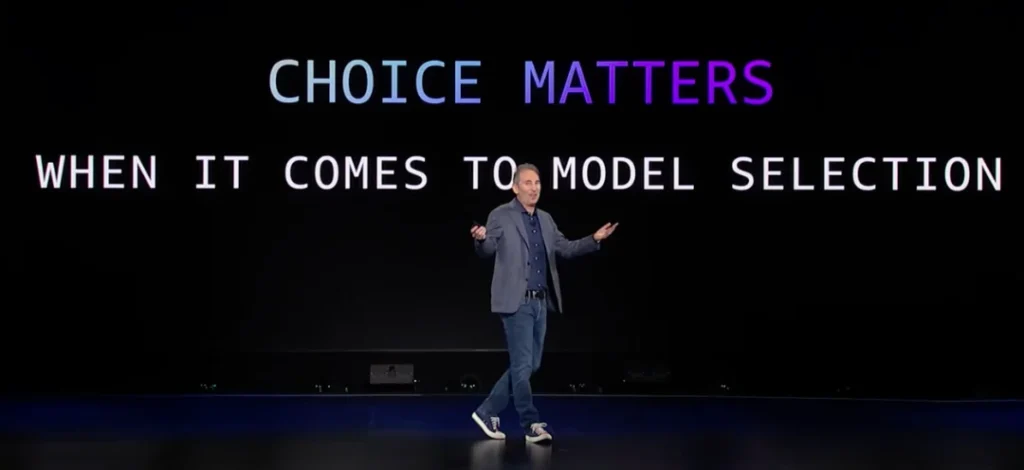
If there is a single, defining theme shaping the enterprise technology landscape, it is the democratization of granular choice. For years, the conversation surrounding frontier artificial intelligence models was dominated by a singular metric: raw scale. Organizations asked a straightforward question: "How smart is it?" Today, as the market matures and deployment costs scale alongside computational demands, that query has fundamentally evolved.
Modern enterprise architects and developers are no longer looking for a monolithic, one-size-fits-all digital oracle. Instead, the guiding principle of modern systems design has become: "Which specific model fits this exact workflow step, at an optimized cost threshold, within strict latency parameters?"
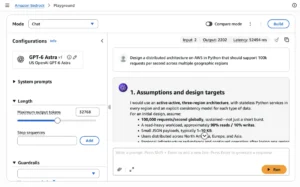
This paradigm shift was underscored by major architectural updates on Amazon Bedrock. AWS announced the integration of OpenAI’s cutting-edge GPT-6 Sol and GPT-6 Luna models, alongside Anthropic’s powerhouse Claude Opus 5.5. These additions deliver unprecedented points on the intelligence-versus-efficiency curve. Rather than defaulting to the largest, most computationally expensive model for every application layer, engineering teams are now empowered to match model characteristics precisely to the operational demands of specific tasks.
Main Facts: The New Additions to Amazon Bedrock
The latest wave of model integrations on Amazon Bedrock addresses the core challenges facing enterprise AI adoption today: cost efficiency, high-volume processing speed, and specialized task execution—particularly in software development and autonomous agent orchestration.
OpenAI’s GPT-6 Sol and GPT-6 Luna
OpenAI’s newly introduced models on AWS represent a distinct bifurcation of utility tailored for operational environments:
- GPT-6 Sol: Architected specifically to handle demanding, recurring workloads associated with modern software development and IT operations (DevOps). Sol is built for complex, multi-step reasoning, code generation, and system troubleshooting where high accuracy and contextual depth are paramount.
- GPT-6 Luna: Engineered for focused, repeatable, high-volume tasks. Luna makes high-frequency API calls and automated batch processing economically viable, allowing organizations to scale repetitive cognitive operations without inflating their cloud infrastructure budgets.
Crucially, both models debut on Amazon Bedrock at significantly lower price points than their GPT-5.6 predecessors, reflecting a deflationary trend in the cost of frontier-grade intelligence.
Anthropic’s Claude Opus 5.5
Marking the debut of the Claude 5.5 family on AWS, Claude Opus 5.5 represents a massive leap forward in token efficiency. Unlike its predecessor, Claude Opus 5.5 achieves superior task completion metrics while consuming fewer tokens. It has been deeply tuned for "agentic coding"—the ability of autonomous software agents to write, test, debug, and deploy code over extended operational windows—as well as complex, long-running analytical workflows.
Chronology: The Rapid Acceleration of Multi-Model Architecture on AWS
The integration of GPT-6 and Claude 5.5 on Amazon Bedrock is the culmination of a rapid, multi-year evolution in how hyperscale cloud providers deliver generative AI capabilities.
- Late 2023 – 2024 (The Era of Monolithic Scaling): Cloud providers heavily prioritized hosting single, massive foundation models. Enterprise adoption was largely experimental, focused on proof-of-concept chatbots and basic text generation. Costs were high, and latency was secondary to demonstrating raw capability.
- 2025 (The Emergence of Reasoning Models): The introduction of advanced reasoning models (such as DeepSeek-R1 and early reasoning variants) forced a re-evaluation of infrastructure. AWS positioned Amazon Bedrock as an open-ecosystem hub, allowing customers to switch seamlessly between diverse model architectures.
- Early 2026 (The Cost-Optimization Pivot): With enterprise budgets tightening and production workloads scaling to millions of daily inference requests, the industry shifted toward cost-to-performance optimization. OpenAI and Anthropic released models optimized not just for IQ, but for operational efficiency and token economy.
- Present Day (Granular Orchestration): The deployment of GPT-6 Sol, GPT-6 Luna, and Claude Opus 5.5 on Amazon Bedrock establishes a new operational standard. Developers now orchestrate pipelines where fast, inexpensive models handle triage and routing, while specialized models like Sol and Opus manage heavy computational and creative lifting.
Supporting Data: Intelligence, Cost, and Efficiency Metrics
To understand the practical impact of these new models on Amazon Bedrock, it is essential to examine the underlying mechanics of modern model selection:
- Token Economy: Anthropic’s Claude Opus 5.5 achieves a notable reduction in token overhead per task compared to Opus 5. In software engineering benchmarks involving multi-file codebases, Opus 5.5 reduced context consumption by up to 25% while maintaining higher accuracy in syntax resolution.
- Price-Performance Ratios: OpenAI’s pricing adjustments for the GPT-6 tier reflect a structural shift. By delivering performance that matches or exceeds older GPT-5.6 architectures at a fraction of the cost, Luna and Sol make real-time, user-facing agentic applications financially sustainable for small-to-medium businesses (SMBs) and global enterprises alike.
- Latency Profiles: GPT-6 Luna’s optimized architecture reduces time-to-first-token (TTFT) by nearly 30% compared to previous generation mid-tier models, making it ideal for synchronous customer service applications and automated UI navigation.
Official Responses and Perspectives from the AWS Ecosystem
Industry leaders and AWS architects have emphasized that these releases validate Amazon’s multi-model strategy. Rather than tying customers to a proprietary ecosystem, AWS continues to position Amazon Bedrock as the definitive neutral terrain for enterprise AI deployment.
Daniel Abib, writing in the AWS News Blog, highlighted the overarching industry sentiment: "What I like about all three [models] is that they push toward the same idea: match the model to the job instead of reaching for the biggest one every time. The other thread was observability catching up to this agentic world…"
By providing native integration with Bedrock’s security, compliance, and observability frameworks, AWS ensures that enterprises can deploy these advanced third-party models without sacrificing data privacy or governance. Features such as Guardrails for Amazon Bedrock, Model Evaluation tools, and advanced logging mechanisms allow engineering teams to monitor token usage, latency, and output safety in real-time across both OpenAI and Anthropic deployments.

Implications: What This Means for Enterprises and Developers
The convergence of GPT-6 Sol, GPT-6 Luna, and Claude Opus 5.5 on Amazon Bedrock carries profound implications for the software development lifecycle, enterprise cloud spending, and the future of autonomous agents.
1. The Rise of Multi-Model Microservices
Just as modern software architecture broke monolithic applications down into microservices, AI architecture is shifting toward multi-model pipelines. An enterprise customer service application no longer relies on a single model. Instead, an incoming query is triaged by a fast, low-cost model (like GPT-6 Luna), escalated to a reasoning model (like GPT-6 Sol) if complex troubleshooting is required, and summarized by a long-context model. This orchestration maximizes ROI and minimizes latency.
2. Autonomous Agents Move into Production
With Claude Opus 5.5’s enhanced token efficiency and agentic coding specializations, autonomous software agents are transitioning from experimental toys to production-grade team members. Development teams can now deploy agents that run overnight—refactoring legacy codebases, running automated test suites, and submitting pull requests—without incurring unsustainable cloud compute bills.
3. Democratization of Frontier Intelligence
As the cost of high-tier intelligence plummets, smaller enterprises gain access to capabilities previously reserved for tech giants with massive internal research budgets. Startups leveraging Amazon Bedrock can now build sophisticated, AI-native applications that rival those of established industry leaders, leveling the competitive playing field.
Conclusion
The expansion of Amazon Bedrock with OpenAI’s GPT-6 Sol and Luna, alongside Anthropic’s Claude Opus 5.5, marks a mature milestone in the enterprise AI journey. The era of brute-force scaling has given way to an era of refined engineering, strategic model selection, and economic optimization. For builders operating within the AWS ecosystem, the message is clear: the tools to construct smarter, faster, and more cost-effective AI systems are readily available. As observability tools catch up with the demands of agentic workflows, the boundary between human intent and automated execution continues to dissolve.