AWS Unveils Well-Architected Agent: An AI-Powered Evolution in Cloud Infrastructure Optimization
SEATTLE — In a major development for cloud architects, DevOps engineers, and enterprise IT leaders, Amazon Web Services (AWS) has announced the public preview of the AWS Well-Architected Agent. Billed as a transformative, AI-driven service, the new tool is engineered to automatically evaluate live cloud environments and pre-deployment infrastructure code. By mimicking the nuanced judgment of a seasoned cloud architect, the service delivers context-aware, highly targeted recommendations designed to optimize applications across cost, security, performance, and resilience.
The launch marks a departure from traditional, manual cloud auditing processes and generic compliance checklists. Instead, the AWS Well-Architected Agent synthesizes complex telemetry—correlating utilization metrics, intricate resource configurations, and dynamic application topologies—against established AWS Well-Architected best practices spanning more than 65 AWS services.
Main Facts: What is the AWS Well-Architected Agent?
The AWS Well-Architected Agent is a specialized, AI-powered service integrated directly into the AWS Well-Architected ecosystem. Delivered through AWS Support, the agent is accessible to customers enrolled in eligible AWS Support plans.
At its core, the service addresses a persistent pain point in modern cloud management: the sheer volume of data, alerts, and generic recommendations that teams must manually filter through to secure and optimize their environments. The Well-Architected Agent solves this by:
- Context-Aware Analysis: Evaluating infrastructure through the unique lens of a company’s declared business goals, ensuring that optimization efforts align with broader organizational objectives rather than operating in a vacuum.
- Comprehensive Pillar Coverage: Analyzing workloads across the foundational pillars of the AWS Well-Architected Framework: Cost Optimization, Security, Reliability, Performance Efficiency, and Operational Excellence.
- Actionable, Ready-to-Implement Fixes: Going beyond mere diagnostic reporting by providing concrete remediation packages—including updated Infrastructure as Code (IaC) templates, AWS CLI commands, and step-by-step console instructions.
- Cross-Pillar Trade-Off Analysis: Surfacing the inherent compromises of architectural decisions (e.g., how boosting performance might impact cost or how hardening security affects latency) to help teams make informed, holistic choices.
- Pre-Deployment & Post-Deployment Capabilities: Reviewing both live running environments and pre-deployment codebases by ingesting IaC projects.
The public preview is currently available in three primary regions—US East (N. Virginia), US East (Ohio), and US West (Oregon)—though organizations can onboard and analyze workloads from any commercial AWS Region.
Chronology of Development and Implementation
The introduction of the Well-Architected Agent represents the latest milestone in AWS’s continuous effort to automate cloud governance and operational excellence.

Phase 1: The Manual Era of the Well-Architected Tool
For years, the AWS Well-Architected Tool served as the primary mechanism for reviewing cloud workloads. While powerful, it relied heavily on manual data gathering, periodic human-led reviews, and static questionnaires. Organizations often struggled to keep pace with rapid infrastructure changes, leading to architectural drift and unoptimized resources.
Phase 2: Integration of AI and Automated Telemetry
Recognizing the cognitive load placed on cloud engineering teams, AWS began embedding smarter telemetry and automated lenses into its ecosystem. However, teams still faced the burden of interpreting fragmented recommendations across disparate services like AWS Trusted Advisor, Compute Optimizer, and Security Hub.
Phase 3: The Public Preview Launch
The unveiling of the AWS Well-Architected Agent unifies these diagnostic capabilities into a single, intelligent interface. The rollout follows a structured implementation lifecycle designed to give administrators granular control:
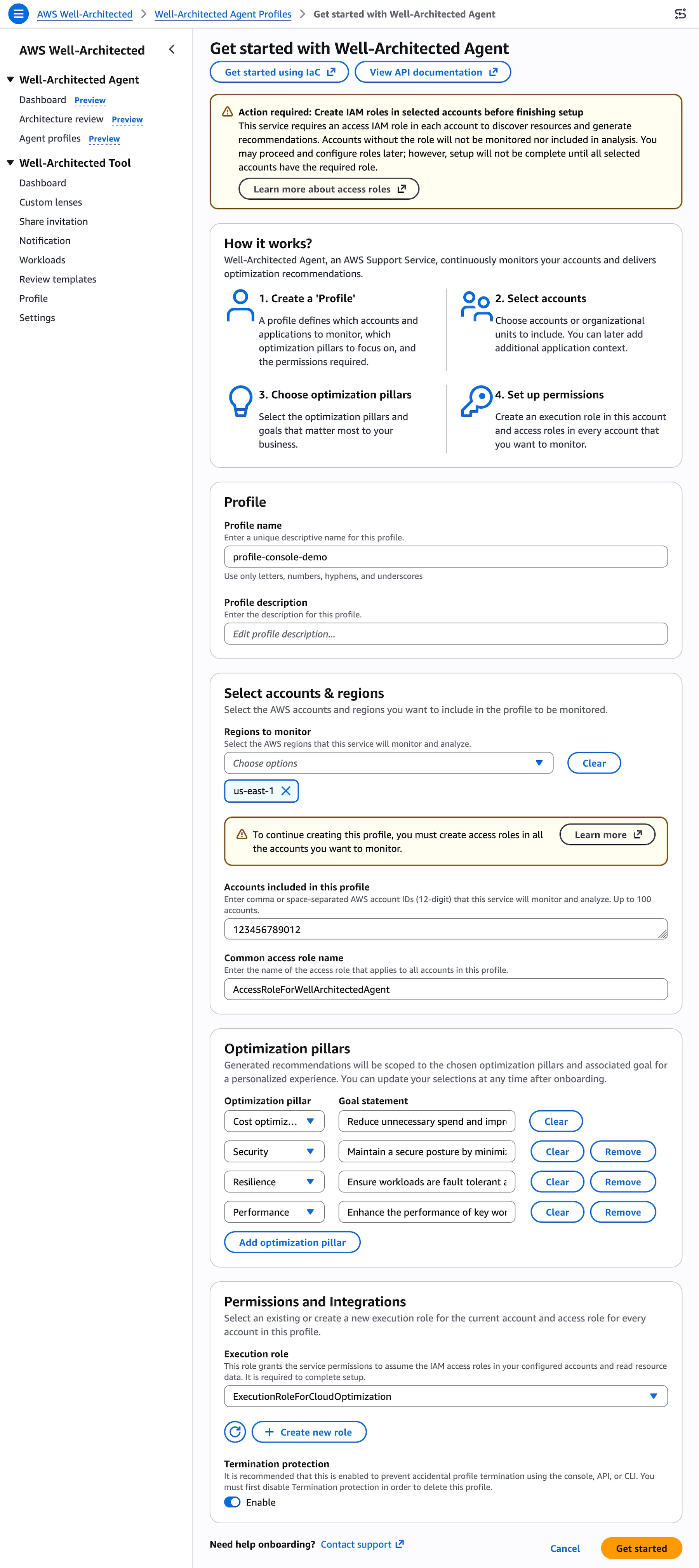
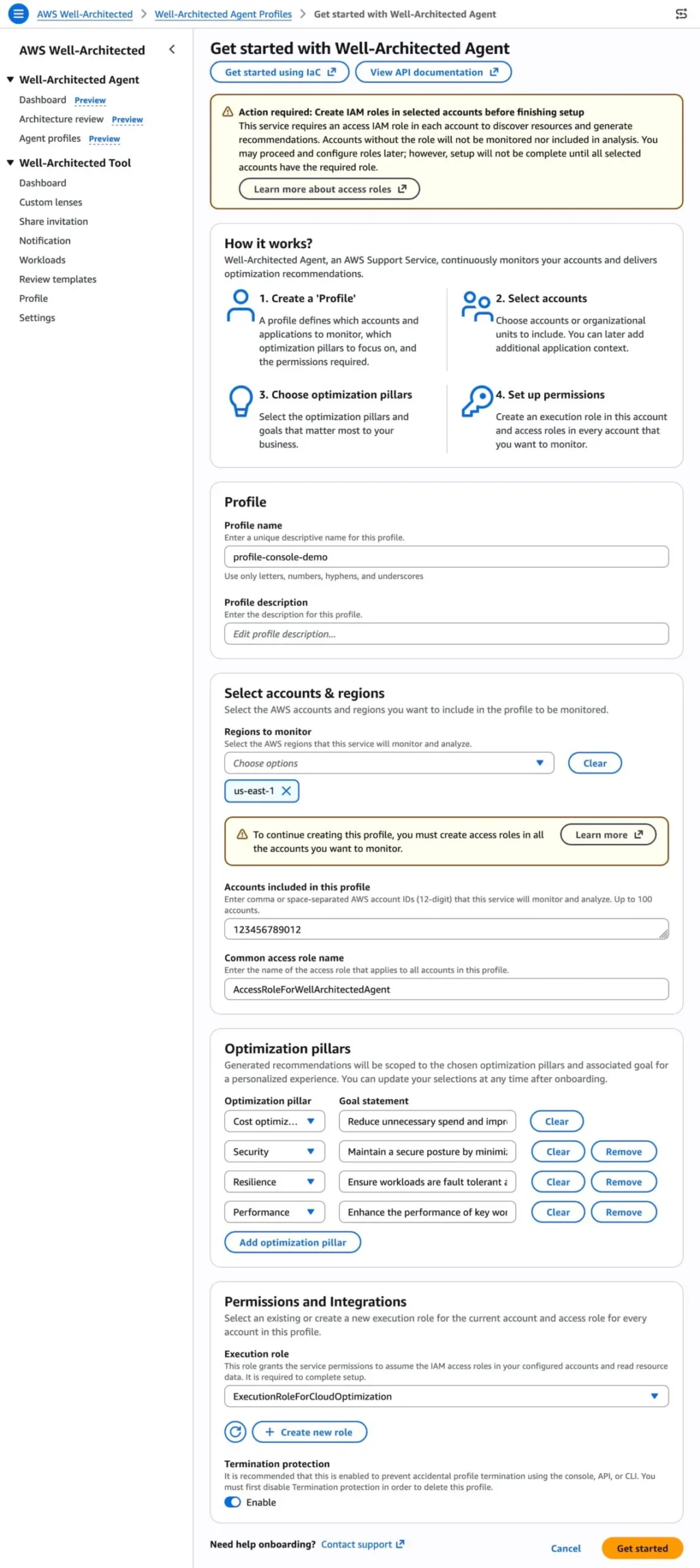
- Profile Creation: Administrators access the AWS Well-Architected console to define an agent profile, specifying target AWS accounts, regions, and optimization priorities.
- IAM and Permissions Setup: Customer-managed IAM roles are provisioned to grant the agent safe, read-only access to resource configurations, metrics, and topologies.
- Context Injection & IaC Upload: Teams can optionally inject application context (tags, specific services, operational boundaries) or upload
.ziparchives of Terraform, AWS CloudFormation, or AWS CDK projects for pre-deployment reviews. - Generation & Remediation: Within 24 hours of profile creation, the agent produces prioritized recommendations, allowing engineers to initiate automated remediation via updated IaC code snippets or direct console actions.
Supporting Data, Architecture, and Technical Workflow
To understand the operational mechanics of the AWS Well-Architected Agent, one must examine its interaction points across a standard enterprise cloud architecture.
The Three-Step Operational Workflow
[Define Agent Profile & Goals]
       │
       ▼
[Connect via IAM Roles / Upload IaC (Terraform, CloudFormation, CDK)]
       │
       ▼
[AI Engine Correlates Metrics, Topology, & 65+ AWS Services]
       │
       ▼
[Generate Prioritized, Contextual Recommendations & Fixes]- Defining the Agent Profile:
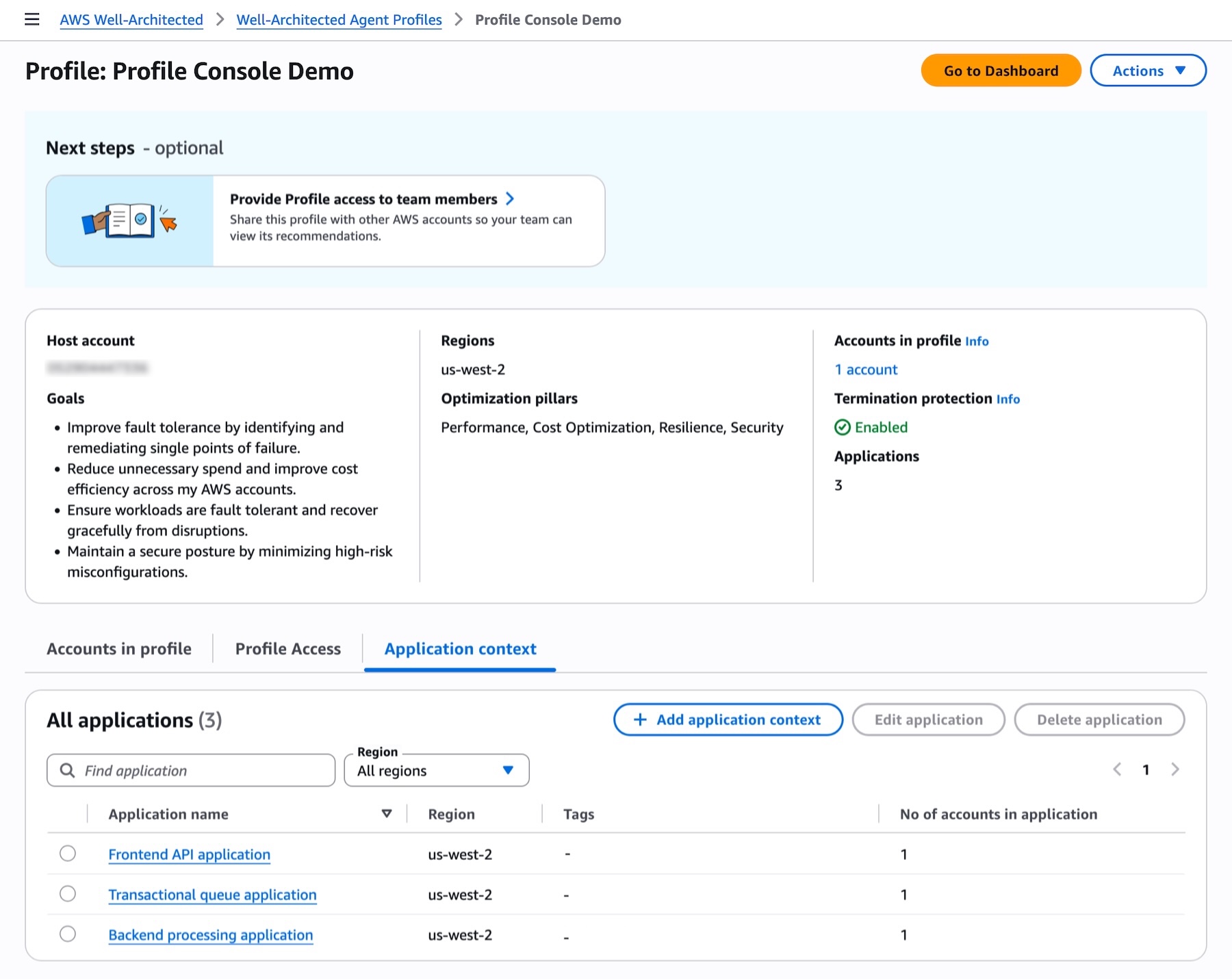
Cloud administrators navigate to the AWS Well-Architected console to initiate the setup. They can scope the agent’s purview down to specific AWS accounts, individual regions, or targeted optimization pillars. Crucially, goals can be customized—for instance, prioritizing aggressive cost reduction for development environments while enforcing maximum resilience and security for production workloads. - Adding Application Context and IaC Reviews:
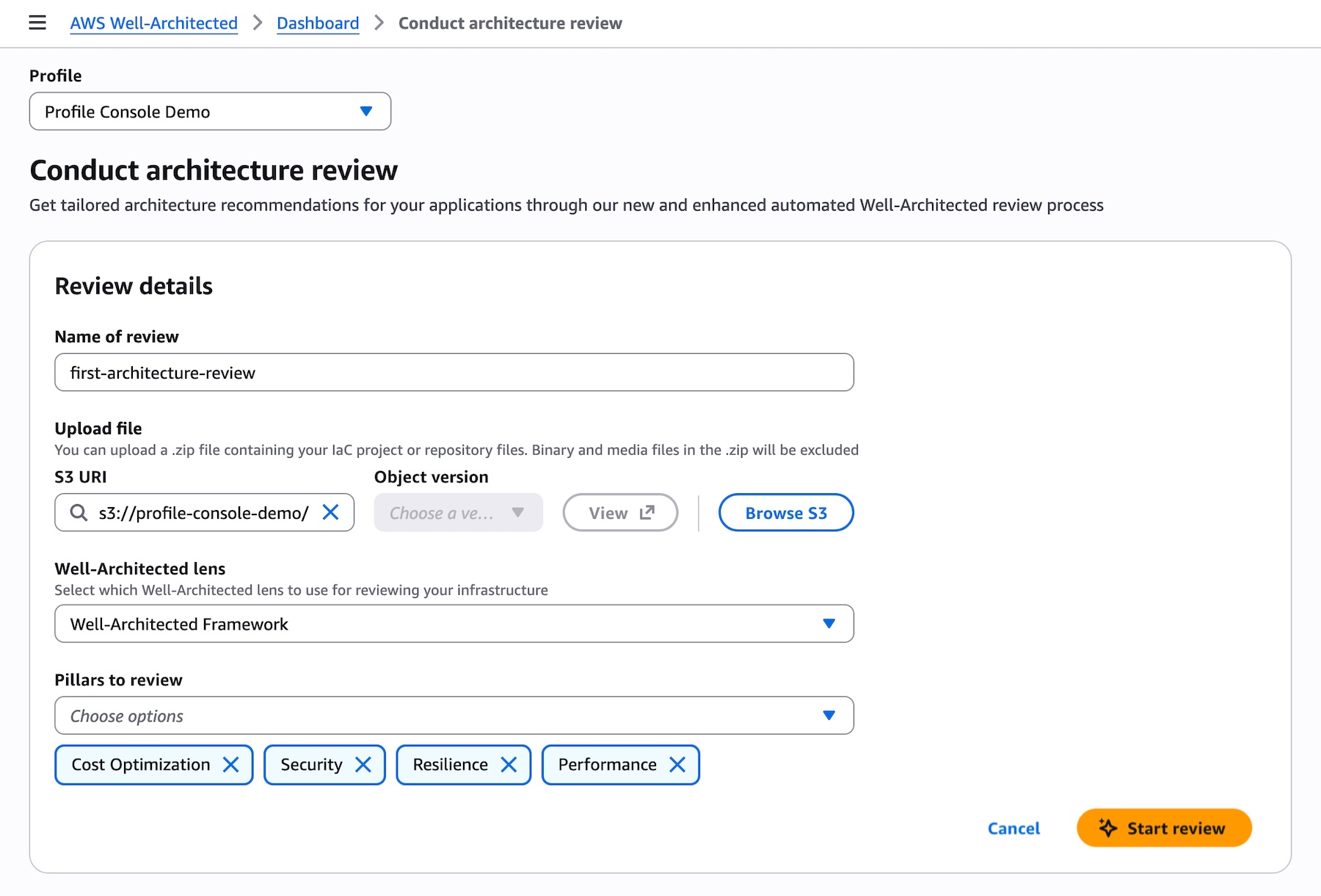
To maximize relevancy, engineers can supply application context by defining boundaries using tags, accounts, regions, and service mappings. Furthermore, pre-deployment security and architecture checks can be performed by packaging Infrastructure as Code projects—whether written in HashiCorp Terraform, AWS CloudFormation, or the AWS Cloud Development Kit (CDK)—into a.zipfile and submitting them through the dashboard. - Prioritized Remediation:
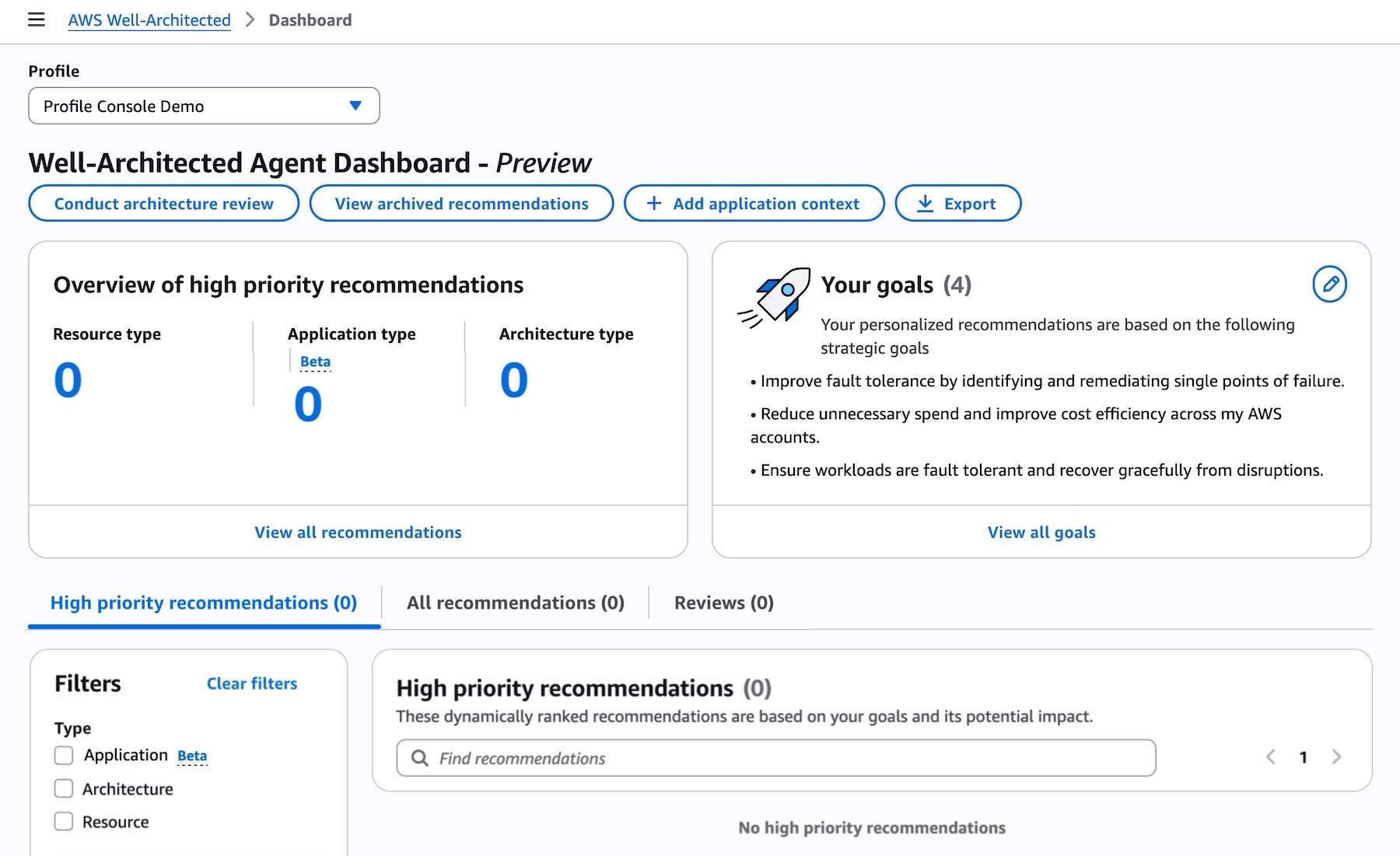
The agent aggregates its findings into a ranked dashboard. When an engineer clicks on a specific finding, the system exposes not only the technical details and affected resources, but also a thorough justification why the recommendation was made, alongside cross-pillar impact analyses. Remediation can then be executed via the AWS Console, AWS CLI commands, or by directly copying updated code blocks (such as a modified CDK function) back into the local codebase.
Developer Workflow Integration: AWS MCP Server and Plugins
Beyond the web console, AWS has designed the Well-Architected Agent to integrate seamlessly into modern developer workflows. Through the AWS Model Context Protocol (MCP) Server and associated plugins, engineers can interact with the agent programmatically. This enables development teams to query documentation, search recommendations, and pull optimization insights directly into their preferred AI-powered coding environments and integrated development environments (IDEs).
Official Responses and Industry Context
While traditional cloud auditing tools have historically focused on point-in-time compliance, industry analysts view the introduction of autonomous cloud agents as a paradigm shift.
AWS representatives emphasize that the Well-Architected Agent is not meant to replace human cloud architects, but rather to augment them by eliminating routine toil. By automating the correlation of disparate telemetry data—such as matching CPU utilization metrics against IAM permissions and network topologies—the agent handles the heavy lifting of architectural discovery. This frees senior engineers to focus on strategic product innovation rather than routine log auditing and cost-cutting sweeps.
Furthermore, enterprise feedback gathered during early private testing highlights the value of the cross-pillar trade-off analysis. In complex cloud environments, a fix that optimizes cost can inadvertently introduce a single point of failure. By explicitly surfacing these trade-offs, the Well-Architected Agent empowers junior and mid-level engineers to make architectural decisions that reflect enterprise-grade maturity.
Implications for the Cloud Ecosystem
The public preview of the AWS Well-Architected Agent carries profound implications for cloud financial management (FinOps), security posture management (CSPM), and overall enterprise DevOps maturity.
1. The Democratization of Cloud Architecture Expertise
Historically, maintaining a well-architected environment required dedicated cloud centers of excellence (CCoE) or expensive external consultants capable of manually auditing thousands of microservices. By encapsulating decades of AWS best practices into an AI agent, organizations of all sizes gain access to enterprise-grade architectural oversight. Startups and mid-market companies can now proactively identify security gaps and cost leakages that previously went unnoticed until a breach or an inflated monthly bill occurred.
2. Shift-Left Architecture and IaC Governance
By supporting pre-deployment code analysis for Terraform, CloudFormation, and CDK, AWS is reinforcing the "shift-left" security and architecture movement. Catching non-compliant or fragile configurations before they are provisioned into production dramatically reduces remediation costs, minimizes downtime risks, and ensures that infrastructure adheres to compliance frameworks from day one.
3. Integration with FinOps and Security Operations
Because the agent evaluates workloads simultaneously across cost, security, performance, and reliability, it bridges the historical silos between FinOps teams (focused strictly on budget) and security/DevOps teams (focused on resilience and hardening). This unified perspective prevents friction between departments, establishing a single source of truth for infrastructure health.
Getting Started
Current AWS customers with an active AWS Support plan can begin exploring the service immediately.
- Console Access: Navigate to the AWS Well-Architected Console to initialize your first agent profile.
- Prerequisites: Ensure that appropriate customer-managed IAM roles are configured to grant the agent read access to your resource configurations and metrics.
- Documentation: Review the AWS Well-Architected Agent User Guide for detailed instructions on IAM prerequisites, API integrations, and MCP server setup.
As the public preview progresses, AWS encourages users to submit feedback through standard AWS Support channels to help shape the future capabilities of the service.