The New AI Paradigm: Forms as Automation Triggers, Masterclass AI Video, and Major Enterprise Ecosystem Shifts
By Michael Stelzner
Founder, Social Media Examiner & AI Business Society
Main Facts
The artificial intelligence landscape continues to accelerate at a breakneck pace, introducing breakthroughs that bridge the gap between passive machine learning assistance and active, autonomous business execution.
Recent industry developments highlight a fundamental shift in how professionals interact with automated tools. Rather than treating AI as a conversational chatbot that simply returns unstructured paragraphs of text, industry leaders are utilizing forms as deterministic automation triggers. By defining precise input fields and dropdown menus, users can bypass ambiguous prompt engineering and force AI models to output clean, structured data capable of instantly launching downstream workflows.
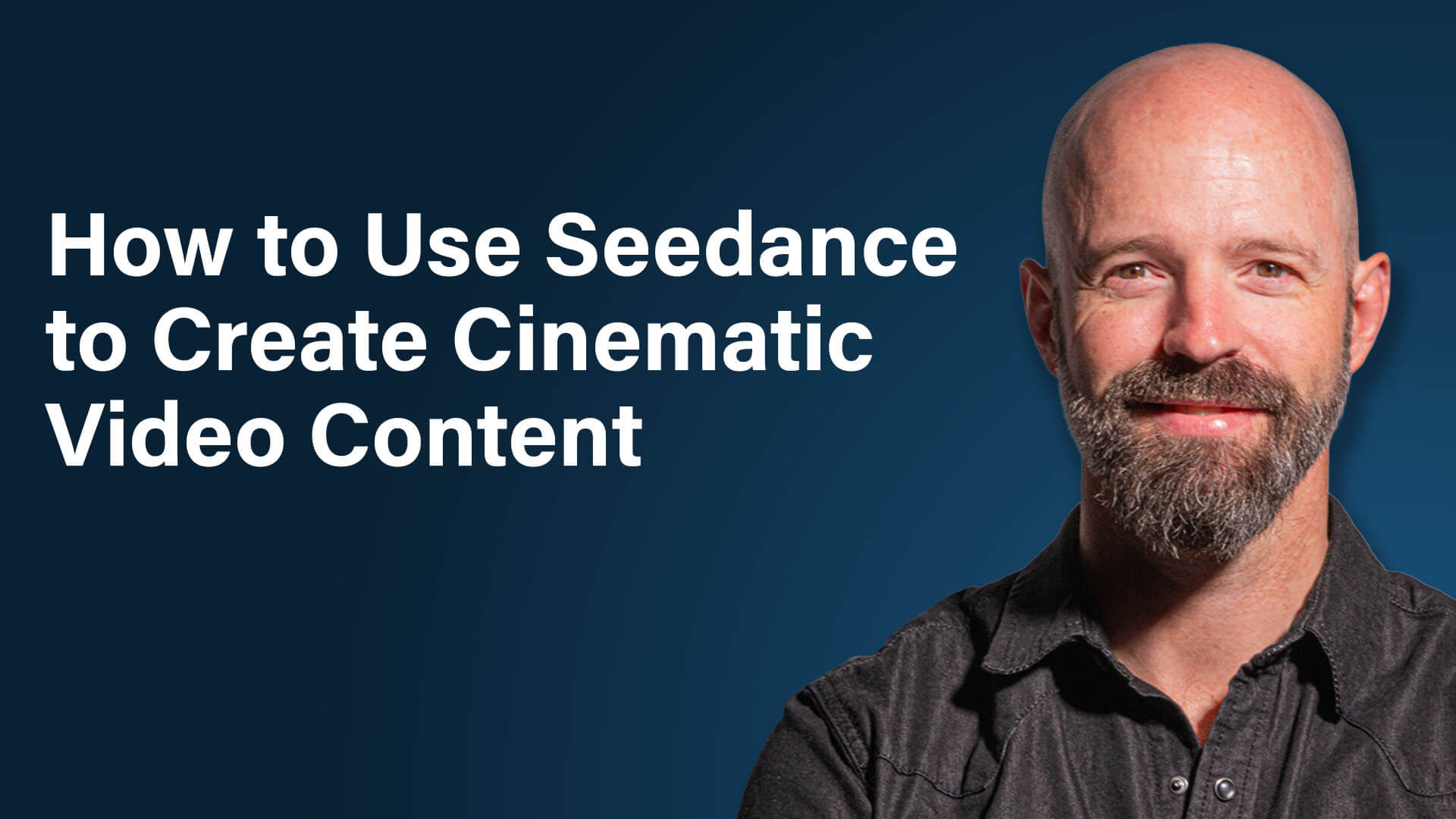
Concurrently, the standard for generative media has reached a professional maturity level. The era of distorted, surreal, "spaghetti-limbed" viral clips has given way to cinematic-grade outputs. Industry experts—such as Ross Symons, co-founder and chief creative officer of Zen Robot—are proving that high-quality AI video requires distinct structural frameworks, moving away from simple prompt-and-pray methods toward a storyboard-first, keyframe-driven methodology.
On the enterprise frontier, major foundational model providers and tech giants have dropped sweeping ecosystem updates. Anthropic has launched its flagship Claude Opus 5.5 alongside a unified interface that merges chat, documents, and presentations. Meta has expanded its native desktop agent, Muse, to macOS. Meanwhile, OpenAI has heavily expanded its advertising ecosystem within ChatGPT, introducing conversational "Sponsored Agents," AI campaign management tools, and deep native integrations with commerce platforms like Shopify and HubSpot.
Chronology of Recent AI Developments
To understand how rapidly the software ecosystem is pivoting toward agentic execution and deep integration, it is necessary to trace the sequence of recent major product rollouts and strategic industry shifts:
- Early September 2026 (The Form-Driven Workflow Shift): Productivity experts begin popularizing the concept of replacing ambiguous prompt windows with rigid form fields. This methodology transforms human-AI interactions from open-ended research sessions into structured data entry points that trigger instant CRM updates, team alerts, and multi-step automations.
- Mid-September 2026 (Anthropic Unified Interface & Claude Opus 5.5): Anthropic rolls out Claude Opus 5.5, designed for high-performance coding, computer use, and research tasks at reduced operating costs. Shortly after, the company deploys a major interface update consolidating Claude Chat, Cowork, Artifacts, and design tools into a single pane of glass equipped with collaborative document and presentation workflows.
- September 16–18, 2026 (Meta Muse Expands to Mac): Meta officially brings its AI agent, Muse, to macOS. The expansion allows the assistant to interact directly with native desktop apps—including files, email, calendars, and messages—signaling a major push into local operating system automation.
- Late September 2026 (OpenAI Reimagines Advertising with AI): OpenAI transforms its ad platform by rolling out Sponsored Agents, natural-language campaign building within ChatGPT Work, and native enterprise integrations with HubSpot and Shopify, embedding conversational AI directly into commercial funnels.
- Ongoing (Professional AI Video Standardisation): Studio creators transition from casual experimentation to rigorous multi-clip video pipelines, utilizing start/end keyframing and director-based style prompts to generate broadcast-ready cinematic assets.
Supporting Data and Technical Breakthroughs
The evolution of generative tools is underscored by quantifiable efficiency gains, technical enhancements, and structural workflow modifications across the industry:
- Cost vs. Performance Metrics: Anthropic’s Claude Opus 5.5 introduces significantly lower operating costs paired with accelerated output speeds, widening profit margins for businesses building programmatic applications on top of the Claude API. Furthermore, enhanced safety filters for biological and cybersecurity workflows allow enterprise risk teams to deploy the model in sensitive sectors with greater confidence.
- Automation Latency Reduction: By substituting conversational prompts with structured forms, workflow friction drops close to zero. Traditional pipelines require a human to read an AI summary, interpret the data, open a separate CRM, and manually input records. Form-driven triggers execute these steps programmatically the exact millisecond a submission is registered.
- Desktop Agent Permissions: Meta’s Muse architecture on macOS relies on a granular permission model. While the agent possesses the capability to draft emails, sort files, and update calendars autonomously, it enforces strict human-in-the-loop approvals for high-stakes actions, mitigating the risk of runaway background scripts.
- Advertising Conversion Dynamics: OpenAI’s integration of Sponsored Agents allows potential customers to move from a standard chat query to a direct, interactive consultation with a branded AI assistant within the same session, fundamentally shortening the traditional multi-touch attribution funnel.
Official Responses and Industry Perspectives
Key figures and corporate entities have weighed heavily on the philosophical and operational shifts driving these new releases.
On AI Execution and Prompt Limitations:
Industry analysts argue that the obsession with "prompt engineering" is reaching its natural limit. As Michael Stelzner notes in recent strategy sessions, "AI did the research, then handed you more work" when restricted to returning block paragraphs. The pivot toward form-based data capture represents a collective industry realization: structure is superior to syntax. By forcing an AI model to populate discrete form fields, developers eliminate ambiguity and create reliable integration hooks.
On Professionalizing AI Video Generation:
Addressing the common misconception that video generation tools are "plug-and-play," Ross Symons emphasizes that foundational knowledge of underlying model architectures is essential for professional results.
"Anyone can type a prompt and get a video clip back," Symons explains. "But getting a result that actually looks good requires a specific way of communicating with these tools that’s very different from how you’d chat with an AI assistant. Understanding the difference between diffusion models and large language models changes everything about your results."
On Enterprise Multi-Tool Consolidation:
Anthropic’s strategy behind unifying Claude’s disparate chat and workspace features addresses widespread enterprise software fatigue. By combining text generation, document collaboration, and live presentation exporting into a single interface, Anthropic aims to reduce the friction of context-switching between specialized standalone applications.

Implications for Marketers, Creators, and Businesses
The convergence of form-triggered automation, advanced video pipelines, and agentic desktop integration carries profound consequences for digital professionals across all sectors.
1. The Death of Manual Handoffs in Marketing Ops
Marketers can no longer afford to use AI merely as an ideation partner. The true competitive advantage lies in building resilient, platform-agnostic workflows. By implementing form-based triggers that automatically feed data into CRM records, draft outbound sequences, and categorize competitor intelligence, lean teams can scale their output exponentially without adding headcount. Businesses that fail to move beyond basic chat windows will find themselves outpaced by automated loops running in real time.

2. A New Bar for Content Production
As cinematic AI video tools become accessible to independent creators via sophisticated keyframing and storyboard workflows, generic, low-effort content will be instantly filtered out by audiences. Creators who master the nuances of diffusion versus language models—and who utilize director-based prompt shorthands—will dominate social feeds and high-end advertising channels alike.
3. The Shift Toward Agentic Computing
With Meta’s Muse operating natively on macOS and OpenAI embedding commerce platforms directly into conversational chat streams, the operating system and the web browser are merging into a unified conversational workspace. Professionals must adapt to managing fleets of autonomous agents that execute multi-step tasks across local files and web applications. Success in this new era will not belong to those who can type the fastest, but to those who can design the most robust, resilient, and platform-independent workflows.