Indian Startup Funding Cools Off: A Detailed Analysis of the Market’s Performance (June 28 – July 3)
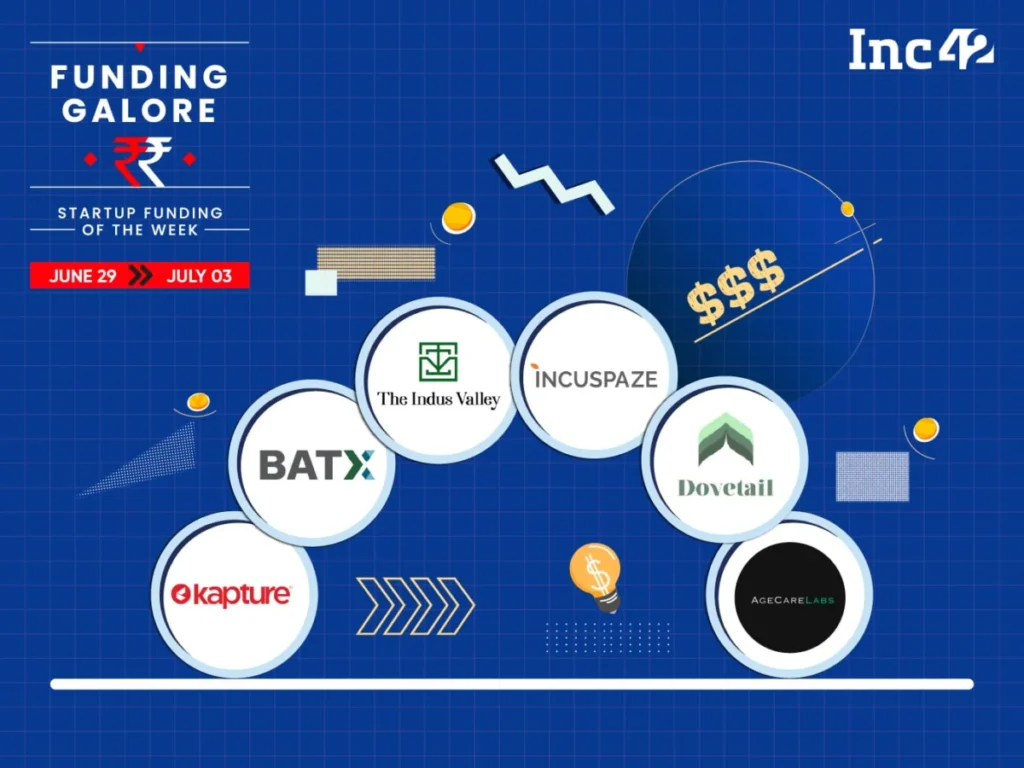
The Indian startup ecosystem, often characterized by its volatility and high-octane growth, experienced a significant cooling period during the final week of June and the start of July. After an explosive preceding week that saw massive capital inflows, the market witnessed a sharp contraction, signaling a return to a more cautious investment climate.
Between June 28 and July 3, Indian startups secured a total of $104.6 million across 21 deals. While the headline figure of 21 deals suggests a sustained level of activity in terms of deal volume, the total capital raised represents a staggering 91% decline from the previous week’s $1.1 billion. This sharp correction underscores the outsized influence that single, mega-rounds—such as CRED’s $900 million Series H—have on the week-on-week performance metrics of the Indian venture capital landscape.
The Core Data: A Market in Retrenchment
To understand the current state of the Indian venture market, one must look beyond the top-line numbers. While the $1.1 billion figure from the previous week was heavily skewed by outlier transactions, even when adjusting for such anomalies, the market experienced a downturn of over 50%.
The data indicates that institutional investors are becoming increasingly selective. While early-stage and seed-stage activity remains present, the aggressive, late-stage funding environment that characterized the previous week has temporarily receded. This week saw 21 distinct funding events, pointing toward a broad-based interest in smaller, high-growth opportunities, rather than the massive, market-dominating capital injections that define bull markets.
The Sectoral Breakdown
Ecommerce re-established its position as the dominant sector of the week, pulling in $29.6 million across four deals. This surge was primarily driven by The Indus Valley’s $17 million Series B round, which highlights a persistent investor appetite for direct-to-consumer (D2C) brands that demonstrate strong unit economics and clear paths to profitability.
Following Ecommerce, Real Estate Tech and Clean Tech emerged as critical areas of focus. Incuspaze’s $15.9 million raise and BatX Energies’ $11 million Series A round demonstrate that infrastructure-adjacent and sustainability-focused startups are successfully capturing the attention of institutional capital, even during slower periods.
Chronological Overview: A Week of Steady, Small-Ticket Activity
The distribution of deals throughout the week was relatively even, suggesting a consistent pipeline of early-to-mid-stage companies seeking growth capital.
- June 28-29: The week began with a mix of AI and real estate focus. Mykare and Monk CI secured early-stage funding, while Incuspaze secured a substantial $15.9 million, setting a high bar for the week’s late-stage prospects.
- June 30: Activity peaked in mid-week, with The Indus Valley securing its $17 million Series B and Kapture CX closing a $10 million Series B. These rounds reflect the continued maturity of the Indian SaaS and D2C segments.
- July 1-2: The latter half of the week was defined by a flurry of smaller, strategic investments. Companies like Dovetail Capital, Supply6, and Ninjacart continued to draw capital, reflecting a diverse appetite for investment tech, health-conscious consumer goods, and agritech.
Deep Dive: Key Funding Rounds
1. The Indus Valley (Ecommerce)
Leading the charts, The Indus Valley secured $17 million in a Series B round led by Gaja Capital, with participation from DSG Consumer Partners and Rukam Capital. This funding is expected to bolster the D2C brand’s distribution network and marketing efforts, allowing it to solidify its presence in the highly competitive home-and-kitchen utility space.
2. Incuspaze (Real Estate Tech)
Securing $15.9 million from Bharat Value Fund, Incuspaze highlights the growing institutional interest in managed office spaces and property discovery platforms. As Indian enterprises continue to adopt hybrid work models, the demand for high-quality, flexible, and tech-enabled office solutions is clearly on the rise.
3. BatX Energies (Clean Tech)
In the sustainability sector, BatX Energies closed an $11 million Series A round led by IvyCap Ventures. This deal is particularly noteworthy for the participation of family offices, including Mankind Pharma and Excel Industries. It reflects a growing trend of "impact-meets-profit" investing, where capital is directed toward the circular economy—specifically, the recycling and repurposing of electric vehicle batteries.
4. Kapture CX (Enterprise Tech)
The $10 million Series B round for Kapture CX, led by Bajaj Finserv Ventures, signals the continued resilience of horizontal SaaS. With global demand for AI-driven customer experience tools, Kapture CX is positioning itself as a key player in the digital transformation journey of mid-to-large enterprises.
The Seed Stage: A 69% Week-on-Week Dip
Perhaps the most telling metric of the week is the performance of the seed stage. Nine startups collectively raised $11.1 million, marking a 69% decline from the previous week. This drop is significant as seed-stage activity is usually a lagging indicator of investor confidence. When seed activity slows, it suggests that venture capitalists are tightening their criteria, focusing more on current portfolio management than on deploying fresh capital into unproven ventures.
Implications for the Indian Startup Ecosystem
A Shift Toward "Rational" Valuation
The massive drop in funding figures is not necessarily a signal of a "startup winter," but rather a normalization. The previous week’s $1.1 billion was an outlier, and this week’s $104.6 million represents a more sober, reality-based valuation landscape. Investors are no longer throwing capital at growth-at-all-costs models; instead, they are prioritizing founders who demonstrate clear unit economics, sustainable growth, and a path to positive EBITDA.
The Rise of Niche Sectors
While generalist funds remain cautious, sector-specific funds are finding success. The investment in AI infrastructure (Clairva), agritech (Ninjacart), and health-tech (Heatronics) shows that capital is moving toward solving specific, high-friction problems. Investors are increasingly looking for "deep-tech" solutions that offer a competitive moat, rather than simple consumer-facing applications that face high customer acquisition costs.
Investor Sentiment: The "Quality over Quantity" Mandate
The presence of family offices and specialized venture firms like 3one4 Capital and Arkam Ventures highlights a trend of strategic, long-term capital deployment. By bringing in partners like Unilever Ventures and industry veterans like Nandan Nilekani, startups are not just seeking cash; they are seeking mentorship, supply chain expertise, and market access.
Strategic Outlook: What to Expect in Q3
As we move deeper into the third quarter, the Indian startup ecosystem is likely to see the following trends:
- Consolidation: Expect to see more M&A activity as well-funded companies look to acquire smaller, struggling startups to consolidate market share or acquire proprietary technology.
- Focus on Profitability: The "blitzscaling" era is firmly behind us. The focus for the next two quarters will be on operational efficiency. Investors will likely exert pressure on founders to extend their runway and reduce burn rates.
- Tiered Funding Cycles: We will likely see a continued bifurcation in the market. Top-tier startups with strong institutional backing will continue to find it easier to raise capital, while early-stage ventures without a clear differentiator will find the fundraising environment increasingly hostile.
Conclusion
The final week of June served as a stark reminder of the inherent volatility in the Indian startup market. While the headlines regarding the 91% drop in funding might alarm casual observers, a deeper analysis reveals a market that is merely catching its breath. The diversity of the 21 deals closed—ranging from AI and clean tech to ecommerce and enterprise SaaS—demonstrates that the Indian startup story remains fundamentally robust.
For founders, the message is clear: the era of easy money has concluded. Capital is available, but it is reserved for those who can demonstrate clear value, operational discipline, and the ability to navigate a more demanding investment landscape. As the ecosystem matures, the focus must shift from the size of the funding round to the quality of the business being built.
Data Source: Inc42 | Edited by Akshit Pushkarna