India’s New-Age Tech IPO Wave: Over 70 Startups Cross Milestone With $192 Billion Market Cap
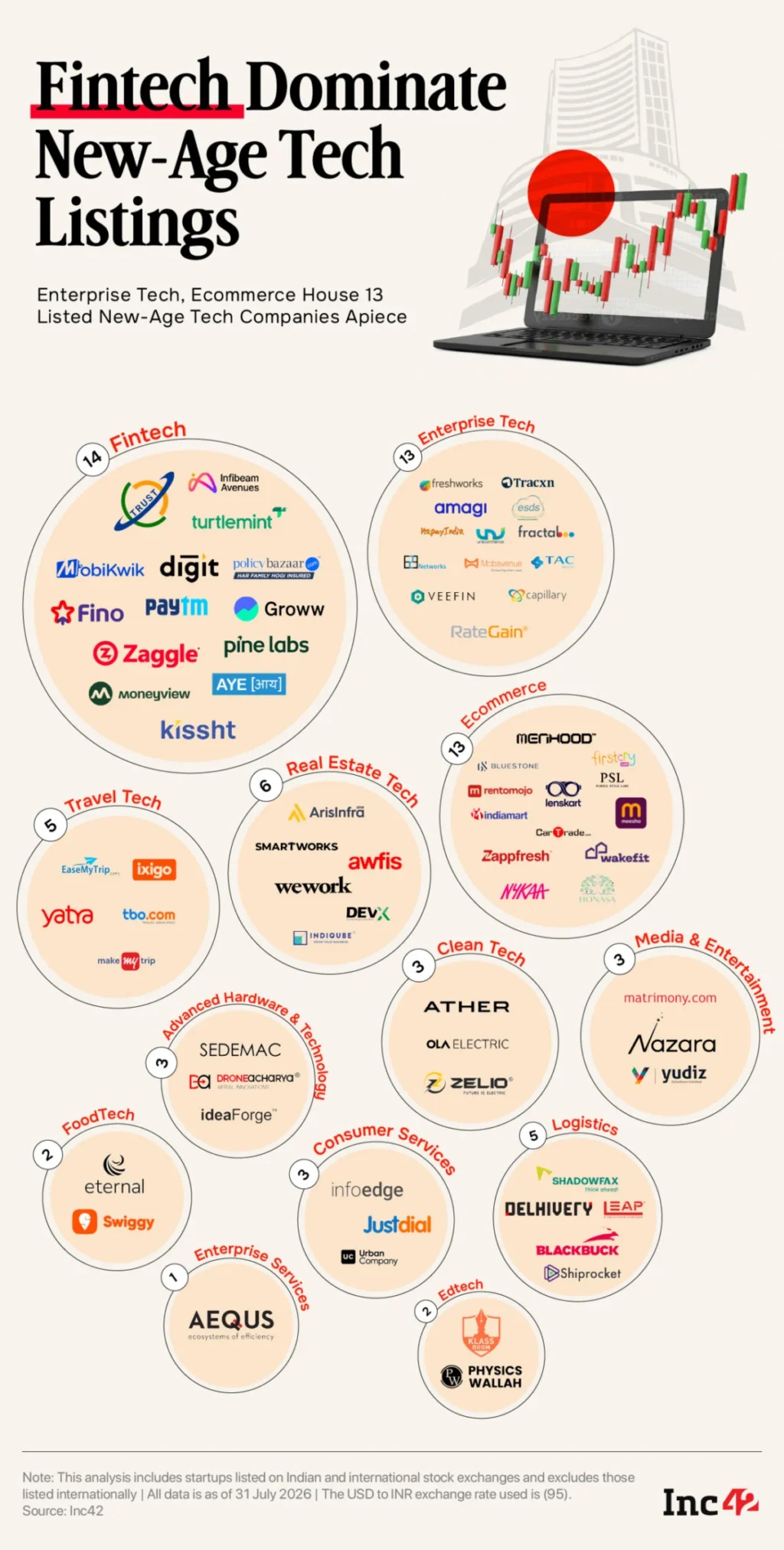
NEW DELHI — The narrative surrounding the Indian startup ecosystem has officially shifted from unbridled, cash-burning expansion to mature, public-market accountability. More than 70 Indian new-age tech companies have crossed the ultimate corporate milestone, successfully transitioning from private ventures to publicly listed entities on domestic and international bourses.
The combined market capitalization of these listed tech firms now exceeds an astonishing $192 billion. This evolution marks a watershed moment for a sector that, only a few years ago, was defined primarily by venture capital dependency and a "growth-at-all-costs" mentality.
Main Facts: The Anatomy of India’s Tech IPO Surge
Public listings have long served as the gold standard for corporate maturity, transparency, and operational viability. For India’s digital economy, an Initial Public Offering (IPO) is no longer an outlier event reserved for legacy conglomerates; it has become an essential rite of passage. These public debuts provide critical pathways for early-stage investor exits, employee stock ownership plan (ESOP) liquidations, and broad-based public wealth creation.
The momentum shows no signs of slowing. Following a robust 2025 that saw 18 startups make their public market debuts—surpassing the previous year’s figures—2026 has already added 14 new-age companies to the bourses. These include:
- Turtlemint
- Klassroom
- Shiprocket
- LEAP India
- Kissht
- Aye Finance
- Fractal Analytics
- Amagi
- Shadowfax
- SEDEMAC Mechatronics
- Moneyview
- Rentomojo
- ESDS Software Solution
- Purple Style Labs
Meanwhile, household names like Razorpay, PhonePe, and PRISM are currently in advanced stages of their IPO preparations. Snapdeal parent AceVector is also slated to make its public market debut on October 5.

Beyond domestic exchanges like the National Stock Exchange (NSE) and Bombay Stock Exchange (BSE), Indian tech firms have also found success abroad. Travel portal MakeMyTrip and SaaS giant Freshworks continue to fly the Indian flag on the US-based Nasdaq exchange, commanding valuations of $4.2 billion and $3.3 billion, respectively.
To bring transparency and centralized intelligence to this burgeoning asset class, Inc42 has officially launched the Indian Listed New-Age Tech Company Tracker. The dynamic resource monitors stock price movements, post-listing performance, and granular financial metrics across the entire spectrum of listed tech enterprises.
Chronology: From the Funding Winter to the Dalal Street Rush
The Growth-At-All-Costs Era (2020–2022)
For years, Indian startups earned a reputation for being perpetually loss-making. Fueled by the hyper-abundant liquidity of the 2020–2022 venture capital boom, founders prioritized aggressive customer acquisition, geographical expansion, and market share capture over immediate unit economics.
The Reality Check and Profitability Pivot (2022 Onward)
The onset of the global "funding winter" in 2022 delivered a harsh reality check. As private capital dried up, startups were forced to restructure their burn rates and chart clear paths toward profitability. This structural pivot laid the groundwork for the subsequent IPO wave.
Data compiled by Inc42 indicates that approximately 60 of the 73 tracked new-age tech companies are currently profitable. Fintech major Groww leads the pack, posting a staggering net profit of ₹2,083 crore in FY26. It is closely followed by fintech pioneer Paytm (₹553 crore) and foodtech giant Eternal, formerly Zomato (₹366 crore).

Lifespan to Listing: A Decade-Long Journey
While older internet economy flagbearers like Info Edge made their public debuts as early as 2006, the median age of a startup hitting the bourses sits at approximately 11 years.
- The Slow Burners: Travel platform ixigo and Fino Payments Bank took nearly two decades of operations before listing.
- The Fast Track: Conversely, real estate tech player ArisInfra Solutions smashed records by materializing its IPO within just four years of inception.
Companies debuting in 2026 typically orchestrated aggressive financial turnarounds right before filing their Draft Red Herring Prospectus (DRHP). Eyewear omnichannel brand Lenskart swung from a ₹10 crore loss in FY24 to a net profit of ₹297 crore ahead of its listing, maintaining a robust PAT of ₹494 crore in FY26.
However, public markets remain unforgiving. Urban Company reported its first consolidated net profit of ₹240 crore in FY25, only to swing back into the red in FY26, posting a net loss of ₹234.8 crore despite a 36% year-on-year surge in revenue to ₹1,555.5 crore.
Supporting Data: Sectoral Breakdown and Geographic Hubs
Which Sectors Rule the Bourses?
The distribution of listed startups directly mirrors the private funding allocations of the past decade. The three most heavily funded sectors—Fintech, Ecommerce, and Enterprise Tech—house the highest concentration of listed entities.
| Sector | Key Listed Startups | Market Trend |
|---|---|---|
| Fintech | Groww, Paytm, PB Fintech, Pine Labs, Aye Finance, Kissht | Strong institutional interest; high regulatory scrutiny balanced by massive transaction volumes. |
| Ecommerce | Eternal (Zomato), Nykaa, FirstCry, Lenskart, Meesho, Rentomojo | Margin expansion focus; shifting from heavy discounts to sustainable unit economics. |
| Enterprise Tech | Freshworks, Amagi, Fractal, E2E Networks, Unicommerce | Global scalability; SaaS players weathering international market corrections. |
This dominance is expected to widen further as consumer-facing giants like Zepto, PhonePe, and OYO prepare to test public waters.

Geographic Concentration: Delhi NCR Takes the Crown
While Bengaluru retains its title as India’s venture capital capital, Delhi and its satellite cities—Gurugram and Noida—account for the highest number of listed new-age tech companies.
- Delhi NCR: Home to 25 listed tech companies, contributing an immense $112.2 billion to the cumulative market cap. Gurugram anchors 15 of these giants (including Eternal, Delhivery, and Lenskart), while Delhi houses Awfis and EaseMyTrip, and Noida hosts Paytm and IndiQube.
- Bengaluru: Trails in second place with 16 listed companies.
- Mumbai: Secures third place with 13 listed entities.
Official Responses and Ecosystem Perspectives
Industry veterans and market analysts view the ongoing tech IPO wave as a profound psychological and structural maturity test for India’s digital economy.
Venture capitalists note that the public markets are effectively filtering out unsustainable business models. Companies that rely purely on subsidies are being heavily penalized by public investors, whereas tech firms demonstrating clear path-to-profitability, robust governance, and scalable unit economics are being handsomely rewarded.
Investment bankers managing upcoming issues point out that institutional investors, both domestic (Mutual Funds, Insurance companies) and foreign (FIIs), now possess sophisticated frameworks to evaluate SaaS, fintech, and consumer internet businesses. Domestic institutional investors (DIIs), in particular, have emerged as powerful cushions, absorbing foreign capital outflows and stabilizing tech stocks during broader market corrections.
Implications: What the Public Listing Wave Means for India’s Future
The mainstreaming of tech startups on Dalal Street carries far-reaching implications for the broader Indian economic landscape:

- Recycling of Wealth: As early-stage founders, angel investors, and employees liquidate their ESOPs through public listings, a massive wave of secondary wealth is being reinvested back into the startup ecosystem. A significant portion of this capital is already flowing into deeptech, artificial intelligence, electric mobility, and space tech startups.
- Corporate Governance Overhaul: Transitioning to a public company forces startups to adhere to strict regulatory compliance mandated by SEBI. This evolution has structurally improved financial transparency, board independence, and internal audit mechanisms across the Indian tech sector.
- Global Competitiveness: With Indian tech companies commanding a combined market cap approaching $200 billion, India is cementing its position as the third-largest tech startup hub in the world—not just in terms of private valuations, but in terms of public wealth creation and market validation.
As India marches deeper into the latter half of the decade, the question for startups is no longer if they will list, but when and how profitably they can execute their journey to the public bourses.