Beyond the Dashboard: Why Audience Intelligence Trumps Attribution-Based Marketing
In the modern digital marketing landscape, the playbook has become remarkably uniform. Whether a brand is a scrappy startup or a multinational corporation, the strategy typically gravitates toward the same triad: Google Ads, LinkedIn campaigns, and Facebook retargeting. These platforms offer the siren song of clear, measurable ROI—the kind of data that is easily digestible for stakeholders and satisfying to report on.
However, a growing chorus of industry experts is beginning to question this reliance on "safe" platforms. Are marketers prioritizing convenience over efficacy? By clinging to channels that provide easy attribution, are they inadvertently ignoring the vast, untapped ecosystems where their target audiences actually live, learn, and form opinions?
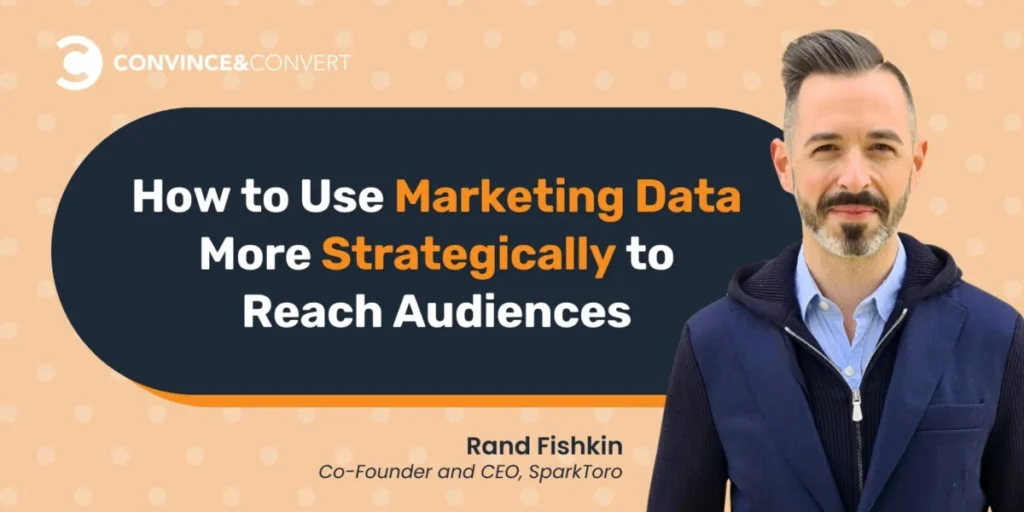
On the Data-Driven Decisions podcast, Rand Fishkin, co-founder of audience intelligence platform SparkToro, argued that the industry’s obsession with measurable clicks has created a significant blind spot. His message is clear: true marketing success requires a shift from chasing "attributable" traffic to understanding the authentic behaviors and habitats of your target customer.
The Illusion of the Attribution-Led Strategy
To understand why so many marketing budgets are misaligned, one must look at the way attribution models have hijacked decision-making. Marketers are frequently incentivized to invest in channels that promise a direct line from ad spend to conversion. If a user clicks a Google Ad and makes a purchase, the platform claims the victory.
But as Fishkin points out, this perspective is fundamentally flawed. "A ton of what happens in Google is actually a response to something else," he explains. "People who performed a search query in Google, very rarely was that a spontaneous first-touch thing. It was like, ‘Oh, I heard about this software, so I went to Google and searched for it.’ And of course, the attribution looks like Google drove all the value. No, Google was just the middleman."
The "Middleman" Problem
When companies treat Google or Meta as their primary marketing channels, they are often paying a premium to "capture" demand that was actually generated elsewhere. The customer may have discovered the product through an industry podcast, a mention in a niche community, or a conversation at a conference. By the time they reach Google, they are already a warm lead.
If marketing teams ignore the upstream channels—the places where the initial brand discovery occurred—they are effectively limiting their growth to the people who are already actively searching. They are capturing existing demand, rather than creating new demand. This creates a cycle where marketers optimize for what is easy to measure, rather than what is actually driving the business forward.
Redefining Strategy Through Audience Intelligence
The alternative approach, championed by tools like SparkToro, involves mapping the specific online footprint of your target audience. Rather than dumping money into broad, platform-controlled ecosystems, companies can identify the specific websites, podcasts, influencers, and publications that their audience trusts.
Case Studies in Strategic Alignment
The practical application of this data-driven approach is evidenced by two distinct success stories shared by Fishkin:
- The Podcaster’s Expansion: A podcaster seeking to maximize sponsorship revenue didn’t just buy ads to promote their show. Instead, they used audience data to identify influential figures with significant reach among their target sponsors’ demographics. By inviting these influencers as guests, the podcaster leveraged the existing trust of those influencers’ audiences, creating a high-value environment that naturally attracted sponsors and increased revenue.
- The Event Organizer’s Strategy: A tech event organizer utilized similar intelligence to curate a speaker list based on audience overlap. By selecting speakers whose followers matched the target demographic for potential sponsors, the organizer ensured that the event’s "marketing" was built into the very fabric of the content, rather than relying on paid social ads to sell tickets.
In both instances, the strategy shifted from "paid reach" to "audience relevance." By meeting the audience where they already gather, these entities bypassed the competition and engaged with leads at the very start of their customer journey.
The Rise of Zero-Click Marketing
Perhaps the most disruptive concept to emerge from this philosophy is "Zero-Click Marketing," a term coined by Amanda Natividad, VP of Marketing at SparkToro.
The core premise of zero-click marketing is the abandonment of the traditional funnel, which demands that every piece of content serve as a "hook" to drive traffic to a website. Instead, zero-click marketing focuses on providing high-value, self-contained content directly on the platforms where the audience spends their time.
Why "Giving It Away" Works
The case of Chartr, a data storytelling company, serves as a masterclass in this methodology. Rather than running ads to drive traffic to their site, Chartr focused on the Reddit community "r/dataisbeautiful." They shared high-quality, insightful data visualizations directly within the subreddit. There were no aggressive branding efforts, no calls-to-action (CTAs), and no forced clicks.
The result? The company built immense credibility and brand recognition within a highly relevant community. By providing value without the friction of a click, they became a trusted voice. When those users eventually decided to seek out data services, Chartr was the top-of-mind choice.
This strategy acknowledges a fundamental shift in user behavior: modern consumers are increasingly wary of being "sold to" and prefer content that informs or entertains them in their native digital environment.
The Limitations of Data: Beyond the Algorithm
While Fishkin advocates for a data-driven approach, he is quick to caution against "data-worship." He emphasizes that data is a tool for information, not a substitute for human intuition or qualitative research.
The Blind Spot of Quantitative Data
Quantitative data, such as website analytics or click-through rates, can tell you what is happening, but it rarely explains the why. It provides a snapshot of behavior but misses the motivations, frustrations, and unvoiced desires of the broader market.
Fishkin suggests that teams should supplement their data strategy with:
- Customer Interviews: Speaking directly to users to uncover the "why" behind their actions.
- Surveys: Gathering feedback from those who don’t use your product to identify missed opportunities or market gaps.
- Contextual Awareness: Recognizing that data often reflects a biased view based on existing channels.
"I’m not saying don’t be data-informed," Fishkin notes. "But I think it pays to be responsible in your recognition of what problems data can solve and what it can’t solve."
Implications for the Future of Marketing
For marketing departments, the implications of this shift are profound. It suggests a transition away from the "Performance Marketing" era—which prioritized immediate, measurable returns—toward a more holistic "Audience Marketing" model.
1. Reallocating the "Top 10%"
Fishkin suggests a pragmatic test for marketing managers: "If you think to yourself, the top 10% of spend that I do at those [traditional] places is probably bringing me no incremental customers… maybe redirect that to some more creative, thoughtful and audience data-driven forms of marketing."
2. Prioritizing Trust Over Reach
When you invest in niche communities, podcasts, and influencers, you are not just buying impressions; you are borrowing trust. This is a higher-leverage activity than buying a Google search ad, which relies on the customer already having the intent to buy.
3. Cultivating Long-Term Brand Equity
Zero-click marketing and community engagement are inherently long-term plays. While they do not provide the instant gratification of a daily ad dashboard report, they build a foundation of brand loyalty that is significantly harder for competitors to disrupt.
Conclusion: A Call to Strategic Action
The goal of a modern marketing strategy should not be to capture the most clicks, but to be the most relevant entity in the customer’s world. By utilizing audience intelligence to map where target users gather and by delivering authentic value through zero-click content, brands can break through the digital noise.
As Zontee Hou, author of Data-Driven Personalization, highlights in her ongoing series, the most successful companies are those that look beyond the surface-level metrics to understand the deeper cross-functional impacts of their data.
In an era of AI-driven ad bidding and algorithmic saturation, the most powerful marketing strategy may be the one that ignores the "easy" path. By investing in genuine connection, understanding the full customer journey, and being willing to step away from the comforting glow of the ad dashboard, marketers can build brands that are not just seen, but deeply felt and remembered.
The path to growth is not found in the next ad platform algorithm—it is found by looking at your audience, listening to their needs, and meeting them exactly where they are.