Navigating the Labyrinth of Big Media Product Recommendations: Can You Trust the Outlets You Love?
By [Author/Journalist Name]
Published: February 2025
Main Facts
In an era where digital journalism faces severe revenue pressures, legacy media organizations have increasingly turned to e-commerce and affiliate marketing to sustain their operations. From venerable newspapers to lifestyle magazines, publishing product roundups, "best of" lists, and curated shopping guides has transformed from a niche side-project into a core pillar of modern digital media revenue.
However, this monetization shift has introduced a complex ethical and consumer trust dilemma. When a household-name media outlet recommends a vacuum cleaner, a mattress, or a software suite, consumers naturally assume the endorsement is driven purely by rigorous, unbiased journalism. Increasingly, however, these recommendations are tied to affiliate links, placement fees, and commercial partnerships that generate commissions for the publisher every time a reader makes a purchase.
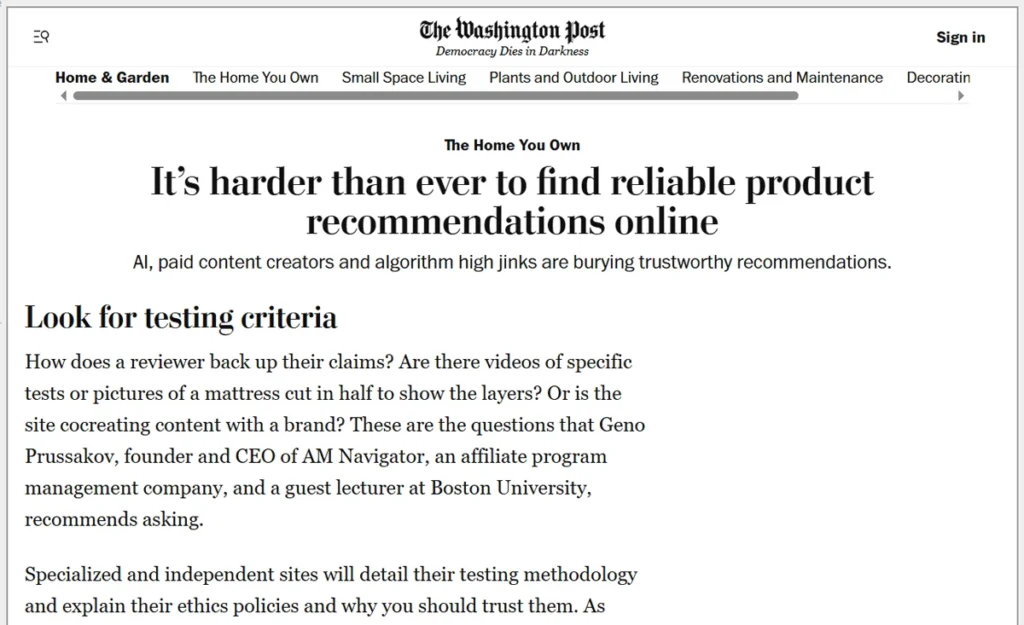
Recent expert commentary—notably from affiliate marketing authorities like Geno Prussakov, whose insights were recently featured in The Washington Post—has brought this industry practice back into the spotlight. While major publishers often maintain strict firewalls between their editorial and commercial teams, the sheer scale of search engine optimization (SEO) authority wielded by big media means that their product roundups can heavily skew market visibility. This dynamic raises a pressing question for modern consumers: How can one trust online reviews and product recommendations, especially when they are published by trusted media giants?
Chronology of the Big Media E-Commerce Pivot
To understand how we arrived at an internet dominated by media-driven shopping guides, it is necessary to trace the evolution of digital publishing over the past two decades.
- The Early 2000s (The Advertising Crash): As print readership declined and digital advertising revenues failed to match legacy income, publishers scrambled for alternative monetization strategies. Banner ads and display networks provided meager returns, leading to widespread industry belt-tightening.
- The Rise of Affiliate Networks (2010–2015): Early digital-native publishers (such as BuzzFeed and specialized tech blogs) discovered that embedding affiliate links into content could yield substantial, passive revenue streams. Retailers like Amazon pioneered robust affiliate programs, turning everyday web traffic into a quantifiable sales funnel.
- The Big Media Adoption Phase (2015–2020): Recognizing the lucrative nature of e-commerce content, legacy media institutions began restructuring. Outlets that once viewed commercial partnerships as a threat to their journalistic integrity established dedicated commerce desks. Publications began launching specialized shopping verticals designed specifically to capture high-intent search traffic.
- The SEO Dominance Era (2020–Present): Major media outlets leveraged their high domain authority—built over decades of trusted reporting—to dominate search engine results pages (SERPs) for product-related queries. Today, searching for "best running shoes" or "best laptops" almost invariably returns articles from top-tier news and lifestyle publishers at the top of Google’s results.
- The Recent Backlash and Scrutiny (2025): With search engines saturated by affiliate-driven content, consumer skepticism has reached an all-time high. Investigative features, such as those published by The Washington Post in early 2025, have forced industry insiders and affiliate management experts to publicly dissect the inner workings of media product roundups, demanding greater transparency and consumer awareness.
Supporting Data and Industry Insights
The transformation of editorial content into commercial real estate is backed by significant economic incentives. Affiliate marketing is a multi-billion-dollar global industry, and big media publishers command a disproportionate share of that revenue due to their unmatched brand trust and search engine equity.
How Major Publishers Vet Products
Contrary to the cynical view that big media simply hawks products to the highest bidder, industry professionals note that reputable publishers take their commerce operations quite seriously. Protecting the broader brand name requires maintaining a baseline of credibility. According to affiliate management veterans who work directly with media partners, reputable outlets typically employ rigorous vetting mechanisms before endorsing a product:
- Hands-On Testing: Top-tier commerce desks often maintain dedicated testing laboratories where staff members physically unbox, test, and compare products over extended periods.
- Editorial Independence Firewalls: Well-structured organizations maintain strict separation between the commercial/affiliate team and the reporters or reviewers. Recommendations are theoretically supposed to be chosen based on merit, with affiliate links appended after the editorial choice is made.
- Data-Driven Performance Analysis: Outlets analyze historical return rates, customer satisfaction scores, and warranty claims to ensure that recommending a poorly manufactured item does not backfire on the publication’s reputation.
- Legal and Compliance Reviews: Fact-checking and legal teams routinely vet claims made in product roundups to ensure compliance with advertising standards and consumer protection laws.
The Hidden Influences: When Commercial Deals Override Merit
Despite these internal safeguards, the sheer financial gravity of affiliate commissions means that commercial arrangements can—and sometimes do—influence product rankings. Industry observers note several ways financial incentives infiltrate editorial roundups:
- Placement Fees: Brands occasionally pay upfront fees to guarantee a spot within a high-traffic holiday gift guide or seasonal roundup.
- Inflated Commission Rates: Merchants may offer higher-than-average commission percentages to publishers in exchange for prominent "Best Overall" or "Editor’s Choice" designations.
- EPC (Earnings Per Click) Guarantees: Publishers heavily optimize their content based on EPC metrics, occasionally favoring products that convert casual browsers into buyers at a higher statistical rate, regardless of whether it is objectively the best item on the market.
Official Responses and Expert Perspectives
The intersection of journalism and e-commerce has elicited strong responses from media ethicists, consumer advocates, and marketing professionals.

In his comprehensive analysis expanding upon his Washington Post contribution, digital marketing strategist Geno Prussakov emphasized that while media outlets are businesses trying to survive, consumers must develop a sophisticated understanding of how these systems operate.
"For quite a few years already, numerous big media players have been turning their authority into a monetizable thing," Prussakov notes. "Most of the monetization targets search engine authority, which raises the inevitable question: How can one trust the reviews and product recommendations found online, even when, or especially if, they are published by big media?"
Media ethics boards have increasingly called for explicit transparency disclosures. While regulatory bodies like the Federal Trade Commission (FTC) mandate that affiliate disclosures must be clearly visible to readers, enforcement varies, and subtle phrasing can often leave casual readers confused about whether an article was written by an independent journalist or a commercial copywriter.
Critics within traditional journalism argue that excessive reliance on commerce content risks eroding the fundamental trust between a publication and its audience. When a reader discovers that a glowing product review was financially incentivized, the perceived integrity of the entire media outlet can take a permanent hit.
Implications for Consumers and the Future of Digital Media
As the digital landscape continues to evolve, the proliferation of monetized product roundups has profound implications for both shoppers and the publishing industry at large.
What Consumers Can Do
To navigate this commercialized information ecosystem, consumers must adopt a more critical approach to online research. Experts recommend four actionable steps to make better-informed purchasing decisions:
- Cross-Reference Multiple Sources: Never rely on a single "best of" list. Check specialized niche review sites, user forums (such as Reddit), and independent consumer testing organizations before making a significant purchase.
- Look for Transparency and Methodology: Credible publications explicitly outline how they test products. If an article lacks any description of testing methodology and simply lists products with "Buy Now" buttons, proceed with caution.
- Distinguish Between Editorial and Commerce Content: Understand that a site’s hard-hitting investigative newsroom operates under a completely different set of incentives than its lifestyle or commerce desk.
- Check the Date and Updates: Product roundups are frequently updated for SEO purposes. Ensure the review is current and that the recommended models are still manufactured and supported by the brand.
The Future Outlook
For the publishing industry, the challenge lies in balancing financial survival with ethical responsibility. As artificial intelligence-generated listicles flood search engines and social media, human-led media outlets must double down on authentic, transparent, and rigorous product evaluation to retain their competitive edge.
Ultimately, big media’s foray into e-commerce is not inherently malicious, but it demands a higher level of digital literacy from the modern consumer. By understanding the mechanics behind the affiliate marketing machine, readers can better separate genuine journalistic insight from cleverly disguised commercial advertising.