Federal Judge Dismisses Antitrust Lawsuits Against Google Brought by Publishers Chegg and Penske Media, Citing Legal Deficiencies
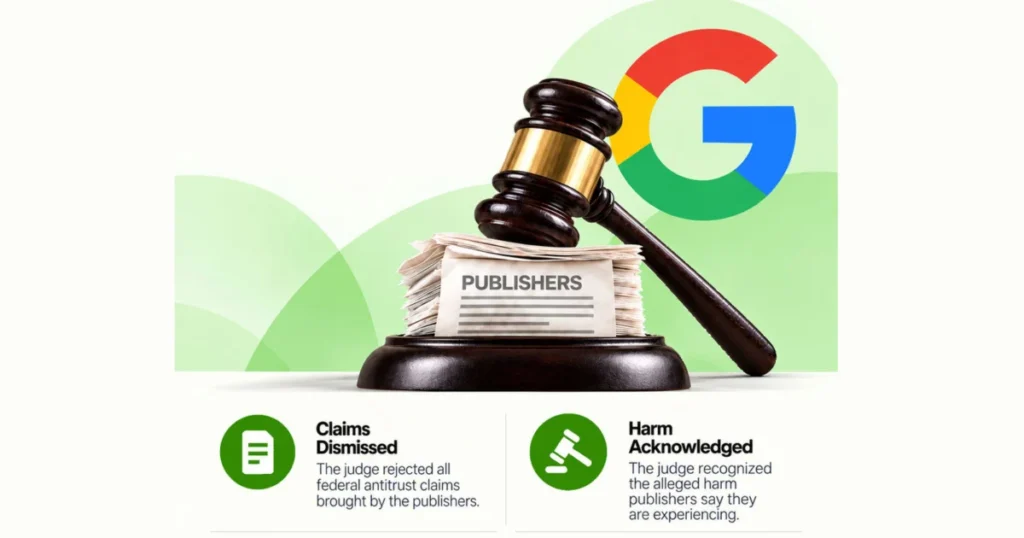
WASHINGTON — In a closely watched legal battle testing the boundaries of digital copyright, platform dominance, and antitrust law, a federal judge has dismissed amended complaints filed by educational technology platform Chegg and media conglomerate Penske Media Corporation (PMC) against tech giant Google.
While acknowledging the profound economic distress and structural challenges facing contemporary digital publishers, U.S. District Judge Amit Mehta ruled that the plaintiffs failed to meet the rigorous legal requirements mandated by federal antitrust statutes. The dismissal of the Penske case was granted without prejudice, rendering the order final and appealable, and opening the door for potential further litigation or appellate review.
The ruling underscores the immense friction between the modern creator economy—which relies heavily on search engine visibility—and the statutory limitations of U.S. antitrust law, which requires plaintiffs to demonstrate specific, legally cognizable market injuries rather than generalized grievances about shifts in the digital landscape.
Main Facts of the Ruling
The core of the legal challenge centered on how Google indexes, displays, and monetizes publisher content, as well as how its search algorithms and features impact referral traffic to third-party websites. Chegg and Penske Media argued that Google leverages its dominance in the general search market to extract content without fair compensation, effectively stifling competition and harming online creators, journalists, educators, and publishers.
Despite validating the gravity of the publishers’ real-world struggles, Judge Mehta made a sharp distinction between recognizing economic harm and finding a violation of federal antitrust law. The court systematically dismantled five distinct categories of claims brought forward by the plaintiffs, ruling that the legal theories presented did not survive scrutiny under prevailing federal standards.
The five primary categories of rejected claims include:
- Reciprocal Dealing: Allegations that an implied exchange exists where publishers supply free content in exchange for search referral traffic.
- Tying: Claims that Google illegally ties its core search product to newer features like AI Overviews.
- Unlawful Monopoly Maintenance: Assertions that publishers possess the legal standing to challenge Google’s monopoly in general search services.
- Attempted Monopolization and Monopoly Leveraging: Arguments that Google is attempting to dominate specific publishing markets.
- Unjust Enrichment: State-level claims that fell alongside the dismissal of the primary federal statutes.
Chronology and Procedural Context
The dismissal is the latest development in an increasingly complex web of antitrust scrutiny facing Alphabet Inc.’s Google. Over the past several years, the company has found itself in the crosshairs of both federal regulators and private commercial entities over its dominance in digital advertising, search engines, and mobile operating systems.
The Evolution of Publisher Grievances
For decades, the symbiotic relationship between publishers and search engines was defined by an unwritten compact: publishers provided high-quality journalism, educational material, and entertainment content, while search engines directed valuable user traffic back to publisher websites through organic links.
However, as Google evolved from a traditional directory of blue links into an answer engine—incorporating features like featured snippets, knowledge graphs, and, most recently, AI Overviews—that dynamic shifted dramatically. Publishers have watched their organic click-through rates plummet as users obtain the information they need directly on the search engine results page (SERP), eliminating the need to click through to the original source.
Filing and Response
Chegg and Penske Media filed their respective antitrust lawsuits to challenge what they viewed as an exploitative extraction of intellectual property. Google subsequently moved to dismiss the complaints, arguing that the plaintiffs failed to establish the foundational elements required for antitrust liability. Judge Mehta’s recent memorandum opinion grants Google’s motion, closing this particular chapter of the litigation while leaving open the possibility of appeal.
Detailed Breakdown of the Dismissed Claims
Judge Mehta’s exhaustive memorandum opinion addresses each legal theory put forward by Chegg and Penske Media, explaining precisely why the pleadings fell short.
1. The Fallacy of "Reciprocal Dealing"
The plaintiffs argued that a form of reciprocal dealing existed between publishers and Google. Under this theory, publishers allow Google to crawl and index their websites, and in exchange, Google provides referral traffic.
Judge Mehta rejected this argument, noting that the plaintiffs failed to plausibly allege an actual, enforceable agreement. The court highlighted a fundamental distinction in contract and antitrust law: possessing an expectation is not the same as establishing a binding agreement.
"Plaintiffs have pleaded only that they have an ‘expectation’ that Google will send them search traffic if they make their content available for free. But an expectation is not an agreement," Judge Mehta wrote, noting the absence of communications, negotiations, or documented mutual assent that would characterize a true reciprocal contract.
2. The Tying Claim and AI Overviews
Penske Media attempted to advance a tying claim, arguing that Google uses its market power over traditional search to force consumers and advertisers into adopting separate products, specifically pointing to the integration of AI Overviews.
The court found that Penske failed to plausibly establish that Google Search and AI Overviews constitute distinct products with separate consumer demand—a baseline requirement for any unlawful tying claim under the Sherman Antitrust Act.
3. Lack of Antitrust Standing
Crucially, the judge ruled that publishers lack "antitrust standing" to challenge Google’s alleged monopoly maintenance in the general search services market. In legal terminology, standing refers to whether a plaintiff has suffered the specific type of injury that antitrust laws were designed to prevent and remedy.
The plaintiffs attempted to establish standing under two distinct theories:
- The Supplier/Purchaser Theory: Claiming they are "suppliers" of search index data to Google and "purchasers" of search referral traffic.
- The Inextricably Intertwined Theory: Arguing that their injuries are inextricably tied to the harms suffered by Google’s nascent AI search competitors.
Judge Mehta dismissed both arguments. He wrote: "To survive a motion to dismiss, Plaintiffs must plausibly establish that they have antitrust standing as to these claims. As with other plaintiffs appearing before this court, they have not… Neither theory persuades."
4. Attempted Monopolization and Market Definition Failures
In their claims regarding attempted monopolization and monopoly leveraging, the plaintiffs alleged that Google sought to dominate online publishing markets. However, the court found that the plaintiffs failed to properly define the relevant markets or demonstrate a dangerous probability that Google would achieve monopoly power within those specific spaces.
Judge Mehta pointed out that Penske Media failed to provide even basic market share data or quantitative facts to support its assertions regarding online publishing. Similarly, he noted that Chegg’s claims collapsed because they failed to establish a dangerous probability of market monopolization.
5. State-Law Claims and Supplemental Jurisdiction
With all federal antitrust claims dismissed, the court declined to exercise supplemental jurisdiction over the remaining state-law claims—specifically, California unjust enrichment claims. Following established judicial standards, Judge Mehta emphasized that considerations of judicial economy, convenience, and fairness strongly favor declining federal jurisdiction over state claims once all federal questions have been eliminated.
Official Responses and Stakeholder Reactions
The ruling has triggered widespread discussion across the legal, journalistic, and search engine optimization (SEO) communities.
- The Publisher Perspective: Representatives for digital publishers and online creators expressed profound disappointment, arguing that the decision highlights a dangerous regulatory vacuum. Creators and media outlets maintain that tech monoliths continue to siphon ad revenue and user engagement without offering fair compensation for the underlying content that powers their platforms.
- The Legal Analysis: Legal scholars note that while the ruling is a significant win for Google, it is narrowly tailored to the specific procedural deficiencies of the plaintiffs’ pleadings rather than a sweeping endorsement of Google’s business practices. The decision illustrates the immense difficulty private commercial entities face when attempting to shoehorn content-scraping and traffic-routing grievances into traditional antitrust frameworks designed for price-fixing and market allocation.
- Google’s Stance: Google has consistently maintained that its search engine provides immense value to publishers by routing millions of free visitors to their websites every day, helping them build audiences and monetize their work through ads and subscriptions.
Broader Implications for Digital Publishing and AI
While the lawsuits brought by Chegg and Penske Media were dismissed, the case reverberates far beyond the courtroom, raising critical questions about the future of the internet economy.
The Rise of Generative AI and Search
The timing of the lawsuit coincides with a massive technological pivot across the tech industry. As search engines increasingly rely on generative artificial intelligence to synthesize answers directly on the search page, the traditional referral traffic model is undergoing unprecedented strain. When users receive complete answers from an AI assistant, they have fewer reasons to click through to publisher websites.
This dynamic has left media companies, educational resources, and independent creators searching for viable legal and economic frameworks to protect their intellectual property. Publishers are increasingly experimenting with paywalls, robust robots.txt exclusion protocols, and direct licensing agreements with AI developers. However, these tools remain difficult to enforce unilaterally against dominant market players.
What Comes Next?
Because the dismissal of the Penske case was granted without prejudice, the plaintiffs retain the legal right to appeal the decision or return to the drawing board to address the specific evidentiary and structural deficiencies identified by Judge Mehta.
For now, however, the ruling serves as a stark reminder that utilizing antitrust law to reshape the digital creator economy requires meeting exceptionally strict statutory thresholds. Until Congress updates federal competition statutes or establishes specialized regulatory frameworks for digital platforms and AI content ingestion, publishers navigating the digital ecosystem will continue to face steep legal hurdles in their efforts to hold tech giants accountable.