The Battle for Electoral Integrity: Opposition Leaders and Activists Mount Pressure on Election Commission
By The Hindu Bureau
Updated: October 04, 2026, 05:15 PM IST
The political landscape of India is witnessing a period of unprecedented turbulence as a coalition of opposition leaders, student activists, and civil society members intensify their protests against the Chief Election Commissioner (CEC), Gyanesh Kumar. The agitation, which has spanned from the streets of Mumbai to the high-security zones of New Delhi, reflects a deepening crisis of confidence regarding the independence of the Election Commission of India (ECI).
The Core Conflict: Allegations of Partisanship
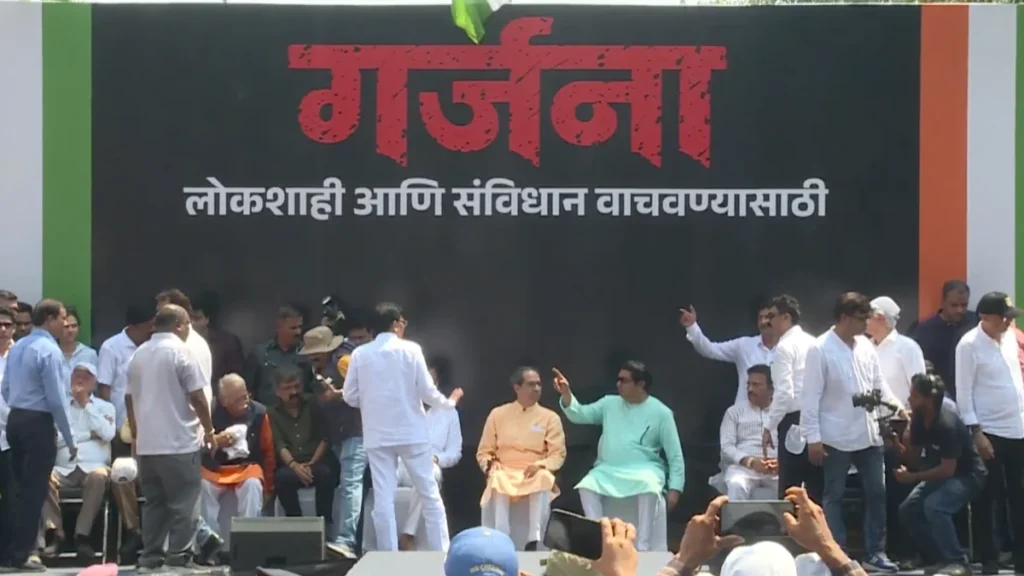
The primary catalyst for the current wave of protests is a mounting skepticism regarding the ECI’s impartiality. Critics, led by high-profile figures such as Shiv Sena (UBT) chief Uddhav Thackeray and MNS leader Raj Thackeray, have openly accused the CEC of functioning as an instrument of the ruling Bharatiya Janata Party (BJP).
The allegations center on the "Special Intensive Revision" (SIR) of electoral rolls in Maharashtra, which opposition leaders claim is a calculated effort to manipulate voter demographics ahead of upcoming electoral cycles. During a massive protest march in Mumbai that traversed from Metro Cinema to the Brihanmumbai Municipal Corporation (BMC) headquarters, the Thackeray cousins voiced a unified demand: the immediate cancellation of the current revision process.

Uddhav Thackeray, addressing a rally of thousands, described the CEC as a "weapon" of the ruling establishment, arguing that the integrity of Indian democracy is being hollowed out from within. Simultaneously, Raj Thackeray has pushed for a structural shift in the voting process, demanding a return to paper ballots to eliminate concerns surrounding Electronic Voting Machine (EVM) reliability.
A Chronology of Escalation: From Jantar Mantar to Mumbai
The unrest did not emerge in a vacuum. It is the culmination of months of simmering tension regarding the ECI’s administrative decisions.
- October 2, 2026: A massive, nationwide demonstration focused on Jantar Mantar, New Delhi. Thousands of citizens gathered to voice concerns over the "shrinking space for democratic dissent" and the perceived erosion of institutional autonomy.
- October 3, 2026: Tensions boiled over in the national capital. Approximately 150 protesters, including AISA national president Neha Bora, activist Yogendra Yadav, and senior advocate Prashant Bhushan, were detained by Delhi Police while attempting a march from Patel Chowk toward Jantar Mantar.
- October 4, 2026: The epicenter of the protest shifted to Mumbai, where the Thackeray-led march brought significant parts of the city to a standstill. Simultaneously, student organizations like the National Students’ Union of India (NSUI) staged a protest at India Gate in New Delhi, demanding transparency and the protection of fundamental voting rights.
The Human Rights Dimension: Allegations of Police Misconduct
The escalation of protests has been met with a firm, and at times controversial, response from law enforcement. The detention of AISA activists on October 3 has drawn widespread condemnation from civil society organizations.
Specifically, AISA members have alleged that during the police action at Patel Chowk, Neha Bora was subjected to physical manhandling by a male police officer. Furthermore, activists have reported that another Delhi Police officer allegedly used abusive language toward her during the arrest. These allegations of misconduct have added a layer of human rights advocacy to the broader electoral debate, with legal experts arguing that the state’s reaction to peaceful dissent is a violation of constitutional protections.

Supporting Data and Political Implications
The current agitation is supported by a growing digital mobilization. Rahul Gandhi, leading the opposition front, recently launched a ‘Satyagraha’ digital platform, designed to consolidate grievances against the ECI and provide a unified channel for citizens to report irregularities in electoral rolls.
The demands of the protesters are multi-faceted:
- Transparency: A full, public disclosure of the methodology behind the Special Intensive Revision of electoral rolls.
- Accountability: An independent inquiry into the decision-making processes of the ECI under CEC Gyanesh Kumar.
- Institutional Reform: A demand for the appointment of Election Commissioners through a process that involves broader political consensus rather than executive fiat.
Economically and socially, these protests signal a shift in the political consciousness of the youth. The involvement of student unions like NSUI and AISA suggests that the battle for electoral integrity is no longer confined to traditional party-political lines but has become a generational issue.
Official Responses and the Institutional Standoff
To date, the Election Commission has maintained a stance of administrative stoicism, emphasizing that all procedures are conducted according to the Representation of the People Act. Official sources within the ECI have repeatedly denied claims of political bias, asserting that the Special Intensive Revision is a standard, periodic exercise aimed at updating the rolls to include newly eligible voters and remove duplicates.

However, this bureaucratic defense has failed to quell the anger of the opposition. The "Satyagraha" movement, as termed by its proponents, aims to keep the pressure on the ECI until a formal dialogue is established.
Legal observers note that the standoff places the judiciary in a precarious position. If the executive continues to use police force to quell protests against a constitutional body like the ECI, the Supreme Court may eventually be called upon to intervene, potentially leading to a constitutional crisis regarding the extent of the ECI’s administrative autonomy versus the citizens’ right to protest.
Looking Ahead: The Path to the Ballot Box
As of October 4, 2026, the situation remains fluid. The coordination between disparate political factions—ranging from the Shiv Sena (UBT) to student-led leftist organizations—indicates a rare, unified front against the current leadership of the Election Commission.
The immediate future of Indian elections depends on whether the ECI can regain the public’s trust. If the demands for transparency regarding the electoral rolls are ignored, the protests are likely to intensify, potentially disrupting the administrative preparations for future electoral cycles.

For the ruling party, the challenge is to manage the optics of a state-led crackdown on protesters while simultaneously addressing the validity of the concerns raised. For the opposition, the goal is to transform this wave of protest into a tangible electoral mandate, turning the "CEC controversy" into a central campaign issue.
As India marches toward future polls, the streets of Jantar Mantar and the rallies in Mumbai serve as a potent reminder: in a democracy, the legitimacy of the government is inextricably linked to the perceived fairness of the process that elects it. The silence from the highest levels of the ECI, combined with the rising volume of the protesters, suggests that this conflict is far from resolved.
This article is based on ongoing coverage of the protests as of October 4, 2026. Further updates will be provided as more information becomes available from the Election Commission and local law enforcement.