The Patching Paradox: Microsoft’s AI-Driven Security Surge and the Human Cost
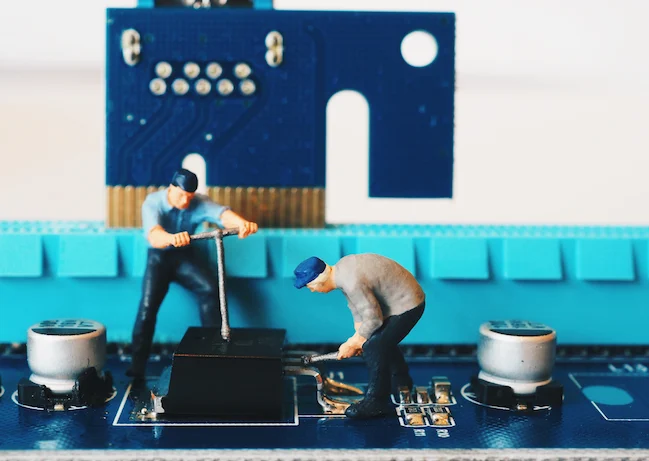
In the landscape of modern cybersecurity, the second Tuesday of each month—known colloquially as "Patch Tuesday"—has long served as a ritual of maintenance for IT professionals worldwide. However, August 2026 has underscored a volatile new reality: the era of the "bugpocalypse." Microsoft has just released a staggering bundle of updates addressing 398 security vulnerabilities across its Windows operating systems and auxiliary software. While this figure does not quite reach the record-shattering 570 flaws patched in July, it stands as a testament to an accelerating trend in software security, where artificial intelligence (AI) is simultaneously uncovering flaws at an unprecedented rate and placing immense pressure on the human engineers tasked with fixing them.
The August 2026 Patch Cycle: Key Facts
The sheer volume of this month’s release—398 individual security fixes—is double the count seen in June 2026. Of these, 42 have been classified as "critical." In the parlance of Microsoft’s Security Response Center (MSRC), a critical rating indicates that an attacker could potentially achieve remote code execution (RCE), gaining control of a target machine with little to no interaction from the end user.
The primary headline for this cycle is CVE-2026-68820, a privilege escalation vulnerability currently being exploited in the wild. This "zero-day" flaw resides in afd.sys, a core driver responsible for Windows socket connections. Because this driver is present on virtually every Windows endpoint, the vulnerability is widespread, though experts emphasize that it is not a "front-door" exploit. Instead, it functions as a critical secondary step in an attack chain: an intruder first gains a foothold via phishing or other social engineering, then leverages the afd.sys flaw to elevate their privileges and seize full control of the system.
A Chronology of Escalation
To understand the current state of software security, one must view August in the context of a rapidly shifting calendar. The recent trajectory of patch volume is not merely a statistical outlier; it is a structural change in the industry.
- June 2026: Microsoft released nearly 200 fixes, which was considered a record at the time.
- July 2026: The industry was stunned when Microsoft issued an unprecedented 570 security updates.
- August 2026: With 398 fixes, the "new normal" for monthly updates has clearly settled into the hundreds, rather than the dozens.
This surge is not limited to Redmond. Major industry players including Adobe, Cisco, Google, Mozilla, and Oracle have all increased their patching frequency. Adobe, in particular, has transitioned to a twice-monthly cadence, publishing security bulletins on the second and fourth Tuesdays of each month. This shift is widely attributed to the integration of AI tools in vulnerability research, which allow automated systems to "fuzz" code and identify edge-case logic errors that human researchers might spend months overlooking.
The Role of AI: A Double-Edged Sword
The paradox of modern patching lies in the disparity between discovery and remediation. AI is indisputably an elite "hunter" of vulnerabilities, capable of scanning millions of lines of code in seconds. However, the task of writing, testing, and deploying a secure patch remains a profoundly human-centric endeavor.
Recent research conducted by the security firm 1Password highlights the dangers of relying on generative AI to close the security gaps it finds. When Large Language Models (LLMs) were tasked with generating patches for complex vulnerabilities, the results were sobering. More than 50% of the AI-generated patches either failed to address the underlying flaw or introduced entirely new, secondary vulnerabilities into the code.
Ed Skoudis, president of the SANS Technology Institute, warns against the allure of "one-shot" AI patching. "AI is rapidly becoming astonishingly good at finding vulnerabilities, but this research shows that fixing them is a very different problem," Skoudis noted in a recent newsletter. He advocates for a "human-in-the-loop" approach, where AI acts as a partner rather than a replacement. The process must remain iterative: test, challenge, improve, and verify.
Implications for Corporate IT and Security Teams
For Chief Security Officers (CSOs) and IT administrators, the current environment presents a significant management challenge. The sheer volume of patches can lead to "patch fatigue," where teams feel forced to rush deployments to minimize the window of exposure.
Tyler Reguly, a researcher at Fortra, offers a cautionary perspective for those feeling the pressure. "There’s no need to rush these updates, no matter what various vendors try to tell you," Reguly says. He points out that while 398 bugs were patched this month, only one is currently confirmed to be under active exploit. The risk of deploying a buggy, untested patch into a production environment—potentially causing system-wide outages—often outweighs the theoretical risk of a vulnerability that is not currently being targeted.
Reguly encourages leadership to facilitate a dialogue with their engineering teams. "If you’re a CSO, talk to your teams about how they are shifting or modifying their workflows to better accommodate this patching surge. Support them by enabling the changes they need to manage this workload safely."
Best Practices for "Reboot Wednesday"
Given the massive size of the August bundle, security experts recommend a measured approach. While the temptation exists to automate the deployment of all 398 updates immediately, the risk of "misbehaving" patches remains high.
- Prioritize by Severity: Focus on the critical RCE vulnerabilities first, especially those identified as having public exploits.
- Backup Before Deployment: The day following Patch Tuesday is often dubbed "Reboot Wednesday" due to the frequency of system crashes and compatibility issues. Ensuring a full, tested backup of critical data and system states is non-negotiable.
- The "Wait and See" Strategy: Unless a system is directly exposed to the public internet, it is often prudent to wait 48 to 72 hours before applying the full suite of updates. This allows time for the community—and vendors like SANS Internet Storm Center—to flag any patches that are causing instability or breaking legacy software.
- Leverage Community Resources: Tools like the SANS Internet Storm Center’s per-patch breakdown provide a vital, human-curated analysis of which updates are urgent and which are "low-impact."
The Future of the Patching Ecosystem
The "bugpocalypse" is not a temporary crisis, but rather the new operating environment of the software industry. As AI becomes more sophisticated, the number of discovered vulnerabilities will likely continue to climb. The burden on human teams to audit, test, and deploy these fixes will grow proportionally.
The ultimate challenge for the next decade will not be finding vulnerabilities, but managing the velocity of remediation. Organizations that succeed will be those that move away from reactive, panicked patching cycles and toward rigorous, automated testing pipelines supported by skilled human oversight. As the industry grapples with the fallout of the August 2026 update, one thing remains clear: in the race between AI-assisted attackers and AI-assisted defenders, the human at the keyboard remains the most critical—and most overstretched—link in the chain.