Elon Musk to change company name following Trump’s AI-to-SI update
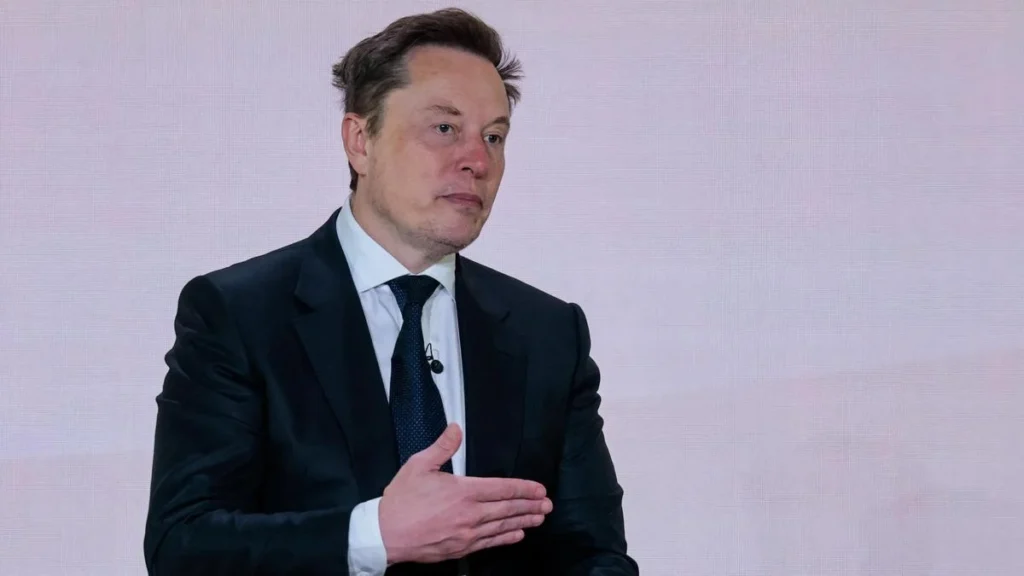
WASHINGTON D.C. — In a striking development that bridges Silicon Valley innovation with federal nomenclature, tech billionaire Elon Musk has announced that he will rename his firm SpaceXAI to SpaceXSI. The move directly aligns with U.S. President Donald Trump’s administration-wide push to officially phase out the terms "Artificial Intelligence" and "AI" across the executive branch, replacing them with "Super Intelligence" (SI).
The decision underscores a rapidly evolving intersection of federal policy, corporate branding, and semantic governance. As federal agencies scrub their lexicons of legacy terminology, industry leaders are increasingly falling in line, signaling a profound cultural and structural pivot in how the United States categorizes and regulates advanced computing.
Main Facts
The core of this tectonic shift lies in a sweeping federal directive and rapid corporate compliance:
- The Rebrand: Responding to an inquiry on his social media platform X (formerly Twitter), Elon Musk confirmed that his enterprise would officially transition from SpaceXAI to SpaceXSI, asserting in a follow-up post that "SI" is categorically "better" than "AI."
- The Federal Mandate: Under an executive order signed by President Donald Trump, the U.S. executive branch has effectively banned the use of the terms "Artificial Intelligence" and "AI" in official correspondence, public communications, policy documents, and non-statutory filings.
- The New Terminology: Federal agencies and executive branch workers must now exclusively utilize "Super Intelligence" and its corresponding acronym, "SI."
- Official Definition in Progress: The President’s executive order directs the Assistant to the President for Science and Technology (APST) to formally establish a federal definition for "Super Intelligence" and "SI" to standardize its application across government operations.
- Big Tech Alignment: Musk’s rebrand follows his participation in a high-profile White House summit, where major technology leaders signed the Accord on Super Intelligence, committing to rigorous security audits, safety guardrails, and cooperative frontier model development.
Chronology of Events
The transition from AI to SI has unfolded with remarkable bureaucratic and corporate speed, moving from executive whitepapers to boardroom adoption in a matter of weeks:
September 29: The White House Policy Shift
The Trump administration released a comprehensive White House fact-sheet formally introducing "Super Intelligence" as the preferred nomenclature for frontier technology. The administration argued that the moniker "Artificial Intelligence" was outdated, diminutive, and fundamentally flawed.
Late September – Early October: The Accord on Super Intelligence
Top executives and developers of frontier AI models gathered at the White House to ink the Accord on Super Intelligence. The agreement established voluntary and mandatory safety frameworks, pushing participating tech firms to adopt heightened security protocols. Crucially, the summit served as a testing ground for the administration’s linguistic preferences, socializing the term "SI" among corporate leadership.

October 3: Implementation of Executive Directives
Federal agencies began circulating internal guidance instructing executive branch workers to purge "AI" and "Artificial Intelligence" from active policy documents, memos, and public-facing releases, replacing them uniformly with "Super Intelligence" and "SI."
October 5: Elon Musk’s Public Confirmation
Elon Musk publicly confirmed via X that SpaceXAI would formally transition to SpaceXSI. The announcement transformed a domestic bureaucratic nomenclature change into an international headline, forcing tech industry watchers to evaluate whether other frontier labs would follow suit.
Supporting Data and Context
To understand the weight of this semantic shift, analysts point to the fundamental philosophy driving the Trump administration’s directive. According to the White House September 29 fact-sheet, the administration believes that the term "Artificial Intelligence" implies mere imitation or passive automation of human cognition.
- The Linguistic Argument: The White House maintains that modern technological breakthroughs transcend human imitation. The term "Super Intelligence," officials argue, accurately captures the true scalar capabilities of advanced systems—specifically, unlocking novel forms of human creativity and enabling citizens to achieve outcomes previously deemed impossible.
- Scope of the Ban: The executive order affects millions of civilian and defense personnel operating within the U.S. executive branch. Departments ranging from the Department of Defense to the Department of Commerce must systematically audit their internal digital infrastructure, contract language, and public repositories to eliminate legacy terminology.
- Industry Compliance: Musk’s early adoption is viewed by political strategists as a bellwether. Given his deep involvement in defense contracting through SpaceX and his role at the forefront of frontier AI research, his pivot to "SpaceXSI" places immense pressure on rival firms—such as OpenAI, Anthropic, and Google DeepMind—to decide whether to adopt the federal naming convention in their public relations and government-facing portfolios.
Official Responses
Reactions to the mandatory semantic overhaul have run the gamut from enthusiastic corporate compliance to cautious skepticism from legal and linguistic scholars.
The White House Perspective
Defending the decree, administration officials emphasized that language shapes policy. "When we call a technology ‘Artificial,’ we diminish its potential and mischaracterize its trajectory," a senior administration official noted under condition of anonymity. "Super Intelligence correctly identifies a tool that amplifies human capability rather than merely simulating it."
Silicon Valley and Elon Musk
Elon Musk has consistently championed rigorous safety protocols for advanced computing while maintaining an optimistic outlook on technological acceleration. By tweeting, "Yes, we will make that change," and later asserting that "SI is better than AI," Musk reinforced his strategic alignment with the current administration. Industry insiders note that maintaining a harmonious relationship with the White House is vital for Musk’s broader portfolio, which relies heavily on federal partnerships, satellite deployment clearances, and defense contracts.

Critics and Constitutional Scholars
Conversely, academic circles and free-speech advocates have raised operational and constitutional eyebrows. While the executive branch holds undisputed authority over its own internal communications and style guides, linguists have questioned the practicality of legally discouraging a globally recognized scientific term. Furthermore, legal scholars are watching closely to see how the impending APST definition of "Super Intelligence" will impact ongoing legislative efforts in Congress, where lawmakers have spent years drafting bills explicitly utilizing the term "Artificial Intelligence."
Implications for the Future of Technology and Governance
The pivot from AI to SI is far more than a cosmetic exercise in rebranding; it carries profound implications across multiple domains:
1. Regulatory Fragmentation
The divergence between executive branch terminology and legislative terminology could create a legislative-executive friction point. If Congress continues to draft bills referencing "Artificial Intelligence" while the executive branch exclusively recognizes "Super Intelligence," administrative enforcement and statutory interpretation may become fraught with bureaucratic hurdles.
2. Global Standards and International Diplomacy
The United States is a primary architect of global technology standards. If U.S. federal agencies, diplomatic channels, and international trade documents exclusively adopt "Super Intelligence" and "SI," international bodies—such as the United Nations, the OECD, and bilateral trade partners—will be forced to navigate this localized linguistic shift, potentially fracturing global consensus on how advanced computing is classified.
3. Corporate Strategy and Branding
For tech companies, the dilemma is balancing global consumer recognition with compliance in their primary domestic market. While everyday consumers worldwide continue to search for and utilize "AI," American defense and enterprise tech companies operating within the U.S. federal procurement ecosystem may find it commercially advantageous—or legally mandatory—to adopt "SI" branding.
As the Assistant to the President for Science and Technology works to codify the official federal definition of "Super Intelligence," the tech industry stands at a crossroads. Whether "SI" becomes the global standard or remains a uniquely American bureaucratic idiom will depend largely on how aggressively the federal government enforces the transition in upcoming procurement cycles and regulatory frameworks.