The Rise of "Phone Bombing": How Harmless Pranks Have Evolved into a Pervasive Digital Menace in India
By Investigative Desk
With inputs from Aniket Singh Chauhan
Main Facts: The Anatomy of a Digital Assault
In an era defined by hyper-connectivity, a disturbing new trend is weaponizing the very tools meant to keep people linked. Known colloquially as "phone bombing," or "pranking as a service," this malicious digital practice allows anyone with an internet connection to inundate an unsuspecting target with hundreds—or even thousands—of automated phone calls and One-Time Passwords (OTPs) within minutes.
Easily searchable on mainstream search engines, these websites brazenly advertise their capabilities. "Fast and reliable bombing service with unlimited calls and instant delivery," boasts one such platform, promising users the ability to dispatch up to 1,000 automated notifications per hour with total anonymity.
The modus operandi is shockingly simple: a perpetrator visits a specialized website, inputs a victim’s mobile phone number, selects the volume of fake messages or calls they wish to trigger, and hits send. Within seconds, the target’s device is flooded with a barrage of automated alerts from legitimate applications like ride-sharing services, food delivery apps, and e-commerce platforms. This sudden surge completely incapacitates the device, rendering it virtually unusable, draining batteries, and throwing victims into states of panic as they grapple with the terrifying illusion that their personal digital lives have been compromised.
What is often marketed by its creators as "harmless entertainment" or a "fun way to prank friends" has rapidly morphed into a systemic form of online harassment, drawing the scrutiny of cybersecurity experts, legal professionals, and victims alike across India.

Chronology: From Underground Forums to Mainstream Telegram Networks
While automated dialing scripts have existed in various forms for years, the commercialization and packaging of phone bombing as an accessible, plug-and-play consumer service represent a concerning evolution in digital harassment.
- The Emergence of Web-Based Tools: Initially restricted to niche hacker forums, phone-bombing scripts transitioned into sleek, user-friendly websites designed for the general public. These sites capitalized on poorly secured Application Programming Interfaces (APIs) of major consumer apps that automatically generated OTPs upon request.
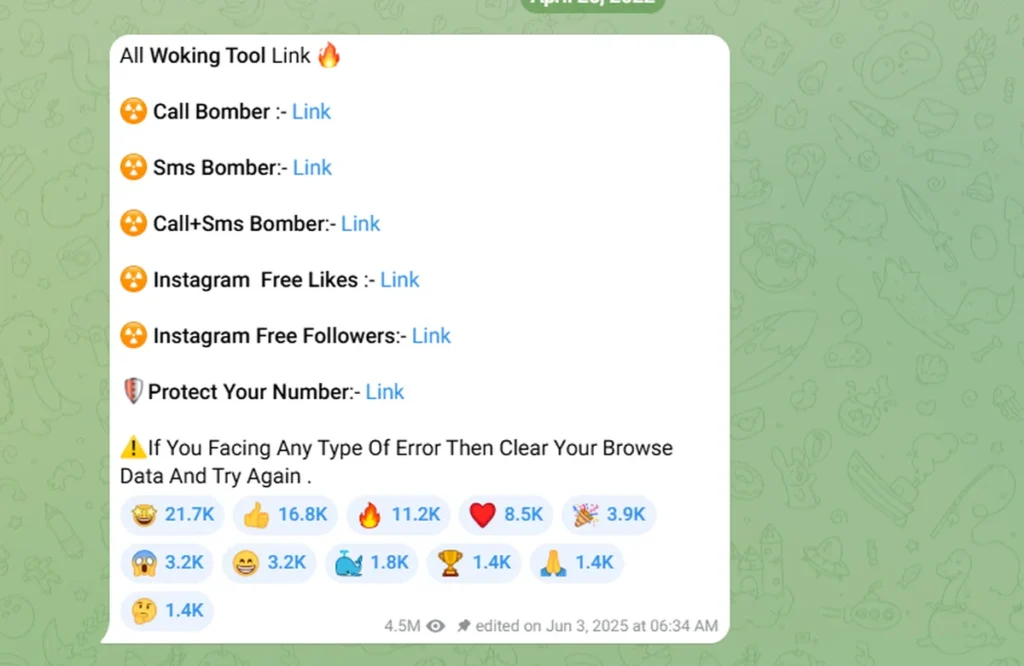
- Migration to Encrypted Platforms: As traditional web domains faced sporadic crackdowns, operators migrated their coordination and marketing efforts to encrypted messaging platforms, most notably Telegram. These channels have experienced exponential growth. An investigation by The Hindu revealed a single Telegram channel promoting phone-bombing websites boasting over 558,000 subscribers.
- Commercialization and Feature Expansion: Far from hiding in the shadows, these Telegram communities operate with corporate-like efficiency. Administrators post regular status updates announcing when websites go down for maintenance and when they are successfully restored. Over time, these networks have expanded their portfolios, monetizing their reach by selling fake Instagram followers and introducing "pro" subscription tiers featuring advanced tools like "WhatsApp bombers."
- The Irony of "Protection Lists": Realizing the widespread panic their tools generate, website operators introduced a cynical monetization and retention feature: the "protection list." Victims who manage to identify the platform used against them can pay or register to have their numbers "permanently shielded" from future attacks—though no global registry exists to protect users from the thousands of similar sites operating concurrently.
Supporting Data: Understanding the Scale and Impact
The psychological and practical impact of phone bombing is profound, affecting individuals across different demographics, from university students to senior educators.
Case Study 1: The Student Caught in the Crossfire
Prashasti, a 20-year-old design student, fell victim to the trend when a peer tested the service on her number. Sitting quietly in a university lecture, her phone suddenly lit up with 50 to 80 OTP messages in under a minute.
"I was not aware, so at first, I felt [confused] as to why so many messages were being delivered," Prashasti recalled. "When I checked the notifications and saw so many OTPs, I got a little frustrated and was scared. Where has my number been leaked?"
Beyond the immediate disruption, Prashasti noted a residual surge in unsolicited sponsored messages and company advertisements in the weeks following the incident—though investigators have yet to definitively prove whether such attacks directly result in the commercial sale of personal data.

Case Study 2: The Retaliatory Cycle
The line between victim and perpetrator is often razor-thin. Aryan, a 24-year-old who was once targeted by friends, decided to turn the tables on a lecturer he found irritating.
"My lecturer was teaching and he was irritating, so I did it," Aryan admitted casually.
Describing the technical illusion created by the attack, Aryan explained, "Imagine I have to trouble you, okay? I will call you from your own number. You will see your number only." Victims frequently report receiving bizarre missed calls originating from their own telephone numbers—a disorienting psychological trick engineered by the scripts.
Furthermore, Aryan noted that the barrage exclusively utilizes non-financial OTPs—originating from platforms like Meesho, Rapido, and Uber—while deliberately omitting banking or monetary transaction codes, a design choice likely intended to minimize severe financial fraud investigations while maximizing psychological distress.
Official Responses and Legal Perspectives: Navigating the Grey Areas of the Law
As digital harassment techniques outpace traditional legislative frameworks, legal experts emphasize that phone bombing is far from a harmless prank—it is a clear-cut violation of Indian law carrying severe penalties.

Criminal and Civil Liabilities Under the IT Act
Supreme Court advocate Nipun Saxena points out that existing provisions within the Information Technology (IT) Act comprehensively criminalize the mechanics behind phone bombing:
"Section 43 and Section 66 of the IT Act specifically provide for penalties both under civil and criminal law for computer-related offences. The penalty carries a maximum imprisonment of 3 years or a fine of ₹5 lakhs," Saxena explains.
He highlights specific clauses within Section 43:
- Section 43(c): Punishes the unauthorized "introduction of any computer contaminant."
- Section 43(d): Targets acts that "damage or cause to be damaged any computer, system or network or any other program."
- Section 43(e): Penalizes the "disruption" of any computer, system, or network.
"Every act of phone bombing specifically causes such a disruption and is therefore punishable on every count," Saxena asserts.
The Erosion of Digital Trust
Advocate Krishnesh Bapat, also practicing at the Supreme Court, underscores the psychological toll and the fundamental breach of consent inherent in these attacks.

"Even if it is a harmless prank, they are perhaps doing it to people they know to trouble them. Phone bombing like this can basically prevent you from using your phone, disturb your sleep, affect your day, and leave you living in fear… It disrupts the integrity of a system which is essentially based on trust," Bapat notes.
He emphasizes that mobile numbers constitute deeply personal information entrusted to others for communication, not harassment: "You have not consented to being bombed through automated requests."
Implications: The Challenge of Regulation and Future Safeguards
The persistence of phone-bombing websites raises critical questions about internet governance, platform accountability, and the delicate balance between robust cybersecurity and overreaching censorship.
For victims like Prashasti, the solution seems straightforward: "I feel like this should be banned. Anyone would panic that their phone has been hacked. If you are a novice user, it would be like, ‘What is happening?’ That’s why I feel it should be banned."
However, legal and technical experts warn that outright bans are complex, legally fraught, and often ineffective in a decentralized digital ecosystem. Advocate Bapat points to Section 69(A) of the IT Act, which dictates how online content and platforms can be restricted. Any governmental action must adhere strictly to the principle of proportionality.

"The exercise must be proportionate in nature if perhaps there is a genuine use case of such websites where you need to make repeated calls," Bapat notes, citing hypothetical emergency scenarios where rapid, automated calls might be deployed to grab someone’s attention in peril. "Would that also be impermissible is something that would have to be seen in the context of the situation… Only the specific misuse for phone bombing can be taken down."
The Road Ahead
Ultimately, combating the scourge of phone bombing will require a multi-layered approach. App developers and service providers must fortify their API gateways against automated bot abuse and rapid OTP requests. Concurrently, law enforcement agencies must actively monitor encrypted communication channels like Telegram, where these underground services are openly marketed, traded, and monetized.
Until stricter technological safeguards and proactive enforcement mechanisms are established, the digital prank culture will continue to walk a dangerous tightrope between juvenile mischief and severe cybercrime—leaving millions of mobile users vulnerable to the whims of anonymous harassers.