AWS Expands Generative AI Capabilities with Amazon Bedrock Managed Agents Powered by OpenAI
SEATTLE — Amazon Web Services (AWS) has officially launched the public preview of Amazon Bedrock Managed Agents powered by OpenAI, marking a significant milestone in cloud-based artificial intelligence integration. Announced as part of the weekly AWS ecosystem update by principal developer advocate Channy, this new capability bridges OpenAI’s advanced agentic frameworks with AWS’s robust cloud infrastructure, security protocols, and enterprise governance frameworks.
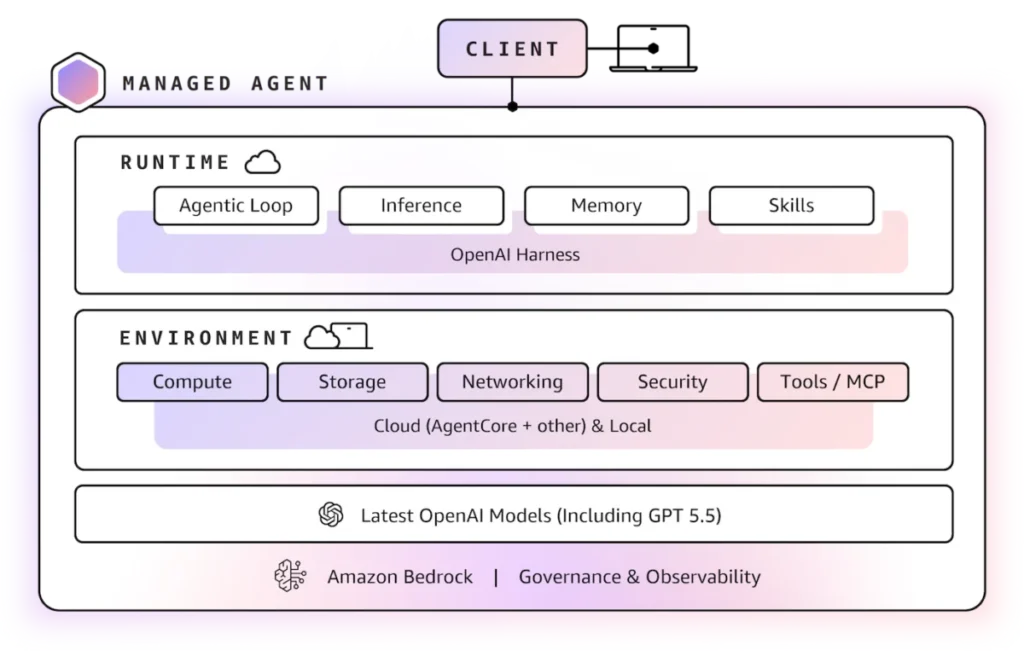
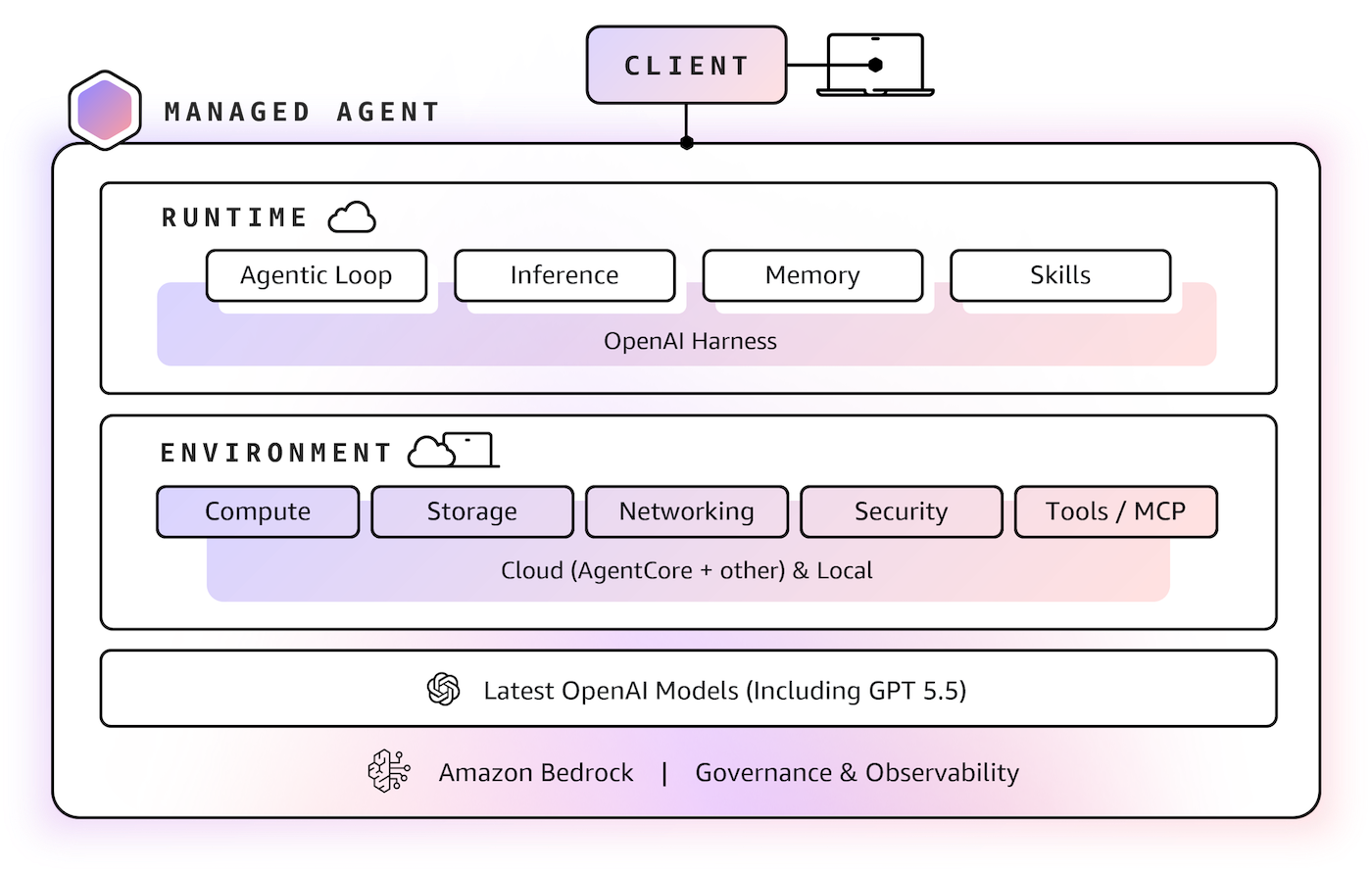
The integration allows organizations to deploy agents specifically optimized for OpenAI models directly within their AWS environments. By leveraging a customized version of OpenAI’s Agents API that is engineered to be natively compatible with AWS, enterprises can now combine state-of-the-art generative intelligence with existing AWS identity management, permission hierarchies, and data governance controls.
Main Facts
The core announcement centers around the public preview of Amazon Bedrock Managed Agents powered by OpenAI, offering developers and enterprises a streamlined path to build, scale, and secure complex AI workflows.
- AWS-Native OpenAI Integration: The offering is built upon a specialized, customized version of OpenAI’s Agents API. It is tailored to operate seamlessly within the AWS ecosystem.
- Flexible Execution Environments: Developers can choose between two distinct runtime setups:
- Self-Hosted Compute: Ideal for developers wishing to utilize existing local development machines, custom containers, or external compute clusters.
- Amazon Bedrock AgentCore Runtime: A fully managed runtime environment providing managed sessions and configurable storage options directly inside the user’s AWS account.
- Enterprise Security and Governance: Agents operate using pre-existing AWS security frameworks, ensuring that identity and access management (IAM), data security, and corporate compliance guardrails remain strictly enforced.
- Expanded Frontier Models: Alongside the agent announcement, AWS continues to expand its catalog of frontier models available through Amazon Bedrock, giving architects broader choices for multi-model strategies.
- Lifecycle and Maintenance Updates: AWS also released its routine update regarding product lifecycle transitions, outlining upcoming maintenance windows, sunset dates, and end-of-support schedules for legacy tools.
Chronology
The rollout of Amazon Bedrock Managed Agents powered by OpenAI follows a structured timeline of development and deployment within the AWS cloud ecosystem:
- April 2026: Initial architectural foundations and early developer previews for foundational Bedrock extensions began appearing in internal and selective partner testing environments.
- Late September 2026: AWS formalized the service lifecycle adjustments (dated September 29, 2026), moving legacy features into maintenance and sunset phases to clear infrastructure pathways for newer generative AI workloads.
- First Week of October 2026: AWS officially announced the public preview of Amazon Bedrock Managed Agents powered by OpenAI via the AWS News Blog. Concurrently, architectural documentation and runtime setup guides were published to help early adopters configure their environments.
- October 29, 2026 (Upcoming Deadline): The threshold date for specific legacy services to officially enter maintenance, rendering them inaccessible to new customers as AWS streamlines its portfolio toward modern, agentic AI systems.
Supporting Data & Technical Architecture
The architecture behind Amazon Bedrock Managed Agents is engineered for high availability, low latency, and deep cloud service integration. According to technical documentation released alongside the preview, the system decouples agent orchestration from underlying compute resources, giving engineering teams unprecedented deployment flexibility.
Execution Environments and Performance
Organizations dealing with strict data residency or custom networking requirements can opt for self-hosted compute, maintaining total oversight of the hardware and network layers. Conversely, organizations seeking serverless agility can utilize the Amazon Bedrock AgentCore Runtime. This managed option automates session handling, memory management, and persistent storage configuration within the boundaries of the user’s isolated AWS account.
Integration Metrics and Ecosystem Reach
- API Compatibility: Direct utilization of a customized OpenAI Agents API ensures that existing OpenAI-trained developer talent can transition to AWS environments without learning entirely new paradigms.
- Governance Overhead: Zero additional IAM policy translation is required for basic deployments, as agents inherit the overarching AWS account governance policies by default.
- Ecosystem Events: AWS continues to rally its developer base through platforms like the AWS Builder Center, upcoming AWS Community Days, and the flagship annual conference, AWS re:Invent, where deeper technical deep dives into agentic workflows are expected.
Official Responses and Developer Perspective
Industry analysts and AWS representatives have framed this release as a response to growing enterprise demand for flexibility and multi-model architectures. Rather than locking developers into a single proprietary ecosystem, AWS is positioning Amazon Bedrock as an open orchestration layer where best-in-class models—whether from Anthropic, Meta, Cohere, or now enhanced with OpenAI integrations—can coexist under a unified security umbrella.
In his weekly roundup post, Channy emphasized the practical nature of the release for builders:

"You can now build agents optimized for OpenAI models that run entirely inside AWS with the identities, permissions, and governance controls you already use."
Feedback from early developer preview participants highlights the reduction in boilerplate code required to connect external LLM APIs with internal AWS databases, Lambda functions, and S3 storage buckets. By abstracting the connection layer into the Bedrock Managed Agents framework, developers can focus primarily on prompt engineering, agent behavior design, and business logic execution.
Implications for Enterprises and the Cloud Market
The introduction of Amazon Bedrock Managed Agents powered by OpenAI carries profound implications for the enterprise cloud and artificial intelligence markets.
1. Breaking Down Silos in Generative AI
Historically, organizations utilizing OpenAI’s models had to manage API keys, billing relationships, and data governance policies outside of their primary cloud provider environments. By bringing these capabilities natively into AWS via Bedrock, enterprises can consolidate their cloud spend, apply centralized compliance monitoring, and ensure that sensitive corporate data processed by AI agents remains protected under enterprise-grade AWS security contracts.
2. Accelerating Autonomous Agent Deployment
Simple chatbots are rapidly giving way to autonomous agents capable of chaining multiple steps together, querying databases, executing APIs, and solving complex operational tasks. The managed runtime environment provided by Bedrock AgentCore lowers the technical barrier to entry for building these sophisticated systems, allowing mid-market and enterprise companies to deploy autonomous workflows in days rather than months.
3. Lifecycle Management and Cloud Optimization
As AWS pivots aggressively toward supporting advanced generative AI infrastructure, resources are continually reallocated. The simultaneous announcement of service lifecycle updates—moving older, underutilized features into maintenance and sunset phases—demonstrates AWS’s strategic prioritization. Enterprise IT leaders must review these lifecycle timelines carefully to ensure their legacy applications are migrated to modern alternatives, freeing up architectural bandwidth for next-generation AI deployments.
Looking Ahead
As the public preview period progresses, AWS is expected to gather telemetry and developer feedback to refine the Bedrock Managed Agents framework ahead of general availability. Developers interested in testing the capabilities can access the setup guides directly through the Amazon Bedrock user documentation and participate in upcoming community discussions at AWS re:Invent and regional builder events.