Odisha Cabinet Hails Prime Minister Modi’s 25-Year Legacy of Transformative Governance
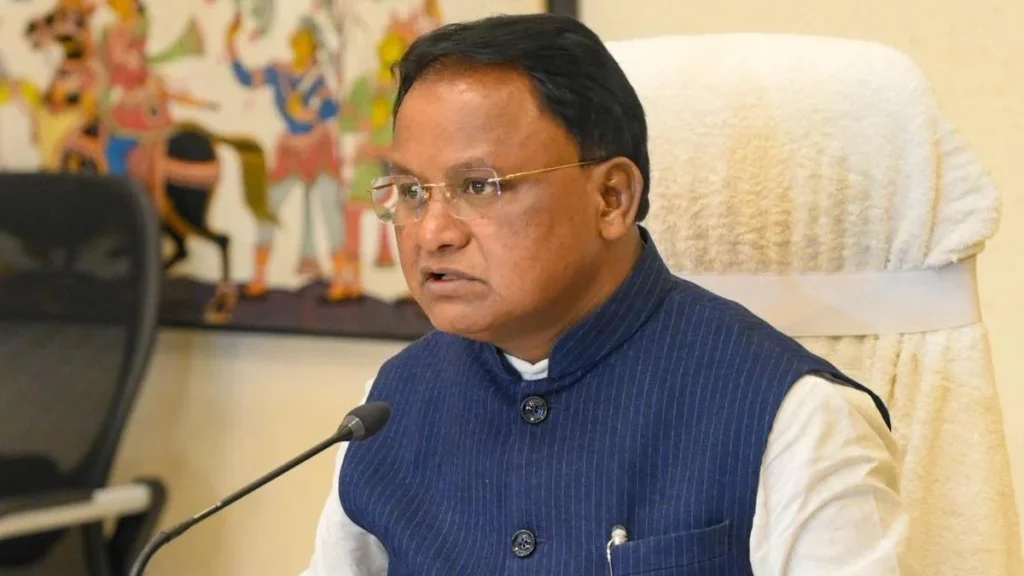
BHUBANESWAR: In a significant political gesture reflecting the strengthening alignment between the State and the Centre, the Odisha Cabinet, presided over by Chief Minister Mohan Charan Majhi, formally passed a resolution on Tuesday to congratulate Prime Minister Narendra Modi. The occasion marks a milestone in Indian politics: the completion of 25 years of uninterrupted service by Mr. Modi in public life, a quarter-century that has seen him evolve from a regional administrator to a global statesman.
The resolution, adopted with unanimous approval, serves as both a retrospective on the Prime Minister’s administrative journey and a forward-looking statement on the socio-economic trajectory of Odisha under his federal vision.
The Milestone: A Quarter-Century of Public Service
The political journey of Narendra Modi began in earnest when he assumed the office of Chief Minister of Gujarat in 2001. His subsequent transition to the national stage as the Prime Minister in 2014 marked a paradigm shift in Indian governance. The Odisha Cabinet’s resolution emphasizes that this 25-year span is not merely a duration of time but a period defined by a "transformative transition" for the nation.
Chief Minister Mohan Charan Majhi, speaking during the Cabinet meeting, highlighted that the "India First" principle has been the bedrock of Mr. Modi’s governance model. According to the State government, this philosophy has transcended political rhetoric to become a functional tool for national integration, economic resilience, and global positioning.
Chronology: From Gujarat to the National Stage
To understand the significance of the Cabinet’s resolution, one must look at the timeline of the Prime Minister’s career:
- 2001–2014: The Gujarat Era. This period established the "Gujarat Model" of development, characterized by rapid industrialization, energy security, and improved ease of doing business.
- 2014: The National Mandate. Mr. Modi assumed the office of Prime Minister, shifting the focus to a "New India" characterized by digital transformation and inclusive growth.
- 2014–2024: The Decade of Transformation. This period saw major structural reforms, including the implementation of the Goods and Services Tax (GST), the expansion of digital public infrastructure (UPI), and massive social welfare drives.
- 2024–2026: The Current Phase. The focus has shifted toward "Viksit Bharat @2047," with Odisha playing a pivotal role in the "Purvodaya" (Rise of the East) initiative.
Supporting Data: Infrastructure and Economic Growth in Odisha
A significant portion of the Cabinet meeting was dedicated to quantifying the impact of the Central government’s support on Odisha’s development. The Chief Minister provided a detailed breakdown of the infrastructure revolution currently unfolding in the State:
Railway Connectivity and Modernization
The transformation of Odisha’s rail network stands as a flagship achievement of the current administrative partnership. Since 2014, the State has witnessed:
- Network Expansion: The construction of 2,236 kilometers of new railway lines.
- Electrification: Achieving a 100% railway electrification milestone.
- Modern Transit: The introduction of six Vande Bharat Express trains, connecting 17 districts through 25 strategic stops, significantly reducing travel time and boosting regional commerce.
- Station Upgradation: The ongoing redevelopment of 59 railway stations under the Amrit Bharat Station Scheme, turning transit hubs into engines of local economic growth.
Maritime and Industrial Ambitions
The Cabinet also highlighted massive capital investments aimed at leveraging Odisha’s long coastline:
- Bahuda Estuary Port: Approval for a deep-sea port in the Ganjam district with an investment of ₹21,500 crore.
- Shipbuilding Cluster: A major shipbuilding and ship-repair cluster in the Kendrapara district, valued at ₹24,700 crore. These projects are expected to generate thousands of jobs and position Odisha as a premier maritime state.
Official Responses and Political Implications
Chief Minister Mohan Charan Majhi’s rhetoric during the meeting was marked by high praise for the Prime Minister’s crisis management capabilities. "Modiji’s leadership demonstrates the courage to confront extraordinary challenges directly," the CM stated. He specifically cited the government’s handling of the COVID-19 pandemic, the resilience shown against geopolitical instability, and the containment of security threats.

The "Antyodaya" Focus
The Chief Minister reiterated that the central objective of the government remains Antyodaya—the upliftment of the person at the very last rung of society. He cited data indicating that over 25 crore people have been lifted out of multidimensional poverty across India during Mr. Modi’s tenure. This emphasis on social welfare is designed to signal that the economic growth seen in Odisha is not limited to urban centers but is trickling down to the rural and tribal hinterlands.
Implications for the Future: Odisha as the Engine of the East
The "Purvodaya" (Rise of the East) vision, championed by the Prime Minister, places Odisha at the heart of India’s future economic growth. For decades, the eastern region of India lagged behind the western and southern states in industrial output and infrastructure. The current government’s strategy is to reverse this trend by funneling investment into Odisha’s mineral-rich and coastal geography.
The eight visits by the Prime Minister to Odisha since the formation of the current State government underscore a deepening relationship. This alignment is expected to streamline land acquisition, accelerate environmental clearances, and foster a collaborative environment for large-scale industrial projects.
Economic Security in a Volatile World
The Cabinet also lauded the Prime Minister for maintaining India’s economic stability amid global volatility. By keeping inflation in check and fostering a robust domestic manufacturing sector, the Centre has provided a buffer for states like Odisha to pursue long-term industrial goals without the fear of sudden capital flight or macro-economic shocks.
A New Era of Federal Cooperation
The resolution passed by the Odisha Cabinet is more than a courtesy; it is a declaration of political intent. By aligning so closely with the Prime Minister’s legacy and vision, the Odisha government is signaling to domestic and international investors that the State is a stable, reliable, and high-growth destination.
As India moves toward the midpoint of the current decade, the synergy between Bhubaneswar and New Delhi appears stronger than ever. The focus on infrastructure, connectivity, and social welfare—the pillars of the Prime Minister’s 25-year journey—is now the template for Odisha’s own development roadmap.
In conclusion, the State Cabinet’s gesture serves to reinforce the narrative that the "New India" envisioned by Mr. Modi is finding its most fertile ground in the resource-rich and strategically located State of Odisha. As the projects for the deep-sea port and the shipbuilding clusters move from approval to implementation, the impact of these decisions will likely define the state’s socio-economic landscape for the next generation.
The Cabinet meeting concluded with a renewed commitment from the State government to align its administrative goals with the national objective of making India a developed nation by 2047, ensuring that the legacy of the last 25 years serves as a launchpad for the next century of growth.