Global Trade Realignment: Jaishankar Calls for Nuanced Assessment of Market Distortions
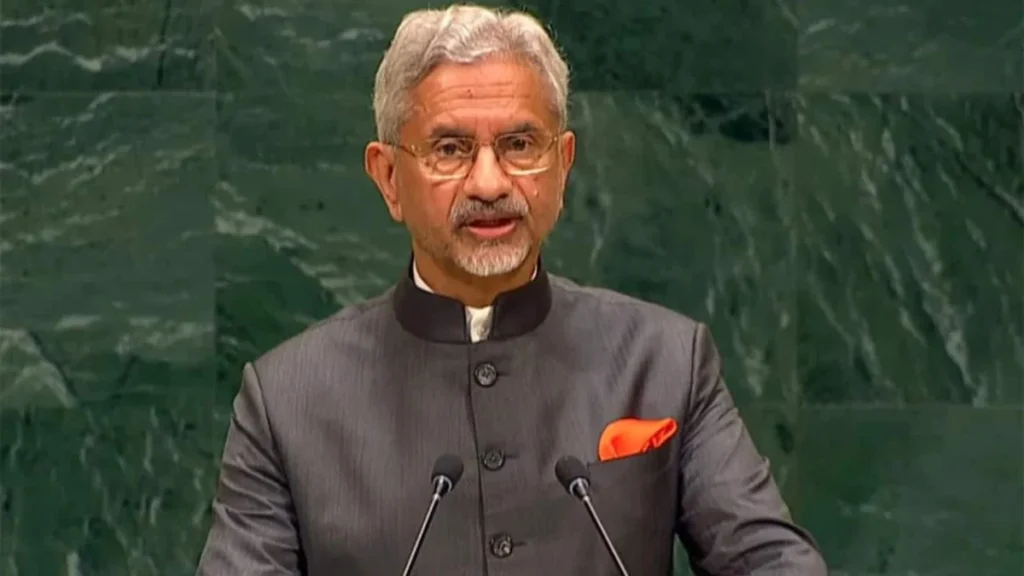
New Delhi – In a significant departure from the reflexive critique often directed at Washington regarding global economic imbalances, External Affairs Minister S. Jaishankar has called for a more sophisticated, multi-dimensional understanding of the contemporary global trade architecture. Speaking at the prestigious Kautilya Economic Conclave, themed "India and the World: Adaptive by Design," the Minister argued that the complexities of the current international trade system cannot be reduced to a singular narrative of American protectionism or dominance.
The Main Facts: Moving Beyond the "Washington-Centric" Critique
Addressing an audience of policymakers, economists, and global stakeholders, Dr. Jaishankar underscored that while the United States remains a pivotal player in shaping global trade norms, it is analytically flawed to attribute all systemic inefficiencies to Washington.
"The global trade system is currently experiencing a profound state of flux," Jaishankar noted. "It is tempting to place the entirety of the burden for market distortions at the doorstep of the United States. However, an objective assessment reveals that these distortions have emerged from a multitude of sources, many of which are geographically and structurally decoupled from American policy alone."
The Minister’s remarks serve as a strategic pivot in India’s diplomatic and economic positioning. By distancing India from a monolithic critique of the US, New Delhi is signaling a shift toward a more pragmatic, "Adaptive by Design" foreign policy—one that acknowledges the roles played by various global actors in creating both the opportunities and the roadblocks within the current multilateral trading system.
Chronology: The Evolution of Global Trade Tensions
To understand the weight of Jaishankar’s comments, one must look at the timeline of trade volatility over the past decade:
- 2016–2018: The emergence of "America First" policies and the subsequent escalation of the US-China trade war initiated a period of systemic uncertainty. The imposition of sweeping tariffs fundamentally challenged the post-Cold War consensus on globalization.
- 2020: The COVID-19 pandemic acted as a massive supply chain disruptor, forcing nations to reconsider their dependence on singular manufacturing hubs. This period saw the rise of "reshoring" and "friend-shoring" as dominant economic philosophies.
- 2022–2023: The geopolitical ramifications of the Russia-Ukraine conflict introduced weaponized energy markets and unprecedented sanctions regimes, further distorting global trade flows.
- 2024–2025: A rise in industrial policy—characterized by large-scale subsidies in both the EU and the US—led to concerns among developing nations regarding the erosion of the World Trade Organization’s (WTO) "level playing field."
- October 2026 (Present): Jaishankar’s intervention at the Kautilya Economic Conclave represents a maturation of the discourse. It suggests that India is now looking past the initial shocks of the last decade to identify more permanent, structural distortions that exist independently of specific geopolitical rivalries.
Supporting Data: The Anatomy of Market Distortions
While the Minister did not explicitly name specific nations, economic analysts point to several systemic factors that validate his assessment of "multilateral distortions":
- State-Led Capitalism: The prevalence of massive state-owned enterprise (SOE) subsidies in various economies creates an inherent disadvantage for market-based firms. These distortions, often obfuscated by complex regulatory frameworks, skew competition in sectors ranging from steel to advanced semiconductors.
- Digital Protectionism: Many nations, under the guise of "data sovereignty," have implemented restrictive local storage and processing requirements. This digital Balkanization has created significant barriers to trade in services, which were previously the bedrock of the modern, interconnected economy.
- Fragmented Standards: As the world moves toward green energy, the lack of a global consensus on carbon accounting and green trade standards has led to the emergence of "green protectionism." This creates a fragmented regulatory environment where compliance costs disproportionately affect emerging economies.
- Supply Chain Concentration: Despite the rhetoric of "de-risking," data indicates that certain critical mineral supply chains remain heavily concentrated in a small number of jurisdictions, allowing for the potential weaponization of supply flows—a distortion that is neither purely American nor purely Western.
Official Responses and Diplomatic Implications
The reaction to Jaishankar’s speech has been carefully parsed by global observers. In Washington, the sentiment is one of cautious appreciation. For years, the US has sought to pivot the conversation toward the systemic challenges posed by non-market economies. By aligning, even partially, with this assessment, India has strengthened its role as a key strategic partner to the US, while maintaining its "multi-aligned" status.
Conversely, some observers in the Global South have expressed concern that this stance might be interpreted as a weakening of India’s traditional role as a voice for developing nations. However, diplomatic sources in New Delhi suggest the opposite: by calling for an "objective assessment," India is advocating for a more transparent, rules-based system that benefits all, rather than one defined by the binary grievances of the past.
The Ministry of External Affairs has emphasized that the "Adaptive by Design" framework is about resilience. It is an acknowledgment that the world is no longer governed by the hyper-globalization of the early 2000s, and that policy must be tailored to navigate a landscape where protectionism is increasingly mainstreamed.
Implications: What This Means for India and the World
The implications of Jaishankar’s speech are threefold:
1. A Pivot to Bilateralism: With the WTO struggling to find consensus on critical issues, India is signaling that it will pursue trade relationships on a bilateral or "minilateral" basis. This strategy allows India to bypass the systemic gridlock of multilateral institutions, focusing instead on partners who share a commitment to market-based, transparent trade.
2. Domestic Policy as Trade Policy: The emphasis on "adaptive" design suggests that India’s domestic economic reforms—such as the Production Linked Incentive (PLI) schemes and infrastructure modernization—are essentially its response to global distortions. By improving its own internal competitive capacity, India aims to become a "stabilizer" in the global supply chain, rather than a passive victim of global volatility.
3. Redefining "Fair Trade": Jaishankar’s call for an objective assessment of distortions implies a new Indian definition of "fair trade." It is no longer just about tariff levels; it is about the transparency of state subsidies, the neutrality of regulatory bodies, and the fairness of digital standards. India is preparing to champion these as the new metrics of international economic legitimacy.
Conclusion: The New Economic Realism
Dr. Jaishankar’s address at the Kautilya Economic Conclave marks the emergence of a new economic realism in Indian foreign policy. By refusing to scapegoat a single nation for the complex, multifaceted distortions of the global market, India has positioned itself as a sophisticated stakeholder capable of navigating—and perhaps even leading—the next iteration of global trade.
As the global economy continues to fracture, the "Adaptive by Design" philosophy will likely become the cornerstone of India’s economic diplomacy. The message is clear: the era of simplistic finger-pointing is over. The era of strategic, objective, and resilient economic navigation has begun. For India, the challenge now lies in ensuring that this new pragmatism translates into tangible gains for its domestic industry while upholding the principles of a fair and open global order.
As the world watches the shifting tides of trade policy, Jaishankar’s words serve as a reminder that in an adaptive world, the most successful nations will be those that can identify the true sources of friction and engage with them—not with rhetoric, but with a clear-eyed strategy for growth and integration.