The No-Code AI Revolution: How Business Owners Are Building Custom Apps and Slashing Software Costs
Introduction: The End of Off-the-Shelf Software Frustrations?
For decades, small and medium-sized business owners have faced an unavoidable operational tax: paying monthly subscription fees for generic software that only partially solves their problems. Traditional software is, by necessity, built for a "mass market." This forces entrepreneurs to bend their unique internal workflows to fit someone else’s rigid product roadmap. Essential features are routinely missing, while expensive bloatware features remain unused, inflating operational costs.
Today, that dynamic is shifting radically. Thanks to the emergence of "vibe coding" platforms and advanced large language models (LLMs) like Claude, business owners with zero technical background can now brainstorm, build, and launch custom, AI-powered applications tailored strictly to their own workflows.
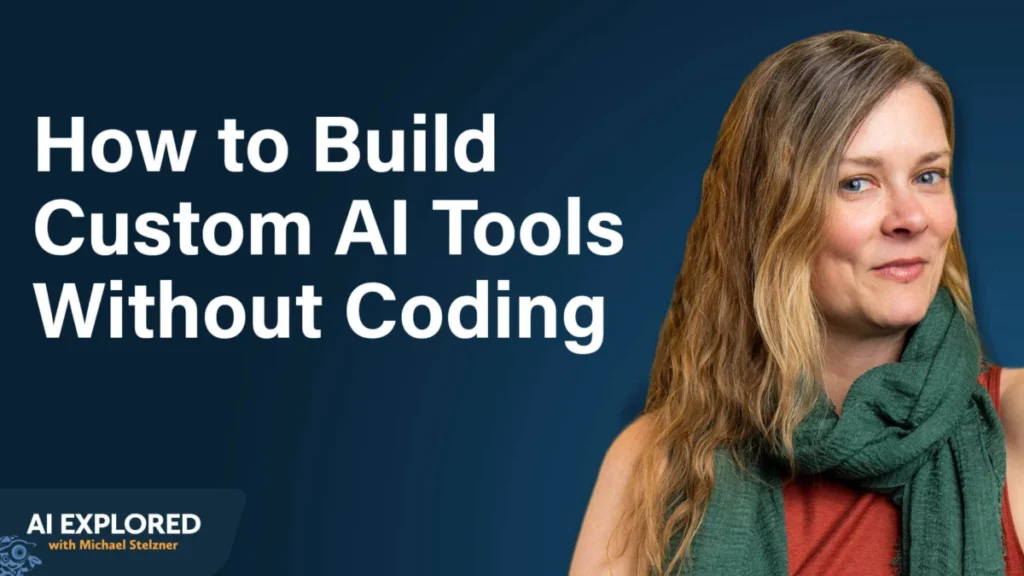
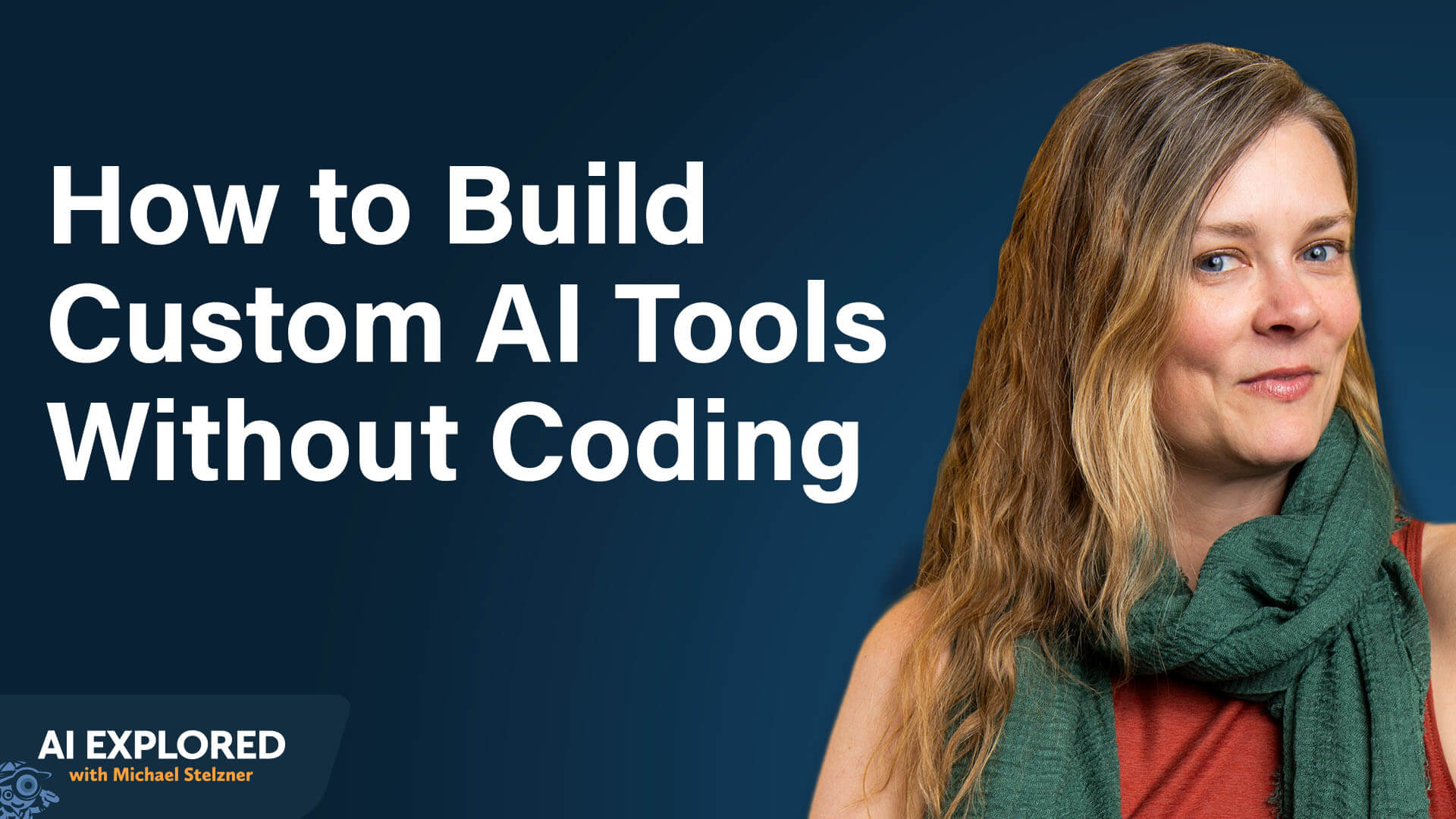
Co-created by AI strategist Erika Stanley and Michael Stelzner, recent insights from the AI Explored podcast illuminate a transformative reality: non-engineers can now build for a "market of one," eliminating thousands of dollars in annual software expenses while building hyper-targeted tools that do precisely what is needed—nothing more, nothing less.
Main Facts: What Is "Vibe Coding" and Custom AI App Development?
The core premise of the modern no-code movement is simple: you no longer need to write syntax or understand programming languages to build functional software. Instead, users practice vibe coding, a development paradigm where you describe desired software functionality in plain, conversational language, allowing generative AI engines to write, debug, and assemble the underlying code.
Key highlights of this approach include:
- The "Market of One" Philosophy: Building software designed for a single business entity rather than thousands of generic users ensures absolute alignment with internal operational needs.
- Radical Cost Reduction: By utilizing higher-tier AI models (such as a $100/month Claude Max subscription), non-technical operators can systematically replace a suite of expensive SaaS subscriptions, turning an AI investment into a self-funding asset.
- End-to-End Autonomy: Modern platforms like Lovable, Base44, and Claude Code handle everything from interface design and database management to hosting and automated security checks.
Chronology: Erika Stanley’s Path from SaaS Consumer to AI App Builder
The transition from passive software buyer to active AI builder happens faster than most entrepreneurs realize. Erika Stanley’s journey offers a clear chronological blueprint of how an operator can reclaim their tech stack in a matter of months.
Phase 1: Identifying the Financial and Functional Breaking Point
Like many business owners, Stanley was paying upward of $300 annually for a client management system that handled leads, contracts, communications, and invoicing, yet never functioned the way her business required. Recognizing that generic tools were draining her resources without delivering optimal results, she set a strict financial rule: any upgrade to her AI subscription stack must immediately pay for itself by cutting redundant software costs.
Phase 2: Building the First Minimum Viable Product (MVP)
Stanley’s first major project was replacing a $29-per-month tool she had relied on for over two years. The tool performed two primary functions: AI-driven email sorting, tagging, and draft generation, and automated Zoom meeting note-taking with follow-up email generation.
Instead of building a monolithic, complex app from scratch, she realized she already had access to these components through existing APIs and models. Using Claude’s native connectors, free meeting transcription tiers (like Fathom), and automated scheduling tasks, she engineered a lightweight solution that runs every morning at 5:30 AM, processing her inbox and delivering an organized digest via Slack. The entire build took less than half a day.
Phase 3: Scaling to Multi-User Platforms
Once comfortable with basic automation scripts, Stanley expanded her scope to full-stack application development using vibe-coding platforms. By leveraging structured workflows—moving from ideation to Product Requirements Documents (PRDs) and deployment—she successfully replaced over $1,200 in annual software subscriptions within just a couple of months.
Supporting Data and Financial Metrics
The economics of building custom AI tools compared to maintaining traditional SaaS subscriptions heavily favor the no-code approach:
- The ROI Threshold: Upgrading from a standard $20/month AI plan to a $100/month Max plan sounds steep, but setting a baseline goal to cut at least $100 in monthly software overhead immediately neutralizes the cost. Stanley successfully slashed over $1,200 in annual software expenditures using this method.
- Platform Economics: Vibe-coding environments like Lovable cost roughly $25 per month, incorporating comprehensive end-to-end capabilities, live URL deployment, database management, and built-in hosting.
- Hosting and Infrastructure Alternatives: For projects requiring scalable external hosting, developers can utilize Vercel (free for low-traffic apps) or Railway (approximately $5/month for apps requiring robust relational databases).
Step-by-Step Methodology: How to Build Your Own AI App
For business owners eager to replicate this process, experts outline a structured, four-step framework:
Step 1: Adopt the Minimum Viable Product (MVP) Mindset
The most common mistake new builders make is attempting to build a comprehensive, feature-heavy application on day one. Stanley recommends starting with a distinct friction point—a minor operational bottleneck that, if smoothed out, would make daily business run significantly better.
- The Skateboard Analogy: Think of an MVP like a skateboard. It has four wheels and two axles; it gets you from point A to point B faster than walking. From there, you can iterate—adding steering to make a scooter, or pedals to make a bicycle. A working skateboard always beats a non-working car sitting in your garage.
Step 2: Brainstorming and Creating a Product Requirements Document (PRD)
Before writing a single line of code or spinning up a development platform, open an advanced LLM (such as Claude) and describe your problem and desired outcome—not the technical solution.
- The PRD Process: Ask the AI to generate a comprehensive Product Requirements Document (PRD). Review it line by line to ensure nothing critical is missing. If you are unsure what features to include, instruct the LLM to interview you, asking targeted questions about your workflow until a polished requirements document emerges.
- Token Conservation Tip: Perform all heavy brainstorming and PRD generation in standard chat interfaces before moving to vibe-coding platforms. Vibe coders consume platform tokens quickly during active building; arriving with a finalized PRD saves valuable credits.
Step 3: Building via Vibe-Coding Platforms
Once your PRD is locked in, transfer it to a vibe-coding environment. While tools like Replit, Base44, and Bolt are exceptional, Stanley favors Lovable ($25/month) for its intuitive chat interface, seamless database integration, and streamlined deployment settings.
- Iterative Refinement: Use the platform’s sidebar chat box to request modifications (e.g., adding dark mode, adjusting data fields). Test prototypes safely within the platform before hitting "publish" to push updates live.
- Design Pro-Tips: Use Claude Design or visual mood boards (like Pinterest) to map out login pages, homepages, and user dashboards before handing the structural assets over to your builder.
Step 4: Deploying, Hosting, and Securing Your Application
Deploying modern web apps no longer requires a degree in systems architecture.
- Hosting: Platforms like Lovable handle hosting automatically. For custom branding without purchasing new domain names, set up simple URL redirects from your primary business website.
- Security Checks: Hackers increasingly target vibe-coded web applications. Always run built-in platform security audits (available in Lovable and Base44) to automatically flag and fix red-indicator vulnerabilities before opening your app to users.
- Version Control: Connect your application repositories to GitHub. This ensures you can roll back versions instantly if a new update introduces bugs.
Official Responses and Industry Perspectives
The rapid rise of no-code AI app generation has triggered a broader conversation within the tech and marketing sectors regarding software democratization. Industry analysts point out that the traditional software-as-a-service (SaaS) model faces an existential evolution. When small business owners can spin up bespoke customer relationship managers, automated email processors, and specialized client portals in an afternoon for a fraction of the cost, the appeal of rigid, expensive enterprise software plummets.
Furthermore, educators like Erika Stanley emphasize that these technical capabilities are no longer reserved for computer science graduates. By treating AI as a collaborative junior developer, non-technical professionals can focus entirely on high-level logic, user experience, and business strategy.
Implications: What This Means for Businesses and the SaaS Market
The democratization of software creation carries profound implications across multiple economic sectors:
- The Disruption of Traditional SaaS: Subscription businesses that rely on charging high monthly fees for generic, inflexible features will face intense pressure. To survive, traditional SaaS providers must pivot toward offering deep integrations, advanced security compliance, or specialized computing infrastructure that simple no-code builds cannot easily replicate.
- The Rise of Micro-Products: The skills acquired while building internal business tools are directly transferable to external markets. Business owners who solve their own operational friction can easily package those custom tools into micro-SaaS products, memberships, or direct sales offerings for their broader communities.
- Redefining "Technical Literacy": Fluency in prompt engineering, workflow mapping, and PRD creation is rapidly replacing traditional coding literacy as the most valuable technical skill set for modern entrepreneurs. The ability to clearly articulate a problem and manage an AI development partner is now the primary driver of digital innovation.
Conclusion
Building custom AI applications without writing code is no longer a futuristic sci-fi concept—it is a practical, cost-effective strategy being deployed daily by forward-thinking business owners. By starting with a minimum viable product mindset, leveraging LLMs to draft precise Product Requirements Documents, and utilizing accessible vibe-coding platforms, entrepreneurs can systematically dismantle their expensive software overhead.
As the tools grow smarter and deployment pipelines become even more seamless, the ultimate question for business owners is no longer “Can I afford this software?” but rather “Why buy off-the-shelf when I can build it better myself?”