The Science of Social Conversion: How Behavioral Psychology is Rewriting the Rules of Digital Advertising
In the fast-paced, thumb-scrolling ecosystem of modern social media, digital marketers are facing an unprecedented crisis of saturation. Platforms like TikTok, Instagram, and Facebook no longer rely exclusively on chronological feeds or social graphs; instead, they are driven by sophisticated "interest graphs." These algorithmic engines serve content based on real-time behavioral predictions, shifting dynamically from morning anxiety to weekend leisure. For brands trying to capture consumer attention, the rules of engagement have fundamentally changed.
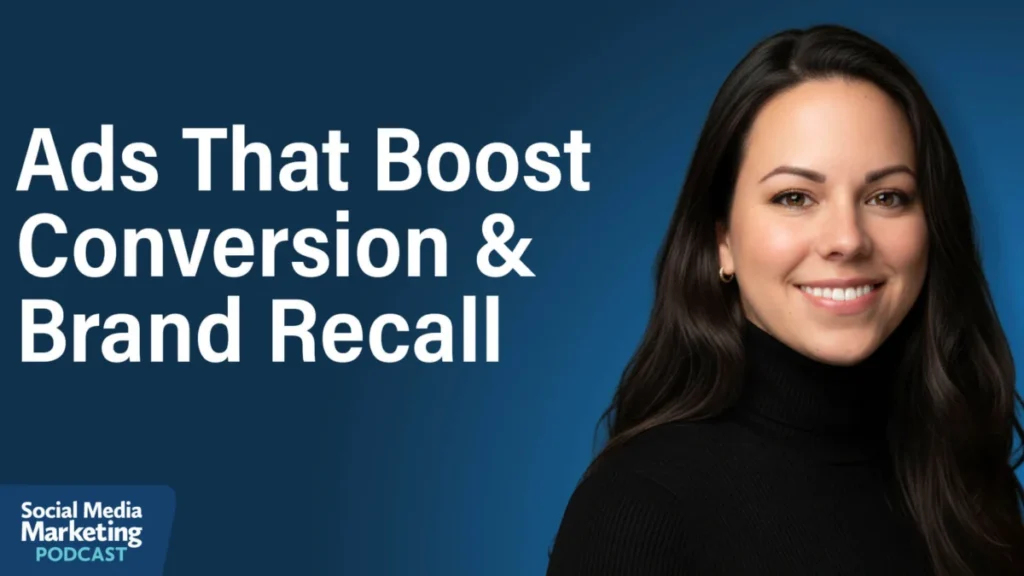
According to ad strategist Sarah Levinger, co-creator of a landmark framework on applied behavioral science in advertising, the traditional approach to social media advertising is broken. Marketers are no longer just competing against industry rivals for screen time—they are competing against human psychology, real-time moods, and algorithmic unpredictability. To cut through the noise, brands must stop guessing what works and start applying the bedrock principles of behavioral science and consumer psychology.
The Main Facts: Redefining Ad Performance Through Science
At the core of Levinger’s methodology is a radical reframing of advertising’s primary objective. The most pervasive misconception in the industry, she notes, is that every ad is solely designed to drive immediate conversion. While conversion remains vital—particularly in e-commerce—Levinger argues that the true core job of advertising is to build brand recall.
"A customer who doesn’t remember a brand exists has nowhere to convert to and ends up buying whatever shows up in their feed," Levinger explains. Consequently, winning brands design their creative assets to target recall and conversion simultaneously.
This is where behavioral science becomes an invaluable asset. Rather than relying on trial and error, behavioral science decodes why a piece of creative resonates with an audience. When marketers can pinpoint the psychological triggers behind high-performing ads, they can replicate that success predictably. The tangible benefits of this scientific pivot include:
- Lower customer acquisition costs (CAC)
- Longer-lasting ad lifespans
- Access to previously untapped audience segments
- Reduced decision fatigue for creative teams
Furthermore, the mechanics of modern digital distribution raise the stakes. Because platforms serve content based on interest and taste rather than explicit keywords or follower lists, every creative concept—whether paid or organic—must be engineered to capture human psychology in real-time.
The Chronology of Decision-Making: A Three-Step Framework
To operationalize behavioral psychology, Levinger outlines a rigorous three-step decision-making process. Every ad campaign must systematically determine: how the message is delivered, who it is aimed at, and where it fits within the modern customer journey. All three steps originate from a unified core brand message.
Step 1: The Valence and Intensity Model
The first critical decision involves choosing whether a message should carry a positive or negative emotional charge (valence) and how strongly that message should be delivered (intensity).
- Valence: This represents the emotional spectrum activated by a message, ranging from positive states like comfort and happiness to negative states like frustration, disappointment, or anxiety. Emotion is not binary; it exists on a sliding scale.
- Intensity: This dictates how strongly the message is delivered, influencing how the audience interprets its valence and urgency.
To illustrate, Levinger uses a simple domestic analogy: reminding someone to take out the trash can be expressed positively and at a low intensity ("I’m so sorry, I need your help with this, I completely forgot"), or negatively and at a high intensity ("You’ve missed the trash five times. I need you to step up").
The stakes are high because emotionally charged messages are encoded in the human brain far more strongly than dry, logical facts. Neurochemicals released during emotional experiences signal the brain on what to remember and what to ignore, which is why emotion ultimately drives recall.
Crucially, valence should be chosen based on category psychology. For instance, an advertisement for a carbon monoxide detector that adopts an overwhelmingly positive tone ("Protect your family and everything is going to be great!") fails because it lacks urgency. Conversely, a negative valence focusing on an invisible, silent danger in the home hits with immediate psychological salience.
Intensity, on the other hand, is dictated by brand identity. Supportive wellness brands that aim to comfort consumers typically remain at a low intensity year-round. In contrast, rebellious, disruptive brands like Liquid Death leverage heavy sarcasm and high intensity to resonate with a counter-cultural audience.
Supporting Data and Psychological Models
Moving beyond broad emotional strokes, Levinger dismantles the traditional marketing "customer avatar"—which she describes as an overused crutch—in favor of a more nuanced model based on Self-Discrepancy Theory.
The Three Selves Model
Consumers do not maintain a single static identity; instead, they cycle through three distinct versions of the self throughout the day:

- The Ideal Self: Future-focused and aspirational. Messaging targeting this self focuses on personal transformation, achieving a better tomorrow, and self-actualization.
- The Actual Self: The present-day self, which seeks validation of existing beliefs and identities. Eco-friendly brands frequently activate the actual self by affirming the consumer’s current worldview without demanding radical change.
- The Ought Self: Past-focused and guilt-driven, operating on internal monologues such as, "I should have fixed this already." This self dominates in parenting, health, and home maintenance niches, responding exceptionally well to slightly negative, low-intensity messaging that addresses chronic, unaddressed problems.
The Power of Micro-Copy: A Six-Figure Case Study
The impact of behavioral adjustments can hinge on a single word. For approximately 18 months, watch brand Original Grain ran advertisements telling consumers they "deserved" to treat themselves to a timepiece.
However, behavioral research revealed that target consumers did not feel they merely deserved a luxury item; they felt they had earned it. By systematically swapping the passive word "deserve" for the active word "earned" across all brand messaging, the company unlocked a six-figure revenue shift.
Mapping the Customer Journey: The Messy Middle
The third pillar of Levinger’s framework dictates where creative assets fit within the consumer’s purchasing pathway. Discarding traditional awareness funnels, she maps creative to the "Messy Middle"—a behavioral framework popularized by Google research detailing how modern shoppers navigate digital ecosystems.
The Messy Middle comprises four distinct behavioral stages:
[ Trigger ] ──> [ Exploration ] ──> [ Evaluation ] ──> [ Purchase ]- Trigger Content: Initiated by an acute problem (e.g., a burst pipe) or a chronic issue long ignored. Ads here should focus heavily on situational point-of-view (POV) or day-in-the-life storytelling rather than pushing immediate product features.
- Exploration Content: Consumers explore the wider industry rather than a specific brand (e.g., researching what ingredients matter in skincare). Top-performing exploration content often debunks myths ("Don’t believe the hype about this product") or utilizes long-form, documentary-style education.
- Evaluation Content: Shoppers actively compare competitive options using hard facts, proof, statistics, and unique selling propositions (USPs). Brands lacking clear functional differentiation must win this stage through distinct personality and likability.
- Purchase Content: Designed to provide the final psychological push or "excuse" for the shopper to complete the transaction with a specific brand.
By auditing existing content libraries using AI large language models (LLMs) such as Claude or Gemini, modern marketing teams can rapidly categorize their digital assets across these four stages, ensuring a balanced, scientifically sound distribution of creative material.
Implications for the Future of Digital Marketing
The integration of behavioral science and consumer psychology into social advertising marks a definitive shift away from creative guesswork toward precision engineering. As AI tools lower the barrier to entry for analyzing audience sentiment, brand reviews, and ad copy through matrices like valence, intensity, and the three selves, marketers are equipped with unprecedented diagnostic capabilities.
For brands navigating crowded feeds on TikTok, Instagram, and beyond, the implications are clear. Survival in the algorithmic era requires abandoning generic demographics in favor of deep psychological alignment. By understanding how emotional valence dictates memory, how the three selves drive personal motivation, and how content maps cleanly to the Messy Middle, brands can build resilient advertising strategies that not only secure immediate conversions, but cement lasting brand recall in the minds of modern consumers.